Flexible Force Fields Can Protect Our Return to the Moon
•February 23, 2026
0
Why It Matters
Effective dust mitigation is essential for protecting lunar infrastructure, directly influencing mission longevity and cost. Flexible EDSs enable protection of non‑flat assets such as habitats and rovers, expanding viable surface operations.
Key Takeaways
- •Flexible EDSs conform to curved lunar structures.
- •Copper‑polymer electrodes achieve >90% dust removal.
- •CMrGO shields sustain cyclic strain, 60% removal efficiency.
- •High voltage (>3 kV) essential for copper EDS performance.
- •NASA’s Blue Ghost mission validates EDS concept on Moon.
Pulse Analysis
Lunar dust, with its abrasive, electrostatically charged particles, poses a unique threat to equipment, power generation, and astronaut health. Traditional mitigation—mechanical brushes or static coatings—struggles on uneven surfaces and cannot adapt to the Moon’s extreme thermal cycles. Electrodynamic dust shields leverage an electric curtain effect, generating fields that repel both charged and neutral particles, offering a scalable, low‑maintenance solution that aligns with the growing demand for reliable, long‑duration lunar operations.
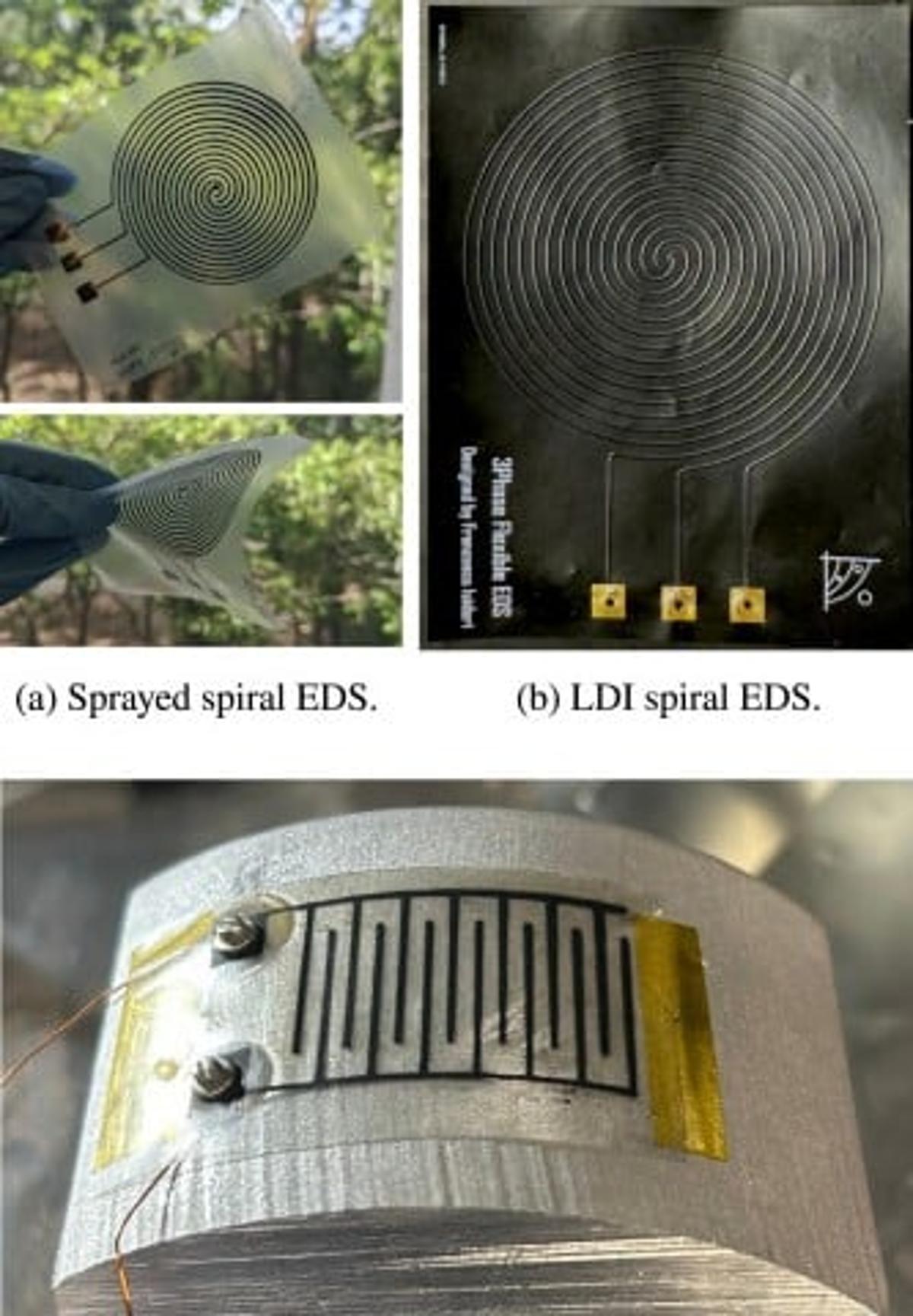
The Georgia Tech team’s recent study introduces two flexible EDS architectures tailored for curved applications. Copper‑polyimide electrodes, prized for conductivity and manufacturability, demonstrated over 90% dust removal when subjected to voltages exceeding 3 kV, though repeated bending can induce micro‑cracks. In contrast, the novel CMrGO nanocomposite maintains structural integrity under cyclic strain, achieving 60% removal for settled dust and near‑complete protection in dynamic dusting scenarios. Limitations such as micro‑discharges—stemming from absent dielectric coatings—highlight areas for material engineering and system integration before deployment.
Looking ahead, the upcoming Artemis and Chinese lunar exploration programs will test dust‑mitigation technologies in situ, with NASA’s Blue Ghost mission already proving EDS viability on the surface. Successful integration of flexible shields could safeguard solar arrays, thermal radiators, and habitat exteriors, reducing maintenance downtime and extending mission lifespans. As commercial interests accelerate lunar infrastructure development, robust dust‑control solutions will become a cornerstone of sustainable off‑world operations, driving investment in advanced materials and adaptive shielding designs.
Flexible Force Fields Can Protect Our Return to the Moon
0
Comments
Want to join the conversation?
Loading comments...