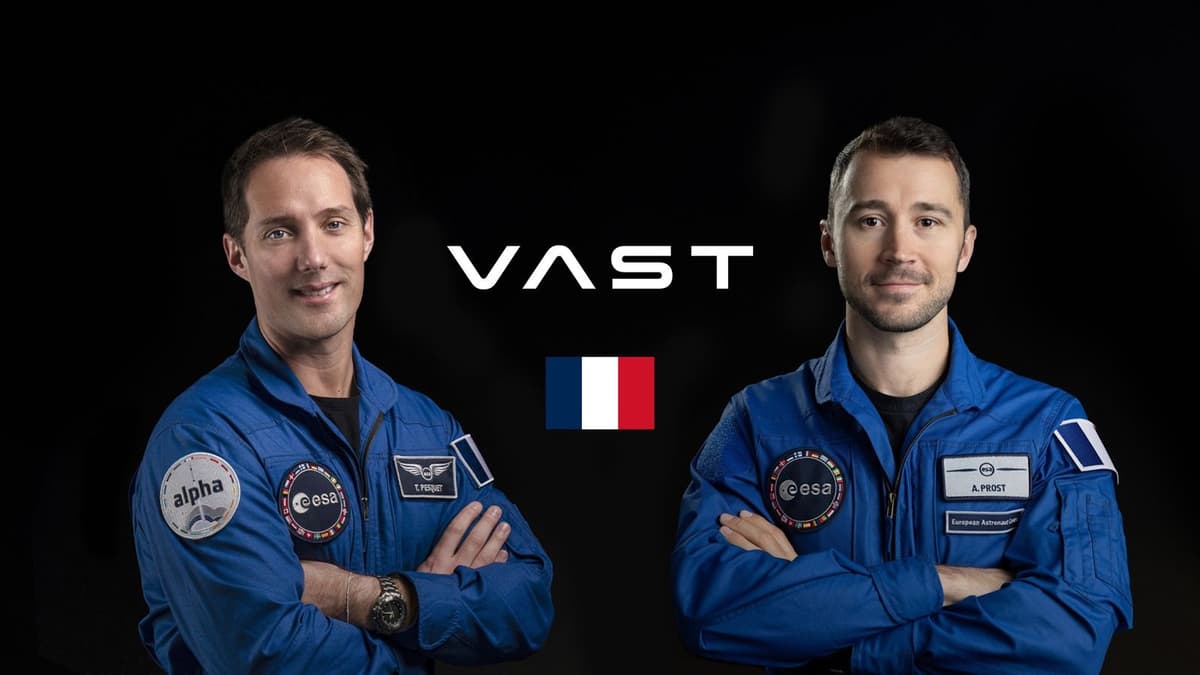
France to Fly Two Astronauts on Vast Missions
Companies Mentioned

Why It Matters
The agreement showcases the growing role of sovereign astronauts in commercial spaceflight, validating the business model of private stations and expanding Europe’s direct access to low‑Earth‑orbit research and diplomacy.
Key Takeaways
- •Vast to launch two French astronauts in 2027 missions.
- •Thomas Pesquet will command private ISS flight under new NASA rules.
- •ESA reserve Arnaud Prost assigned to inaugural Haven‑1 commercial station.
- •France will host Vast’s European HQ and announce details at Paris summit.
- •Sovereign astronaut demand boosts commercial space station business case.
Pulse Analysis
The French‑Vast partnership marks a milestone in the commercialization of low‑Earth‑orbit access. By securing two astronaut slots—one on a private International Space Station mission and another on the debut Haven‑1 flight—Vast demonstrates the viability of sovereign astronaut programs under the latest NASA policy shift. Previously, NASA required a former NASA commander for private missions; the 2025 solicitation opened the door for experienced astronauts from Europe, Canada and Japan, enabling veteran ESA astronaut Thomas Pesquet to lead the ISS venture.
For France, the deal deepens its strategic foothold in the emerging commercial space sector. Establishing Vast’s European headquarters in Paris aligns with President Macron’s Choose France agenda, positioning the nation as a hub for private‑sector space investment. The involvement of ESA reserve Arnaud Prost on Haven‑1 highlights a new pathway for European astronauts to gain flight experience without full‑time corps commitments, potentially accelerating talent pipelines for national agencies and private partners alike. French companies and research institutions will also benefit from onboard experiments and technology demonstrations, fostering a domestic ecosystem around space innovation.
Industry observers see the rise of sovereign astronaut demand as a catalyst for the commercial station market. Nations seeking prestige, scientific output, and diplomatic presence are turning to private platforms as cost‑effective alternatives to traditional government‑run stations. This trend strengthens the business case for operators like Vast, Axiom and others, driving competition, lowering launch costs, and expanding the range of services offered in orbit. As more countries negotiate similar agreements, the low‑Earth‑orbit economy is poised for rapid diversification and growth.
France to fly two astronauts on Vast missions
Comments
Want to join the conversation?
Loading comments...