From Artemis II to Deep Space: Why Space-Grade Chips Must Be Built for the Harshest Conditions
Companies Mentioned

Why It Matters
Radiation‑hardened chips are the linchpin of mission reliability, directly affecting the success of high‑cost space programs and national security assets. GF’s secure, resilient solutions give aerospace customers a trusted path to deploy hardware that cannot be repaired once in orbit.
Key Takeaways
- •GF develops radiation‑hardened‑by‑design (RHBD) and radiation‑hardened‑by‑process (RHBP) chips
- •Malta, NY fab expands with 45SOI, FD‑SOI, and FinFET RHBP nodes
- •Partnerships with Northrop Grumman, Vorago, and BAE accelerate space‑grade solutions
- •Secure, Trusted Foundry status protects critical defense and satellite communications
- •In‑space semiconductor manufacturing explored, but resilience remains immediate priority
Pulse Analysis
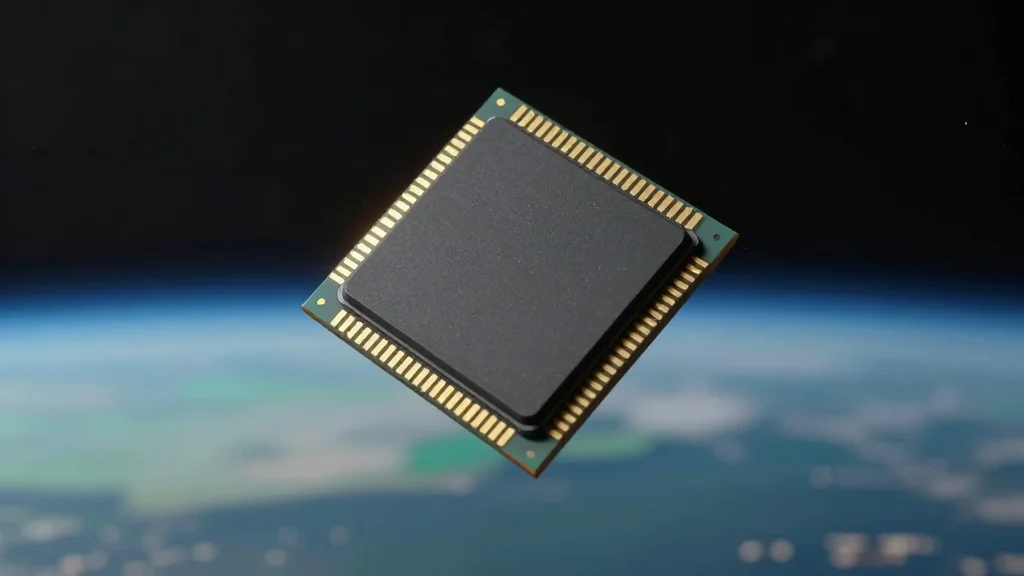
Space missions now demand electronics that can endure radiation levels dozens of times higher than on Earth, temperature extremes, and the vacuum of orbit. Conventional consumer chips quickly succumb to single‑event upsets or total ionizing dose damage, jeopardizing navigation, communication, and life‑support systems. Radiation‑hardened‑by‑design (RHBD) embeds redundancy, layout awareness, and fault‑mitigation directly into the silicon, while radiation‑hardened‑by‑process (RHBP) refines doping and substrate engineering to boost total ionizing dose (TID) and single‑event effect (SEE) performance. Together, these approaches provide the predictability and trust required for missions ranging from low‑Earth orbit constellations to deep‑space probes.
GlobalFoundries leverages a worldwide manufacturing network to deliver these hardened solutions at advanced nodes. The Malta, New York fab now supports 45SOI, FD‑SOI, and a 12 nm FinFET platform enhanced with Vorago’s HARDSIL® material, delivering superior TID and SEE metrics without sacrificing baseline performance. Complementary facilities in Vermont, Singapore, and Dresden add GaN power, RF, and Common Criteria‑certified secure processes, ensuring that aerospace and defense customers receive a consistent, high‑integrity supply chain. GF’s Trusted Foundry status further safeguards intellectual property and prevents tampering, a non‑negotiable requirement for national‑security payloads.
Collaboration fuels rapid innovation: GF’s RHBP FinFET platform is co‑developed with Northrop Grumman and Vorago, while BAE Systems integrates GF’s 45SOI and FinFET chips into its Ascent spacecraft for agile, refuelable missions. These ecosystem partnerships shorten development cycles, reduce program risk, and enable customers to repurpose existing IP on hardened silicon. Although manufacturing chips in microgravity remains a future prospect, the immediate focus is on building resilient silicon today. As the industry eyes lunar bases, Mars expeditions, and ever‑larger satellite constellations, the durability of space‑grade semiconductors will define the pace and safety of humanity’s next frontier.
From Artemis II to deep space: why space-grade chips must be built for the harshest conditions
Comments
Want to join the conversation?
Loading comments...