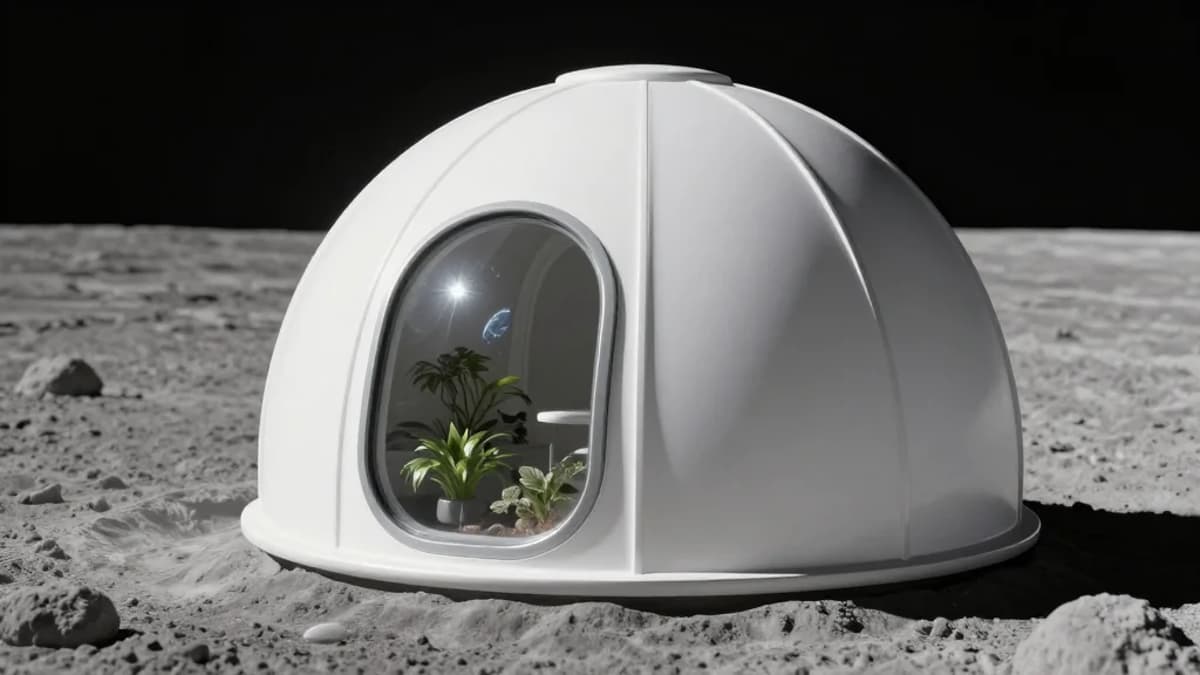
From Lunar Nights to Martian Dust Storms: Why Batteries Struggle in Space
•January 23, 2026
0
Companies Mentioned

Why It Matters
Reliable, resilient energy storage is essential for sustained off‑world habitats and long‑duration missions, directly affecting mission safety and cost. Advances in battery chemistry will enable broader commercial and scientific activities on the Moon and Mars.
Key Takeaways
- •Lunar night temperatures drop to –150 °C
- •Radiation continuously degrades electrode materials
- •Lithium‑titanate offers superior thermal stability
- •Magnesium‑air promises high energy‑to‑mass ratio
- •Sodium‑ion could power lunar habitat grids
Pulse Analysis
The Artemis program and China's lunar ambitions have turned a once‑theoretical moon base into an imminent engineering project. Yet the most critical component—energy storage—faces conditions that no commercial battery was built to survive. Lunar nights plunge to –150 °C, while two‑week days exceed +150 °C, and the vacuum eliminates convective cooling. On Mars, dust storms reduce solar input and coat cells with abrasive particles, while high‑energy radiation continuously breaks down electrolyte bonds. These extremes force designers to rethink power architecture from the ground up.
Recent laboratory simulations and in‑situ testing confirm that conventional lithium‑ion cells fracture under deep‑freeze stress and overheat within minutes of direct sunlight exposure. Researchers at leading aerospace labs have identified electrode cracking, electrolyte evaporation, and solid‑electrolyte‑interphase growth as primary failure modes. To address these, attention is shifting toward chemistries that tolerate thermal cycling. Lithium‑titanate batteries sacrifice some energy density but deliver exceptional cycle life and safety, while magnesium‑air concepts promise a lightweight, high‑energy‑to‑mass solution for rovers and drones. Early prototypes already show resilience to radiation doses that cripple standard cells.
If robust storage can be achieved, off‑world habitats will resemble terrestrial micro‑grids, where sodium‑ion and potassium‑ion batteries provide scalable, cost‑effective backup and load‑balancing. Multi‑functional electrochemical systems could also generate hydrogen peroxide for sterilization or support water‑splitting for oxygen, consolidating several life‑support subsystems into a single mass‑efficient unit. Such advances would lower launch costs, extend mission duration, and accelerate commercial lunar and Martian ventures. Industry players are already filing patents on hybrid battery‑fuel cells, signaling that the next decade may see a market shift from niche space‑only solutions to broader aerospace and terrestrial applications.
From lunar nights to Martian dust storms: Why batteries struggle in space
0
Comments
Want to join the conversation?
Loading comments...