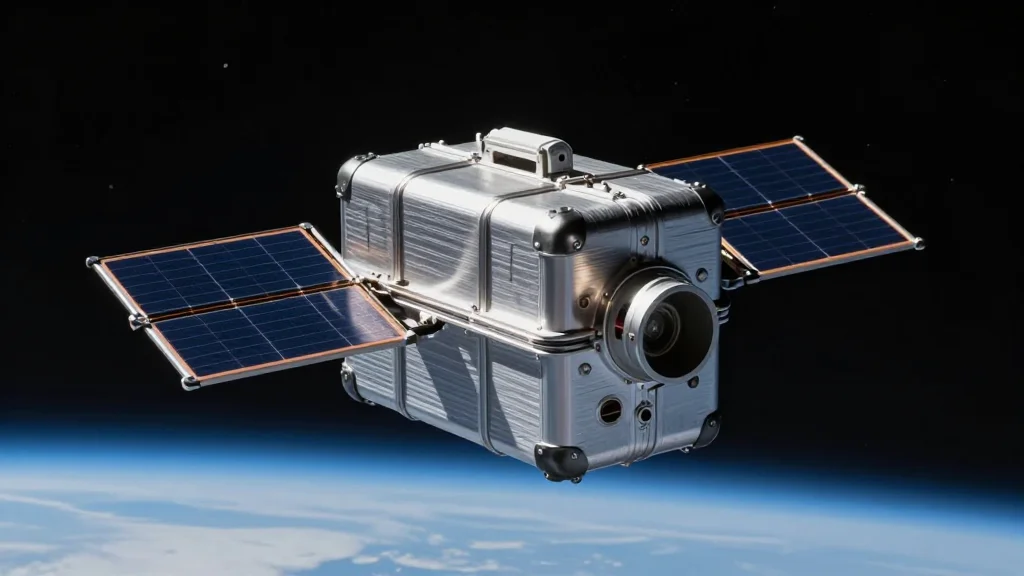
GalaxEye CEO Declares India’s First OptoSAR Satellite Drishti Operational

Companies Mentioned
Why It Matters
Drishti’s successful deployment validates the commercial viability of hybrid SAR‑optical satellites, a technology that could reshape how data‑intensive industries operate under all weather conditions. By proving that a private Indian firm can design, build, and launch such a system, the mission also signals a maturing private space ecosystem in India, potentially attracting more venture capital and international partnerships. The satellite’s all‑weather capability addresses a long‑standing limitation of optical Earth observation, opening new revenue streams for disaster response, precision agriculture, and defense monitoring. If GalaxEye can deliver on its planned constellation, it may pressure incumbent providers to accelerate similar hybrid offerings, intensifying competition in the global remote‑sensing market.
Key Takeaways
- •Drishti launched on May 3 aboard a SpaceX Falcon 9
- •190 kg OptoSAR satellite combines SAR and EO sensors at a 20° off‑nadir angle
- •CEO Suyash Singh confirmed the satellite is "alive and kicking" after tumbling rumors
- •Hybrid sensor delivers data regardless of clouds or darkness, appealing to agriculture, mining, and defense
- •GalaxEye targets a 10‑satellite constellation within 3.5 years
Pulse Analysis
The Drishti announcement underscores a strategic shift in the Indian space sector from government‑led missions to commercially driven ventures. Historically, SAR capabilities have been the domain of national agencies because of the high development costs and security sensitivities. GalaxEye’s ability to fund and field an OptoSAR platform suggests that private capital is now willing to absorb those risks, likely spurred by the growing demand for high‑frequency, all‑weather data in emerging markets.
From a competitive standpoint, Drishti positions GalaxEye against established players like Maxar, Planet and ICEYE, which have focused on either pure optical constellations or dedicated SAR constellations. The hybrid model could carve a niche by offering a single data product that eliminates the need for customers to fuse separate SAR and optical datasets. However, scaling to a ten‑satellite fleet will require substantial capital and launch capacity, and the company must demonstrate that the integrated sensor does not compromise resolution or revisit rates compared to dedicated systems.
Looking forward, the next milestones will be the delivery of validated imagery to early customers and the demonstration of the constellation’s operational cadence. Success will likely attract follow‑on funding and may prompt Indian regulators to streamline approvals for private SAR missions, further accelerating the sector’s growth. Conversely, any setbacks in image quality or launch cadence could reinforce skepticism about hybrid architectures and slow the momentum of private SAR initiatives in the region.
GalaxEye CEO Declares India’s First OptoSAR Satellite Drishti Operational
Comments
Want to join the conversation?
Loading comments...