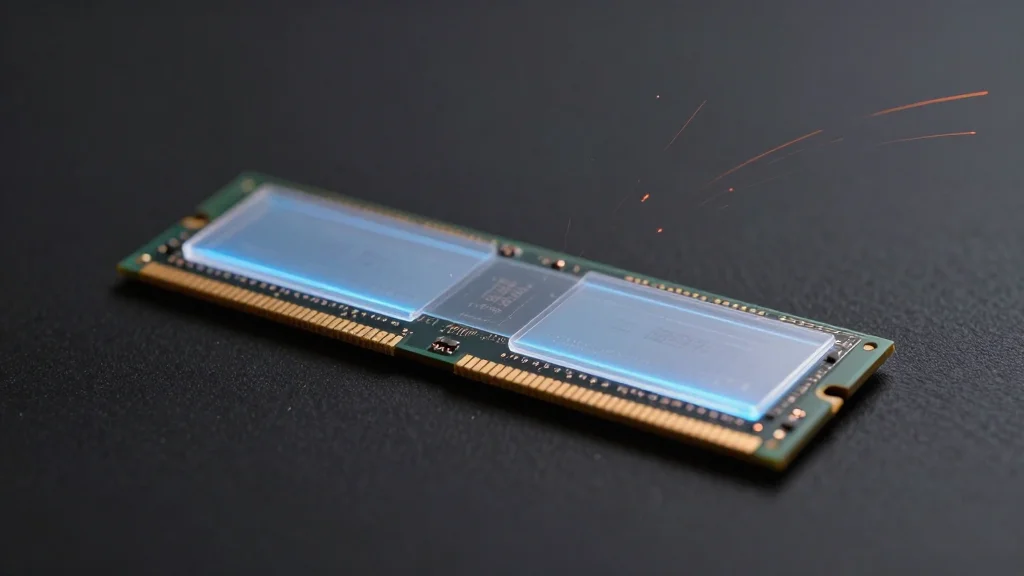
Georgia Tech Researchers Unveil Innovative NAND Flash Storage Technology for Deep Space Missions
Why It Matters
Radiation‑hard memory is a critical bottleneck for autonomous deep‑space probes, and this breakthrough could enable reliable on‑board data processing and AI without costly redundancy. Its compatibility with existing silicon fabs also accelerates adoption across both space and defense sectors.
Key Takeaways
- •Ferroelectric NAND endures up to one million rads radiation
- •Thirty‑fold increase over conventional charge‑trapping flash
- •Hafnium oxide ferroelectric layer compatible with silicon processes
- •Low‑power operation supports onboard AI workloads
- •DARPA funding underscores national‑security relevance of space memory
Pulse Analysis
Deep‑space missions generate terabytes of sensor data, yet traditional NAND flash struggles under the relentless bombardment of cosmic rays. Charge‑based memory cells lose electrons when exposed to ionizing radiation, leading to bit errors that can jeopardize mission objectives. Engineers have long relied on bulky shielding or redundant systems to mitigate these risks, but such approaches add weight and cost—two factors that spacecraft designers are eager to minimize.
The Georgia Tech team’s ferroelectric NAND flips the storage paradigm by encoding information in the polarization of hafnium‑oxide crystals. This material, discovered to be ferroelectric only fifteen years ago, retains its dipole orientation even after extreme radiation exposure. In rigorous tests, the prototype withstood doses of one million rads, a thirty‑fold improvement over legacy flash, meeting and exceeding the thresholds required for missions to Jupiter’s moons or interstellar probes. The fabrication process layers the ferroelectric stack onto standard silicon wafers, allowing seamless integration with existing semiconductor manufacturing lines.
Beyond radiation hardness, the new memory offers low‑power consumption and high‑speed access, attributes that align perfectly with the growing demand for on‑board artificial‑intelligence analytics. Satellites and planetary rovers can process images, perform autonomous navigation, and compress data in situ, reducing reliance on Earth‑based computation and downlink bandwidth. With DARPA and Department of Defense backing, the technology is poised to spill over into secure communications and defense electronics, creating a market where space‑grade reliability becomes a baseline rather than a specialty. As the aerospace industry pushes toward longer, more complex missions, ferroelectric NAND flash could become the cornerstone of resilient, intelligent spacecraft architectures.
Georgia Tech Researchers Unveil Innovative NAND Flash Storage Technology for Deep Space Missions
Comments
Want to join the conversation?
Loading comments...