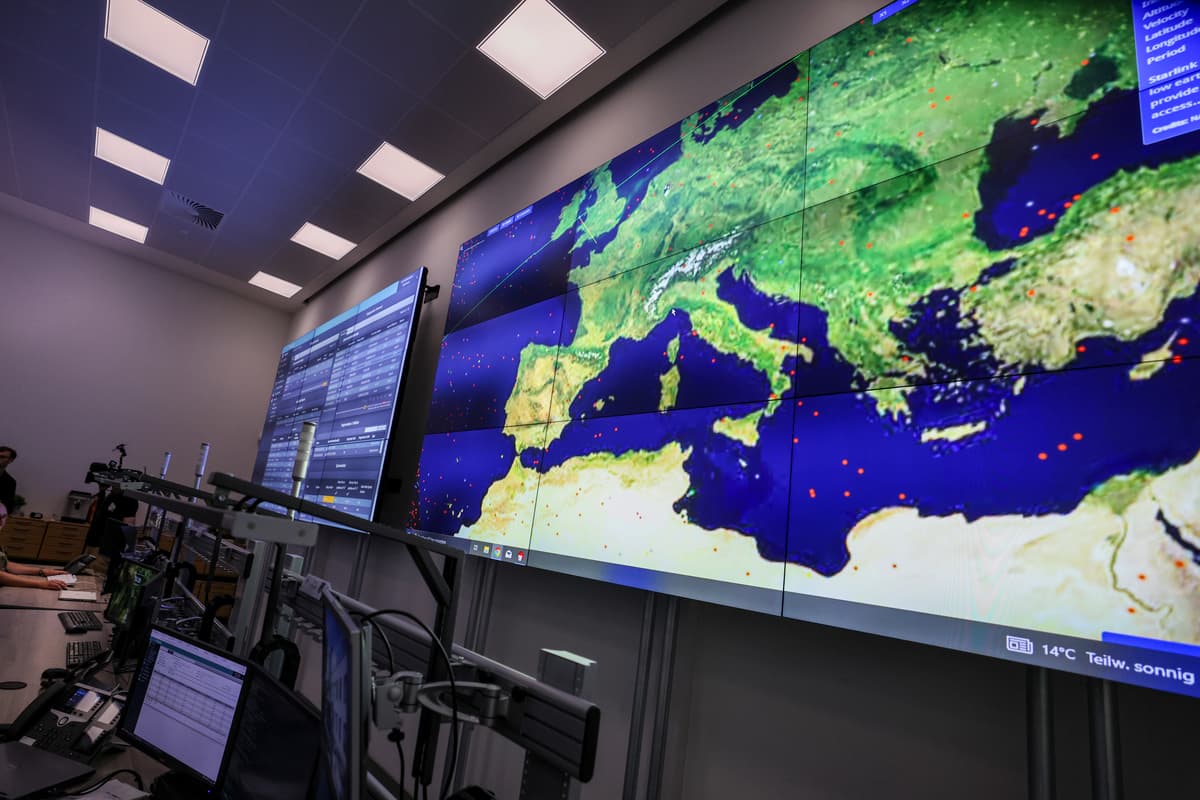
Germany Touts Pan-German Space Command Amid European Push to Supplant US Tech
Why It Matters
The effort marks a coordinated European bid for strategic autonomy in space, reducing reliance on U.S. providers and reshaping the continent’s defence‑industrial landscape. Success could spur a new market for European‑built satellite constellations and launch services.
Key Takeaways
- •Germany leads €35 bn ($40.7 bn) European space command effort
- •Austria to launch three military satellites and a test object in 2027
- •Luxembourg offers SATCOM and Earth‑observation assets to DACH+L partners
- •Switzerland cites dependence on non‑European tech as security risk
- •Joint cyber exercise placed Luxembourg‑DACH team second at NATO Locked Shields
Pulse Analysis
Europe’s push for a home‑grown space capability is gaining momentum as Germany pledges a €35 bn ($40.7 bn) investment to build a European Space Component Command. The plan, unveiled at a rare DACH+L gathering of German‑speaking defence chiefs, seeks to create a joint command and a Weltraumakademie that will train personnel across borders. By embedding Austria, Switzerland and Luxembourg in the design phase, Germany hopes to avoid the pitfalls of a top‑down structure and to accelerate the development of encrypted low‑Earth‑orbit constellations, launch capacity and resilient satellite communications.
For the smaller partners, the initiative offers concrete opportunities. Austria’s defence ministry announced three operational military satellites and a test object slated for 2027, including the low‑cost BEACONSAT built for under €1 million ($1.16 million) and a joint LEO2VLEO project with the Netherlands. Luxembourg will leverage its niche SATCOM and Earth‑observation expertise, while Switzerland points to its industrial player Beyond Gravity as a potential contributor. These moves test the limits of each country’s historic neutrality, but the shared security calculus—especially after the Ukraine war—has prompted deeper integration into European defence projects.
If the DACH+L collaboration matures, it could reshape the European defence market by creating a supply chain for indigenous satellites, launch services and ground infrastructure. Reducing dependence on U.S. space technology would not only enhance strategic autonomy but also open export opportunities for European firms. However, the initiative remains largely conceptual; its success will hinge on sustained political will, funding continuity and the ability to harmonise national procurement rules across the bloc.
Germany touts pan-German space command amid European push to supplant US tech
Comments
Want to join the conversation?
Loading comments...