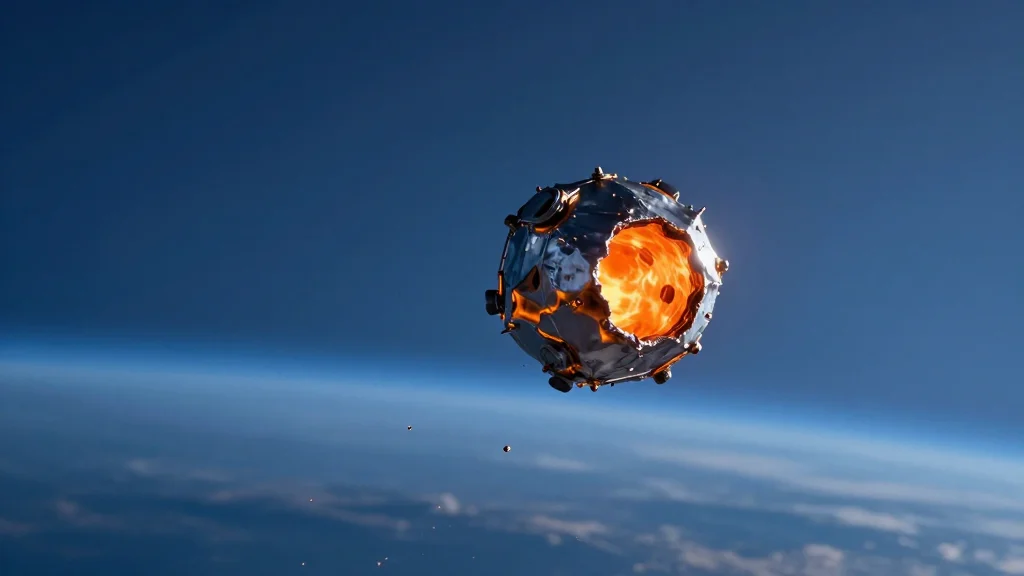
Global Launch and Space Re-Entry: Aggravated Assault on Earth’s Atmosphere?
Why It Matters
Deposited metals can alter stratospheric chemistry, potentially affecting climate and air quality, while unregulated re‑entries exacerbate space debris risks and policy uncertainty.
Key Takeaways
- •Re‑entry events now deposit exotic metals into the stratosphere.
- •Megaconstellations accelerate material influx, raising atmospheric chemistry concerns.
- •Researchers presented findings at the 2026 EGU conference in Vienna.
- •Calls for regulation aim to curb unsustainable low‑Earth‑orbit practices.
Pulse Analysis
The surge in satellite launches, driven by commercial megaconstellations, has turned Earth’s upper atmosphere into a repository for metallic particles from burned‑out spacecraft. Materials such as aluminum, titanium and rare‑earth alloys survive re‑entry long enough to become entrained in stratospheric winds, creating a new class of anthropogenic aerosols. This phenomenon, once a niche concern, now scales with the dozens of daily launches, prompting scientists to quantify deposition rates and trace pathways.
Atmospheric scientists warn that these exotic metals could perturb stratospheric chemistry, influencing ozone dynamics and cloud nucleation processes. Preliminary models suggest that metal‑induced catalytic cycles may accelerate ozone depletion or alter radiative forcing, though empirical data remain scarce. The uncertainty underscores a research priority: systematic sampling of high‑altitude particles and integration of space‑derived inputs into climate models. Understanding these impacts is crucial for accurate climate projections and public‑health risk assessments.
Policy makers are responding to the scientific alarm by advocating for a regulatory framework that governs not only launch licensing but also end‑of‑life disposal. Proposals include mandatory de‑orbiting plans, material‑friendly design standards, and an international treaty to manage cumulative atmospheric loading. While industry groups caution against stifling innovation, many see a market for “clean‑re‑entry” technologies that minimize metal release. Aligning scientific insight with proactive governance could safeguard both the orbital environment and the planet’s atmospheric health.
Global launch and Space Re-entry: Aggravated Assault on Earth’s atmosphere?
Comments
Want to join the conversation?
Loading comments...