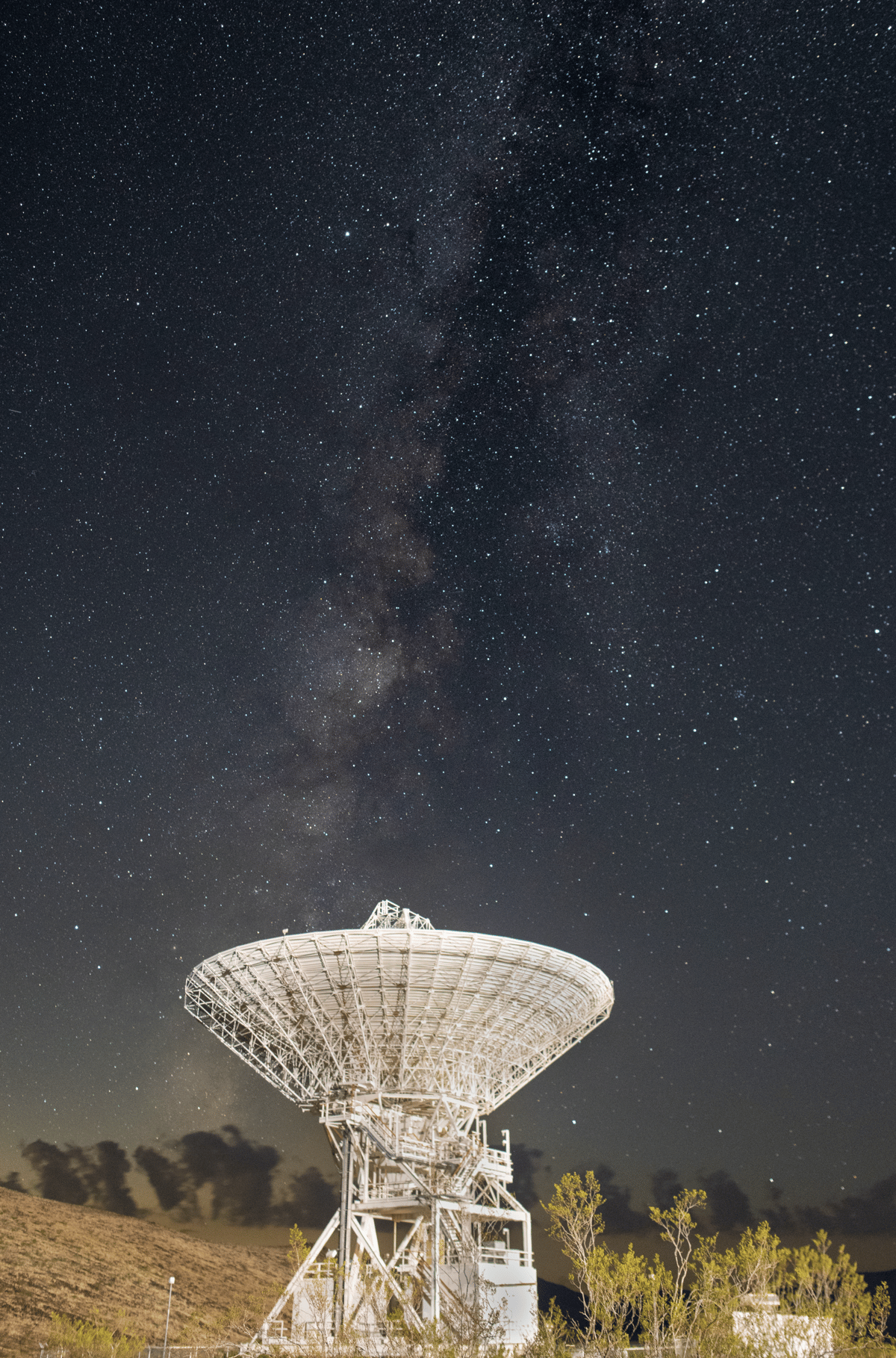
Goldstone’s DSS-15 Antenna and the Milky Way
•January 30, 2026
0
Companies Mentioned

NASA
Why It Matters
Reliable deep‑space communications are essential for Artemis’s goal of a sustained lunar presence, and DSS‑15’s high‑gain antenna ensures mission‑critical telemetry and navigation. Its dual role in scientific observations further enhances NASA’s return on infrastructure investment.
Key Takeaways
- •Goldstone DSS-15 is a 112‑foot deep‑space antenna
- •Part of NASA’s global Deep Space Network
- •Supports Artemis lunar missions and other interplanetary probes
- •Provides radar and radio astronomy data for solar system research
- •Integrated with Near Space Network for continuous spacecraft tracking
Pulse Analysis
The Deep Space Network, established in the 1960s, comprises three strategically placed complexes in California, Spain and Australia, creating a near‑continuous line of sight to any point beyond low Earth orbit. Each site houses multiple high‑gain antennas that relay commands, receive scientific data, and perform precise ranging for spacecraft traveling to the Moon, Mars, and beyond. This global infrastructure underpins not only government missions but also an expanding commercial deep‑space market, making the DSN a cornerstone of space communications architecture.
Goldstone’s DSS‑15 antenna stands out for its 112‑foot dish, capable of transmitting at high power and receiving faint signals across billions of kilometers. Integrated with the Near Space Network—a constellation of relay satellites—the antenna offers redundancy and low‑latency links for Artemis missions, ensuring Orion’s telemetry, navigation, and video streams remain uninterrupted during lunar transits. The synergy between ground‑based dishes and orbital relays exemplifies NASA’s SCaN strategy to modernize space communications, reduce bottlenecks, and support future crewed and robotic ventures.
Beyond mission support, DSS‑15 contributes valuable radar and radio‑astronomy observations that refine models of asteroid composition, planetary atmospheres, and the structure of the Milky Way. These scientific returns justify the substantial capital outlay and open avenues for partnerships with academia and industry. As commercial lunar landers and deep‑space probes proliferate, the reliability and versatility of facilities like Goldstone will become increasingly pivotal, shaping the economics and safety of the next era of space exploration.
Goldstone’s DSS-15 Antenna and the Milky Way
0
Comments
Want to join the conversation?
Loading comments...