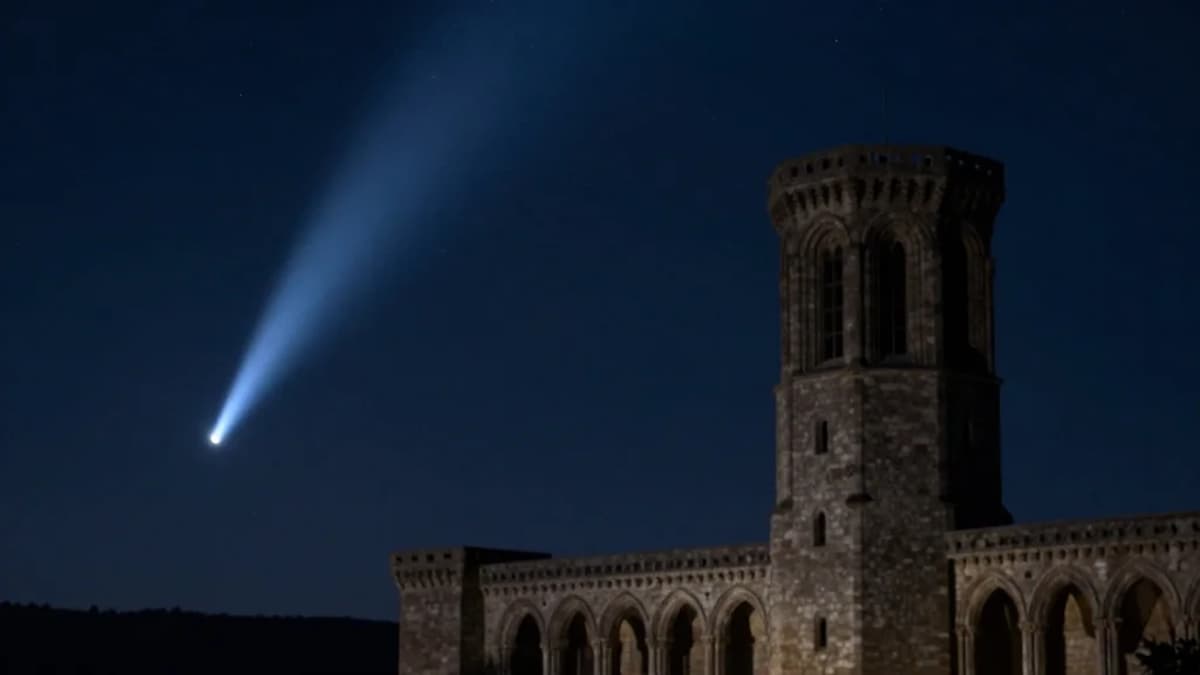
Halley's Comet Wrongly Named: 11th-Century English Monk Predates British Astronomer
•January 23, 2026
0
Why It Matters
Recognizing Eilmer’s observations reshapes the historical narrative of cometary science and challenges the attribution of discovery that underpins a globally recognized astronomical name.
Key Takeaways
- •Eilmer linked comet sightings in 989 and 1066.
- •Halley's periodicity identified centuries later by Edmond Halley.
- •Study published in “Dorestad and Everything After.”
- •Researchers call for renaming Halley's Comet.
- •Findings highlight medieval chronicles as astronomical sources.
Pulse Analysis
The new study bridges a gap between medieval chronicling and modern astrophysics, showing that Eilmer of Malmesbury, a 11th‑century English monk, noted the same celestial visitor that Edmond Halley would later formalize as a periodic comet. By cross‑referencing William of Malmesbury’s accounts with Chinese astronomical records, the researchers demonstrated that the comet’s 1066 appearance was the second sighting after an earlier 989 event, effectively establishing an early recognition of its recurrence.
Beyond the historical correction, the research sparks a debate about scientific naming conventions. Halley's name has become synonymous with periodic comets, yet the evidence suggests that the phenomenon was already documented in Western Europe long before Halley's 18th‑century calculations. Renaming the comet could acknowledge the contributions of medieval observers and promote a more inclusive narrative that reflects the collaborative nature of knowledge across centuries and cultures.
The implications extend to the field of archaeoastronomy, where scholars increasingly turn to ancient texts, art, and artifacts to reconstruct celestial events. This case illustrates how interdisciplinary partnerships—combining historiography, astronomy, and data science—can uncover overlooked data points that refine our understanding of cosmic cycles. Future research may revisit other medieval records for hidden observations, potentially revising timelines for known astronomical phenomena and enriching the cultural context of scientific discovery.
Halley's Comet wrongly named: 11th-century English monk predates British astronomer
0
Comments
Want to join the conversation?
Loading comments...