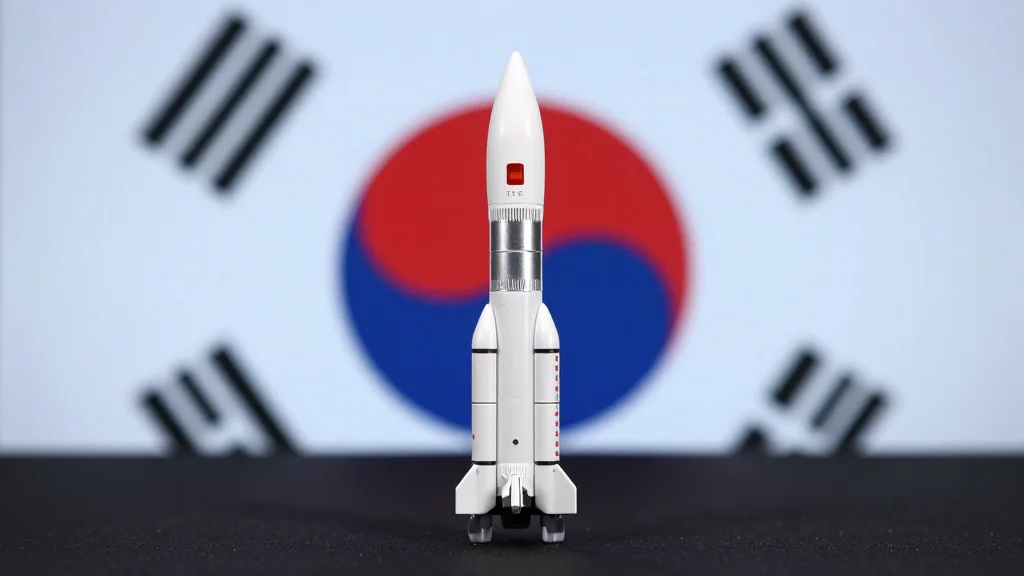
Hanwha Group Launches ‘Korean SpaceX’ Drive, Targets 8% Stake in KAI

Companies Mentioned
Why It Matters
Hanwha’s entry into the space sector signals the first major South Korean conglomerate to attempt a vertically integrated launch‑to‑service model, potentially reshaping the regional supply chain for satellites and rockets. By leveraging its defense manufacturing expertise, Hanwha could accelerate technology transfer, reduce launch costs for domestic satellite operators, and create a new export avenue for Korean aerospace products. The strategy also carries geopolitical weight. A home‑grown launch capability reduces South Korea’s dependence on U.S. and Chinese launch services, giving the government more flexibility in satellite‑based intelligence, communications and navigation. If successful, Hanwha could become a catalyst for a broader Korean space ecosystem, encouraging startups, universities and state agencies to collaborate under a unified industrial umbrella.
Key Takeaways
- •Hanwha aims to raise its stake in Korea Aerospace Industries to 8% by year‑end, up from 5.09% held today.
- •The “Korean SpaceX” plan assigns launch‑vehicle development to Hanwha Aerospace and satellite services to Hanwha Systems.
- •Hanwha Ocean’s acquisition of a Philadelphia shipyard and a U.S. Navy logistics ship contract expand its aerospace manufacturing base.
- •A bid on Canada’s $43.8 billion submarine project could unlock a joint venture to produce K9 howitzers locally.
- •Target launch‑vehicle feasibility study for a reusable rocket is scheduled for 2027, with a satellite‑bus JV with KAI planned for late 2026.
Pulse Analysis
Hanwha’s pivot reflects a broader trend of defense conglomerates leveraging their high‑precision engineering capabilities to enter the commercial space arena. The company’s deep pockets and existing supply‑chain relationships give it a distinct advantage over pure‑play startups that must build credibility from scratch. By anchoring its launch ambitions to KAI, Hanwha secures access to aerospace talent, certification pathways and a legacy of aircraft production that can be repurposed for rocket engine development.
However, the roadmap is ambitious. Developing a reusable launch vehicle by 2027 requires mastering rapid‑turnaround manufacturing, high‑temperature materials and autonomous flight‑control software—areas where SpaceX and Blue Origin have spent a decade of iterative testing. Hanwha’s reliance on defense‑grade processes may accelerate hardware reliability but could also introduce bureaucratic inertia. The success of its satellite‑data services will hinge on securing a critical mass of commercial customers, a challenge in a market dominated by established players like KSAT and global operators such as Planet.
If Hanwha can align its defense contracts, joint‑venture manufacturing capacity and space‑technology R&D, it could create a self‑sustaining Korean space ecosystem that reduces import reliance and opens new export streams. The move also pressures regional rivals to reconsider their own integration strategies, potentially sparking a wave of consolidation across Asia’s nascent commercial space sector.
Hanwha Group Launches ‘Korean SpaceX’ Drive, Targets 8% Stake in KAI
Comments
Want to join the conversation?
Loading comments...