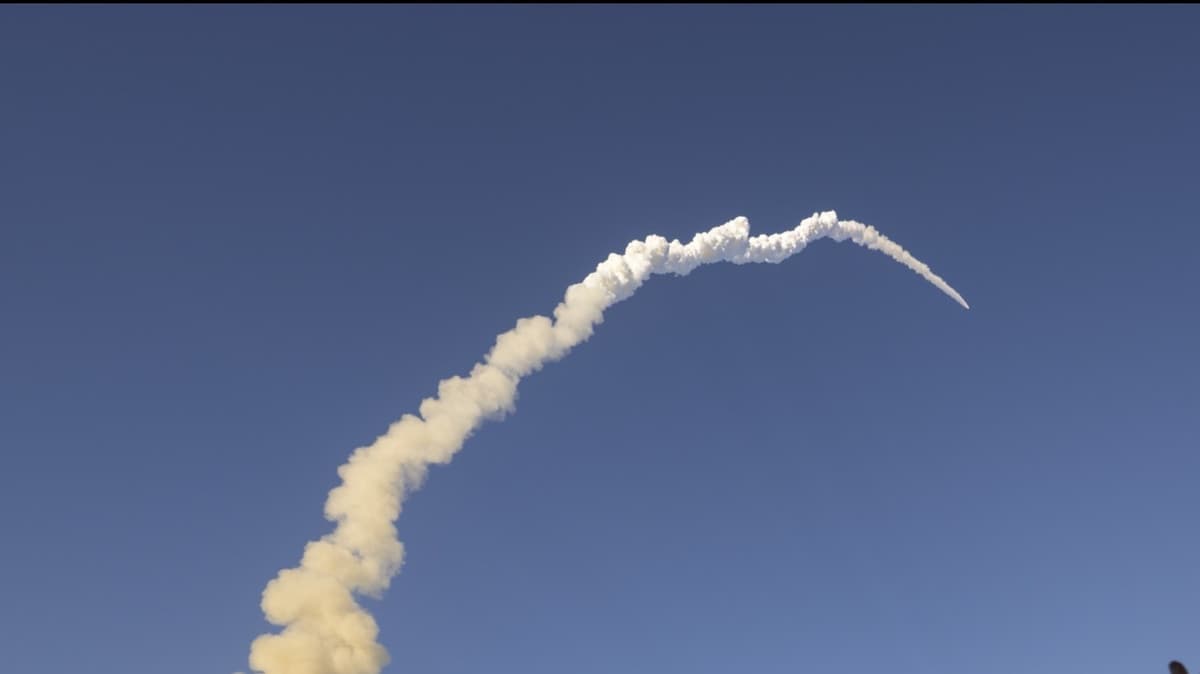
Here's Why Rocket Launch Trajectories Are Curved Like Bananas

Why It Matters
Understanding gravity turns shows how agencies cut launch costs and boost payload capacity, a decisive advantage in the expanding commercial space market.
Key Takeaways
- •Gravity turn follows a brachistochrone curve for fuel efficiency.
- •Eastward turn exploits ~1,000 mph Earth rotation boost.
- •Equatorial launch sites maximize rotational speed advantage.
- •Suborbital flights lack gravity turn, limiting payload to orbit.
Pulse Analysis
The gravity turn is rooted in the brachistochrone problem, the classic physics challenge of finding the fastest path between two points under gravity. By allowing a rocket to pitch gradually after liftoff, the vehicle converts gravitational pull into forward acceleration, reducing the thrust needed from its engines. This curved trajectory minimizes fuel consumption, which directly translates into higher payload‑to‑fuel ratios—a critical metric for both government and commercial launch providers.
Operationally, the turn is executed toward the east to capture Earth’s rotational velocity, roughly 1,000 mph at the equator. Launch complexes positioned close to the equator—Cape Canaveral in Florida, SpaceX’s Starbase in Texas, and China’s Xichang Satellite Launch Center—extract the maximum boost, shaving seconds off the ascent and saving millions of dollars in propellant costs. The precise timing of the pitch‑over maneuver is calibrated by flight dynamics teams to balance aerodynamic stresses with optimal orbital insertion, ensuring the vehicle reaches the required downrange speed without excessive fuel burn.
For the broader industry, mastering gravity turns accelerates the economics of space. Lower launch costs enable larger constellations of communication satellites, more frequent scientific missions, and the viability of ambitious projects like lunar habitats or Mars cargo flights. As reusable launch vehicles become standard, the efficiency gains from an optimal gravity turn compound, allowing operators to recycle hardware faster and allocate more budget to payload development, driving innovation across the space sector.
Here's Why Rocket Launch Trajectories Are Curved Like Bananas
Comments
Want to join the conversation?
Loading comments...