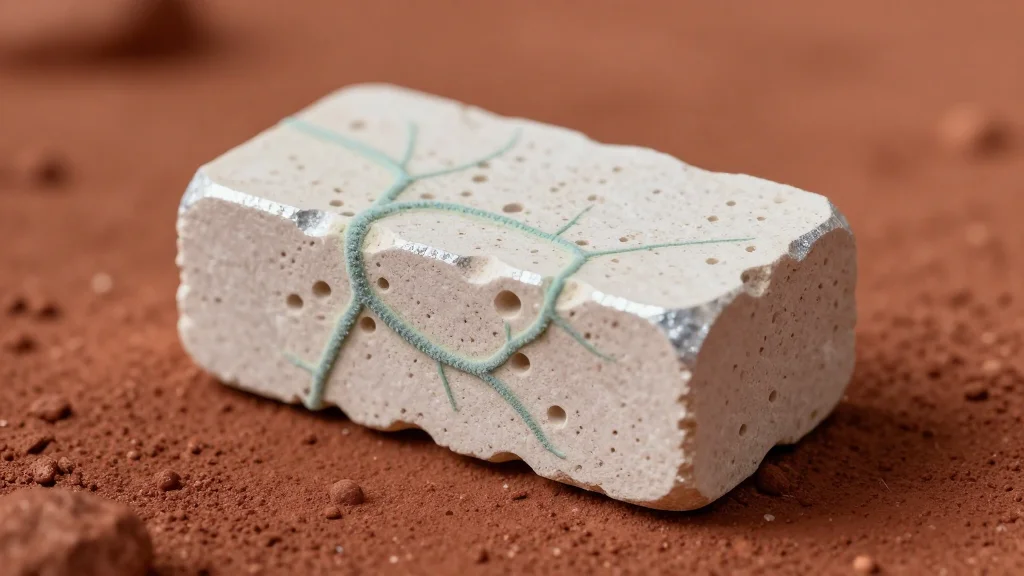
How Brick-Building Bacteria React to Toxic Chemical in Martian Soil
Companies Mentioned
Why It Matters
The findings provide a low‑carbon, on‑site building technique that could cut launch mass and costs for Mars habitats, while also offering greener cement alternatives for Earth applications.
Key Takeaways
- •Perchlorate stresses bacteria but enhances brick strength
- •Guar gum and nickel chloride essential for effective biocementation
- •Native Bengaluru strain forms ECM microbridges linking cells to precipitates
- •Stronger bricks could enable in‑situ Mars construction
- •Approach offers carbon‑light alternative to traditional cement
Pulse Analysis
Biocementation, the process of using microbes to precipitate calcium carbonate, has emerged as a promising alternative to conventional cement. On Earth, the technique reduces CO₂ emissions, but its true potential lies in extraterrestrial environments where transporting building materials is prohibitively expensive. Martian soil contains perchlorate, a compound known to inhibit microbial activity, raising doubts about the viability of bio‑fabricated structures on the Red Planet. Recent laboratory simulations, however, reveal that certain bacterial strains can not only survive perchlorate exposure but also leverage the stress response to improve material cohesion.
The IISc team isolated a hardy Sporosarcina pasteurii variant from Bengaluru soils and observed its behavior in synthetic Martian regolith infused with perchlorate, urea, calcium sources, guar gum, and nickel chloride. Under stress, the bacteria altered morphology, secreted more extracellular matrix, and produced calcium‑chloride‑like precipitates. Electron microscopy showed ECM microbridges acting as nanoscale scaffolds that link cells to mineral deposits, effectively reinforcing the brick matrix. This synergistic interaction yields bricks with higher compressive strength than those formed without perchlorate, suggesting that the chemical’s toxicity can be turned into a functional advantage when the right additives are present.
The broader implication is a step toward true in‑situ resource utilization (ISRU) for Mars colonization. Strong, lightweight bio‑bricks could serve as building blocks for habitats, landing pads, and roadways, dramatically reducing payload requirements. Moreover, the approach aligns with sustainable construction goals on Earth, offering a carbon‑light pathway to replace Portland cement. Future work will test the strain under Martian atmospheric pressures and high CO₂ levels, paving the way for scalable, off‑world manufacturing that bridges planetary science and green engineering.
How brick-building bacteria react to toxic chemical in Martian soil
Comments
Want to join the conversation?
Loading comments...