Companies Mentioned

Why It Matters
Understanding rapid thermal erosion reshapes models of near‑Sun small‑body populations and informs hazard assessments for spacecraft and planetary defense.
Key Takeaways
- •Dark asteroids disintegrate rapidly within 0.1 AU of Sun.
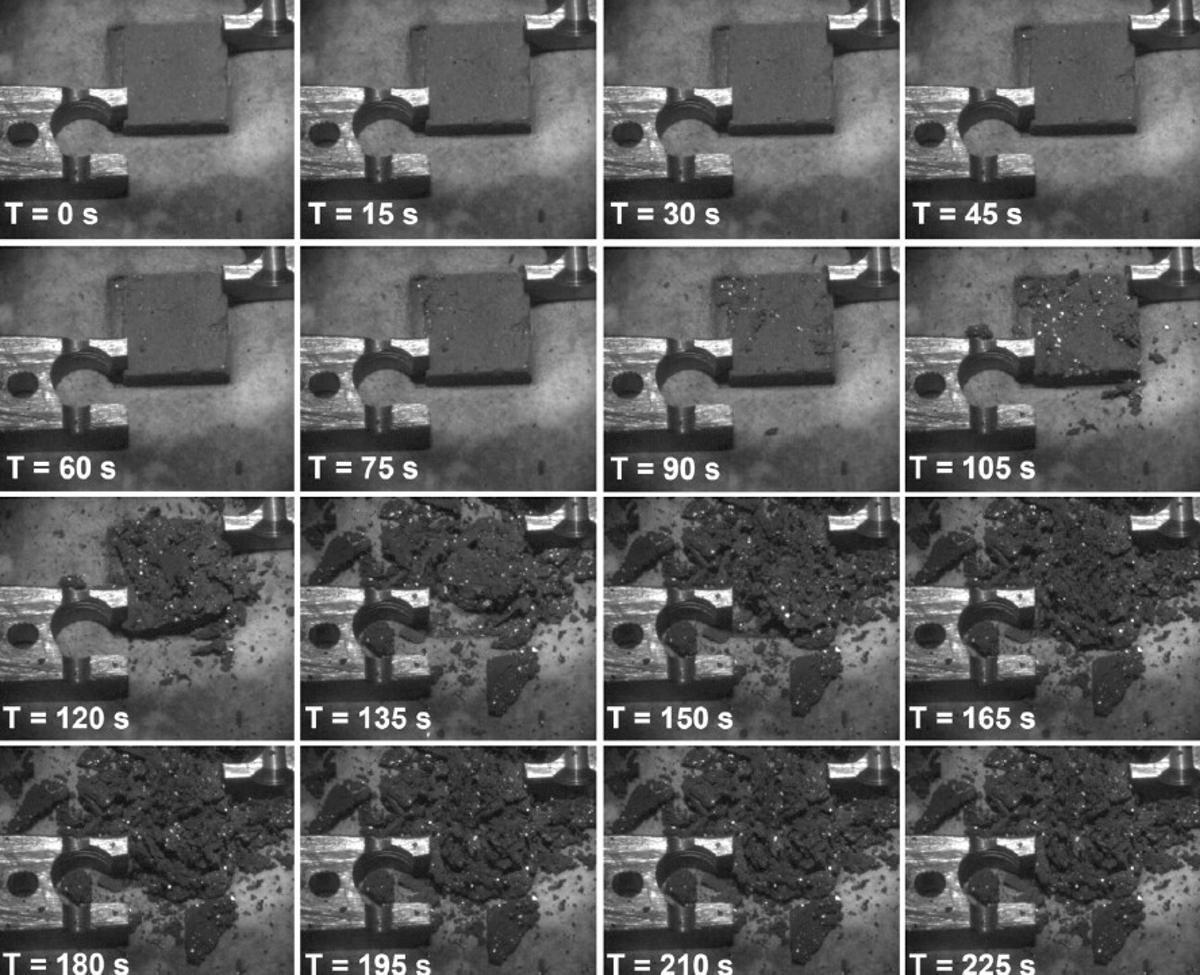
- •SHINeS experiments reproduced explosive fragmentation of carbonaceous chondrite simulants.
- •Thermal erosion explains scarcity of low‑albedo asteroids near Sun.
- •322P/SOHO 1 brightening likely dust ejection from thermal breakup.
- •Phaethon’s slower mass loss suggests prior baking and gravitational retention.
Pulse Analysis
The inner solar system has long puzzled astronomers with a pronounced deficit of dark, low‑albedo asteroids close to the Sun. Early explanations ranged from tidal disruption to slow sublimation, but none accounted for the sharp drop‑off observed inside Mercury’s orbit. The recent laboratory work at Luleå’s SHINeS chamber provides the missing piece: when subjected to solar‑like vacuum and intense radiation, carbonaceous chondrite analogs undergo rapid heating, explosive dust ejection, and subsurface degradation, effectively vaporizing the body in seconds at 0.1 AU. This experimental validation cements the concept of instantaneous thermally‑driven erosion as the dominant loss process for dark near‑Sun objects.
In the SHINeS tests, researchers recorded three sequential phases: an initial dust‑release heating stage, a violent millimeter‑sized fragment ejection, and a deeper structural breakdown as heat penetrated the material. Samples survived only a few hours at 0.22 AU but disintegrated almost instantly at 0.1 AU, highlighting the steep dependence on solar flux and surface albedo. The black surfaces of low‑albedo asteroids absorb more energy, accelerating the erosion cascade. Scaling these results to real asteroids suggests that even modestly sized bodies can be pulverized during a single close perihelion pass, explaining why dark asteroids are under‑represented in near‑Sun surveys.
The implications extend beyond academic curiosity. Objects like 322P/SOHO 1, which brighten without a classic comet tail, can now be interpreted as dark asteroids shedding dust through thermal explosions, offering a real‑time laboratory of Sun‑induced destruction. Phaethon’s comparatively slower mass loss hints at a hardened, previously baked surface that resists immediate fragmentation, yet still contributes to the Geminid meteor stream. For mission planners, recognizing the rapid degradation risk near the Sun is crucial for spacecraft design and trajectory selection. Ultimately, this research refines our understanding of solar system evolution, asteroid population dynamics, and the hazards posed by bodies skimming the Sun’s lethal laser.
How Dark Asteroids Die
0
Comments
Want to join the conversation?
Loading comments...