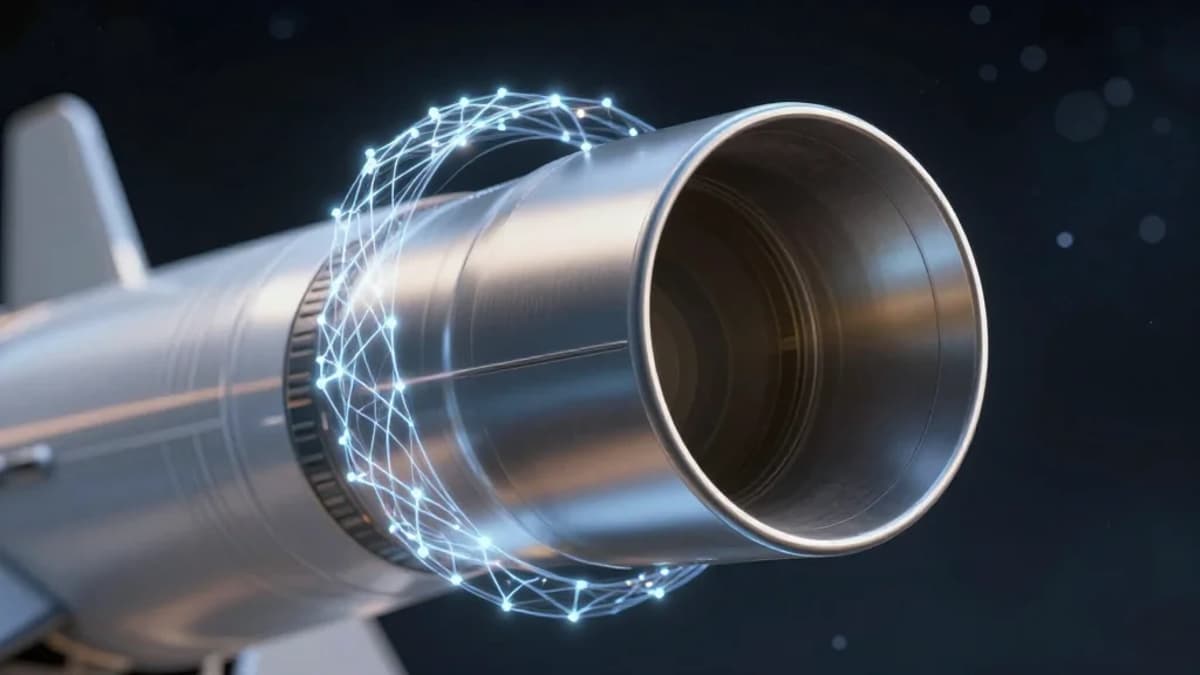
How Far Will Elon Musk Take the ‘Everything’ Business as SpaceX and xAI Merge?
•February 6, 2026
0

Why It Matters
The merger could concentrate critical AI and space capabilities under one umbrella, reshaping competitive landscapes and influencing capital allocation across high‑tech sectors. It signals a shift toward ultra‑integrated conglomerates that may dictate the pace of future technological breakthroughs.
Key Takeaways
- •Musk merges SpaceX with xAI, forming new conglomerate
- •Combined resources aim to accelerate AI and space innovation
- •Musk's $800B net worth rivals historic GE peak
- •Potential blueprint may inspire other tech founders to consolidate
- •Industry watches impact on AI chip competition and funding
Pulse Analysis
The integration of SpaceX and xAI marks a strategic convergence of two of Musk’s most ambitious ventures. By uniting aerospace engineering with cutting‑edge artificial intelligence, the new entity can leverage shared data pipelines, talent pools, and capital to push the boundaries of satellite‑based AI services and autonomous spacecraft. This mirrors historic conglomerate models, yet it is uniquely powered by Musk’s personal wealth and brand, positioning the combined firm to outpace rivals that operate in siloed domains.
From an industry perspective, the merger intensifies the race for AI‑optimized hardware. Companies like Nvidia, Intel, and emerging chip makers are already scrambling to supply the compute power needed for real‑time space analytics and autonomous vehicle systems. With Musk’s dual focus on AI and propulsion, the merged firm could dictate new performance standards, prompting a wave of investment into power‑efficient chips and specialized processors. Moreover, the consolidation may attract fresh funding streams, as evidenced by recent multi‑billion dollar rounds for Waymo, ElevenLabs, and Positron, underscoring investor appetite for integrated tech stacks.
Looking ahead, the SpaceX‑xAI alliance could serve as a blueprint for other tech titans. If successful, it may encourage founders like Sam Altman to pursue similar cross‑sector mergers, potentially reshaping regulatory scrutiny and antitrust frameworks. The broader market will watch how this mega‑conglomerate balances rapid innovation with governance, as its actions could set precedents for capital allocation, talent mobility, and the future architecture of the tech ecosystem.
How far will Elon Musk take the ‘everything’ business as SpaceX and xAI merge?
0
Comments
Want to join the conversation?
Loading comments...