How Japanese Scientists Sent a Real-Life Transformer to the Moon
Companies Mentioned
Why It Matters
Miniaturized, autonomous lunar rovers could dramatically lower payload costs and reach terrain inaccessible to traditional rovers, reshaping commercial and scientific moon missions. Demonstrating reliable transformation and data relay validates a new class of low‑mass exploration assets.
Key Takeaways
- •SORA‑Q transformed from sphere to two‑wheeled rover on Moon
- •Mission demonstrated autonomous navigation and wireless data relay via LEV‑1
- •Collaboration included JAXA, Sony, Doshisha University, and Takara‑TOMY
- •Miniature rovers aim to access lunar crevices unreachable by larger rovers
- •Communications stopped after ~100 minutes, short of the planned 130‑minute lifespan
Pulse Analysis
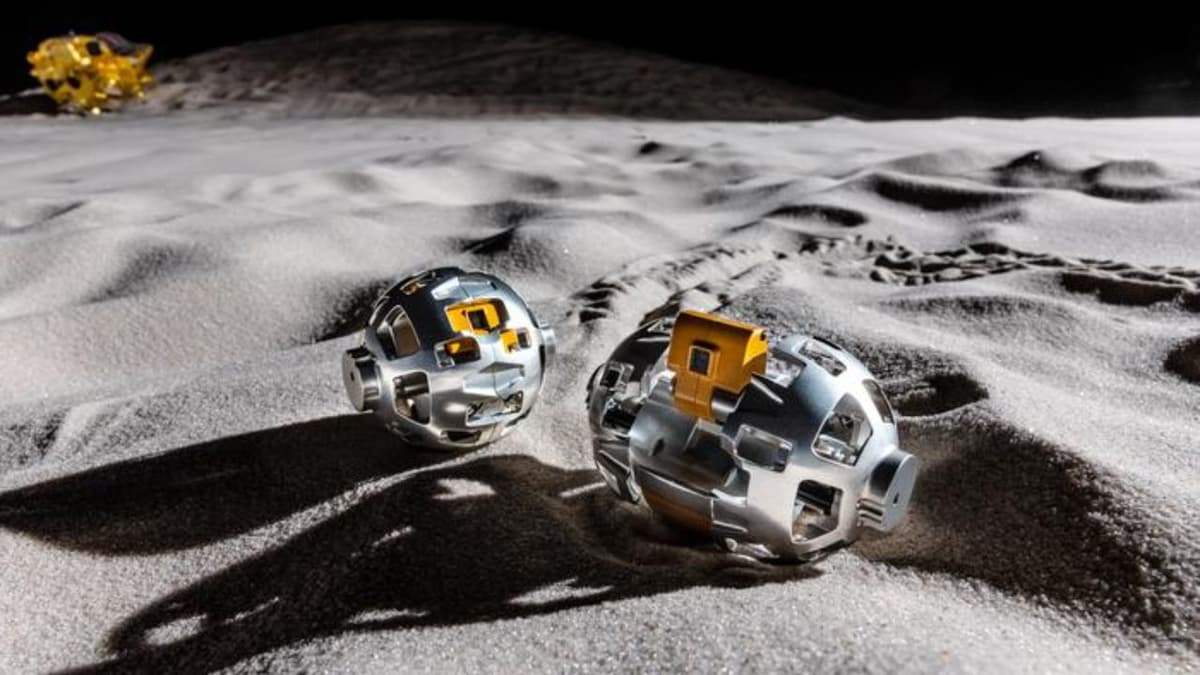
The successful deployment of SORA‑Q marks a turning point for lunar exploration, showcasing how ultra‑compact robots can operate on another world. Weighing only eight centimeters across, the sphere‑to‑rover device unfolded on the surface of Mare Nectaris, captured high‑resolution color imagery, and transmitted the data back to Earth via the hopping LEV‑1 unit. By integrating a camera, stabilizing tail and wheel‑forming hemispheres, SORA‑Q proved that sophisticated mobility can be achieved without the mass penalties of traditional rovers, opening the door for payload‑light missions that fit within smaller launch windows.
The engineering feat was a cross‑industry collaboration that leveraged Sony’s sensor expertise and Takara‑TOMY’s toy‑design heritage, particularly its experience with transforming figures. This partnership illustrates how consumer‑grade mechanisms can be repurposed for space‑grade autonomy, delivering cost‑effective solutions for navigation and obstacle avoidance. Autonomous path‑planning using onboard visual processing allowed SORA‑Q to steer around craters and pits without ground‑control input, a critical capability for future missions where communication delays are prohibitive. The brief operational window—approximately 100 minutes—highlights the challenges of power management and inter‑robot reliability in the harsh lunar environment.
Looking ahead, the SORA‑Q experiment paves the way for swarms of miniature explorers that could collectively map and sample hard‑to‑reach lunar features, such as permanently shadowed regions rich in volatiles. By reducing the mass and cost per unit, agencies and commercial players can field multiple rovers on a single lander, increasing redundancy and scientific return. The lessons learned about transformation mechanisms, wireless relay, and autonomous navigation will inform the design of next‑generation lunar payloads, potentially accelerating the timeline for sustained human presence and resource utilization on the Moon.
How Japanese scientists sent a real-life Transformer to the moon
Comments
Want to join the conversation?
Loading comments...