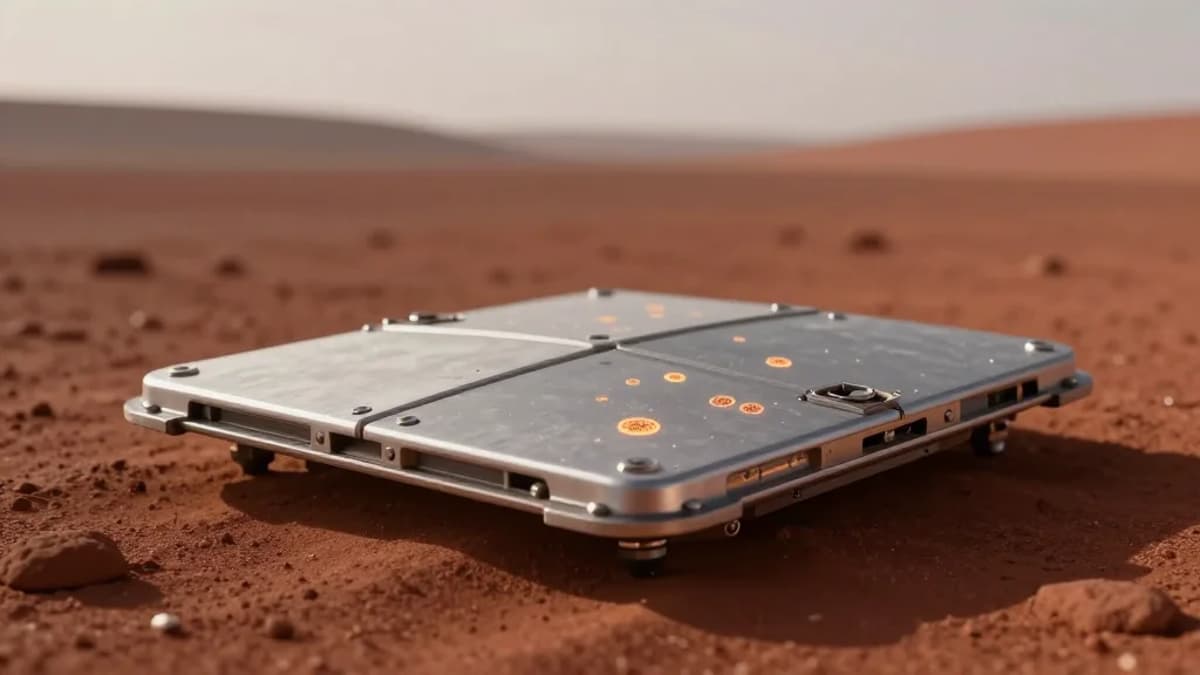
How Long Could Earth Microbes Live on Mars?
•February 25, 2026
0
Why It Matters
Understanding microbial survival timelines sharpens planetary‑protection strategies and boosts confidence that detected biosignatures will be native to Mars, not Earth contaminants.
Key Takeaways
- •MMS model estimates external sterilization in ~1 sol
- •Full spacecraft sterilization takes ~1 Mars year
- •Interior components may persist up to 25 years
- •Study analyzed 14 historic Mars landing sites
- •Forward contamination risk low but not zero
Pulse Analysis
Forward contamination has long haunted Mars exploration, prompting NASA’s Planetary Protection Office to enforce stringent sterilization standards. Early missions relied on crude heat‑kill and chemical wipes, yet uncertainty remained about how long hitchhiking microbes could survive once exposed to the harsh Martian environment. The new Mars Microbial Survival (MMS) model fills that gap by integrating solar‑UVC flux, vacuum‑induced desiccation, and temperature swings to predict bioburden reduction across both cruise and surface phases. By benchmarking against 14 previous landing sites, the model offers a data‑driven baseline for assessing contamination risk.
The MMS model reveals a rapid sterilization curve for outward‑facing spacecraft surfaces—approximately one sol under relentless UVC bombardment—while the entire vehicle requires about a Martian year for complete microbial death. Interior compartments, shielded from direct radiation, present a more nuanced picture: heated components may clear in roughly 100 sols, but cold, unheated niches could harbor viable organisms for up to 25 Martian years. These timelines reflect the synergistic effects of low pressure, toxic regolith, and extreme desiccation, which together act as natural biocides on the Red Planet.
For mission planners, these insights translate into actionable risk mitigation. Sample‑return campaigns can now factor in realistic decay periods when designing containment and sterilization protocols, reducing the likelihood of Earth microbes masquerading as indigenous life. Moreover, the model supports policy discussions around the acceptable bioburden thresholds for future crewed missions and in‑situ resource utilization. As Mars exploration intensifies, the MMS framework provides a scientific backbone for balancing scientific ambition with planetary‑protection responsibility.
How long could Earth microbes live on Mars?
0
Comments
Want to join the conversation?
Loading comments...