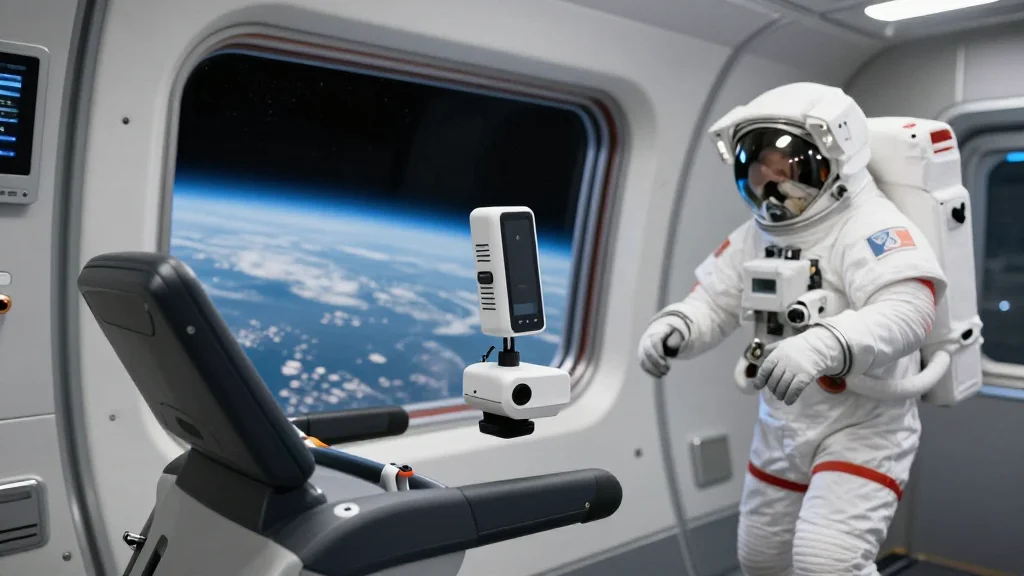
How Mobile Deep‑space Medical Systems Could Support Future Landings on the Moon and Mars
Companies Mentioned
Why It Matters
Without autonomous medical capabilities, health emergencies could jeopardize crew safety and mission objectives, inflating costs and threatening the continuity of deep‑space programs.
Key Takeaways
- •Deep‑space missions require autonomous medical clinics for diagnosis and treatment.
- •Cosmic radiation in lunar/Mars travel raises cancer and cardiovascular risks.
- •Communication delays of up to 20 minutes prevent real‑time Earth support.
- •Compact flywheel exercise devices deliver 400‑lb resistance in suitcase size.
- •Food cultivation and morale‑boosting meals aid crew health and cohesion.
Pulse Analysis
The push toward permanent lunar habitats and crewed Mars missions forces a paradigm shift in space medicine. Unlike low‑Earth‑orbit operations, deep‑space voyages expose astronauts to heightened cosmic radiation, prolonged microgravity, and isolation that can degrade musculoskeletal, cardiovascular, and immune systems. Traditional reliance on Earth‑based telemedicine becomes untenable when signal latency exceeds ten minutes, making real‑time diagnosis impossible. Consequently, agencies and commercial partners are investing in self‑contained medical platforms that combine point‑of‑care imaging, AI‑driven diagnostics, and modular treatment kits, ensuring crews can manage acute and chronic conditions without external assistance.
Parallel advances in life‑support technologies are reinforcing medical autonomy. Compact flywheel resistance devices now generate up to 400 pounds of force while fitting in a carry‑on footprint, offering essential counter‑measures against bone and muscle loss in partial‑gravity environments. Simultaneously, closed‑loop food production systems are being engineered to grow nutrient‑dense crops on the Moon and Mars, providing both dietary variety and psychological comfort. Integrated sensor networks monitor vital signs, radiation exposure, and fluid shifts, feeding data into onboard decision‑support algorithms that guide crew members through treatment protocols, reducing reliance on ground‑based expertise.
The broader implications extend beyond government programs. Commercial spaceflight companies see autonomous medical suites as a market differentiator, promising safer long‑duration missions for tourists and private researchers. Regulatory bodies are beginning to draft standards for onboard medical equipment, while insurance models adapt to account for reduced evacuation options. As the industry converges on robust, portable health‑care solutions, the line between engineering feasibility and human survivability blurs, positioning medical self‑sufficiency as a cornerstone of the next era of space exploration.
How mobile deep‑space medical systems could support future landings on the moon and Mars
Comments
Want to join the conversation?
Loading comments...