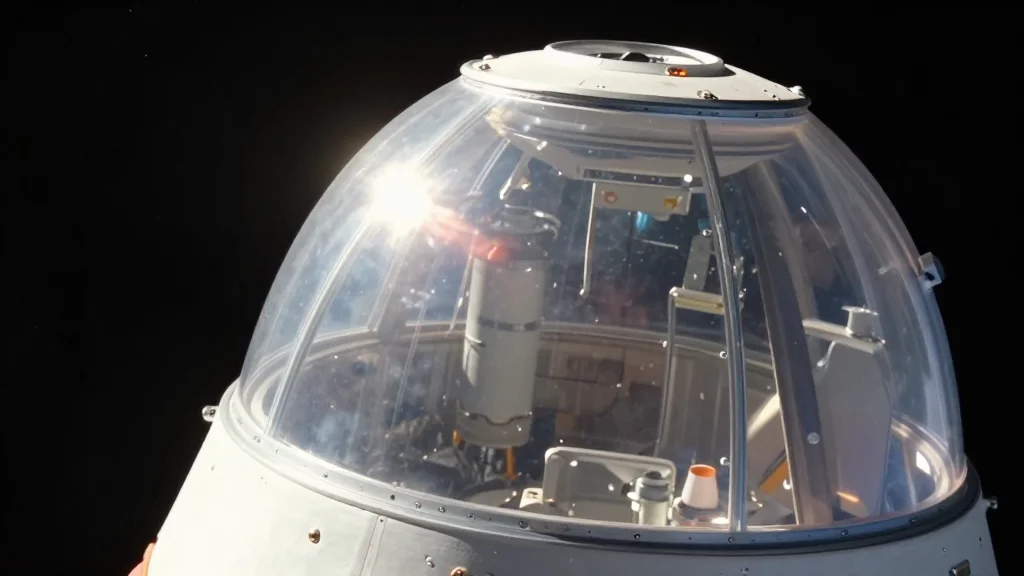
How the Artemis Astronauts Are Protected From Dangerous Space Radiation
Why It Matters
Radiation protection is critical to crew health and mission viability, setting a precedent for future deep‑space voyages beyond low‑Earth orbit.
Key Takeaways
- •Orion uses hydrogen‑rich materials like water for radiation shielding
- •Storm shelter reconfigures cabin mass to shield crew during solar storms
- •AI model forecasts solar eruptions 24 hours ahead using SDO/SOHO data
- •HERA system and personal monitors provide real‑time radiation alerts aboard
Pulse Analysis
The Artemis 2 mission launches at the peak of the Sun’s 11‑year cycle, a period marked by frequent coronal mass ejections and powerful flares. Unlike the Apollo era, today’s crew will spend ten days outside Earth’s magnetosphere, exposing them to high‑energy particles that can damage DNA and increase cancer risk. Understanding this environment is essential for commercial and governmental stakeholders planning crewed missions to the Moon, Mars, and beyond, as radiation remains the most formidable health hazard in deep space.
NASA’s mitigation blueprint blends passive and active defenses. Orion’s structure leverages hydrogen‑dense substances—water tanks, food supplies, and plastic panels—to absorb ionizing particles without adding prohibitive mass. In a solar storm, astronauts can quickly transform the cabin into a “storm shelter” by stacking equipment and stowage bags along the walls, effectively increasing shielding where radiation hotspots appear. Onboard, the Hybrid Electronic Radiation Assessor (HERA) continuously samples particle flux, while personal dosimeters alert each astronaut to rising levels, ensuring immediate situational awareness.
Beyond the spacecraft, NASA relies on a global network of observatories and a cutting‑edge AI forecasting system. Data streams from SDO, SOHO, GOES‑R, and even the Perseverance rover on Mars feed a machine‑learning model that predicts flare onset with a 24‑hour horizon. Coupled with physics‑based supercomputer simulations, this hybrid approach grants mission control valuable lead time to initiate shelter protocols. The success of this integrated strategy not only safeguards Artemis 2 but also establishes a scalable framework for protecting crews on longer voyages, reinforcing the United States’ leadership in human space exploration.
How the Artemis astronauts are protected from dangerous space radiation
Comments
Want to join the conversation?
Loading comments...