How the Evidence for Alien Life on K2-18 B Evaporated
•January 7, 2026
0
Why It Matters
The correction highlights the difficulty of confirming extraterrestrial biosignatures and stresses rigorous statistical methods for future exoplanet habitability assessments.
Key Takeaways
- •Original DMS claim based on limited JWST data
- •New analysis fits 90+ hydrocarbon models to spectra
- •Propyne provides better spectral match than dimethyl sulfide
- •Bayesian model comparison trap led to premature biosignature claim
- •ELT observations could definitively identify K2‑18 b gases
Pulse Analysis
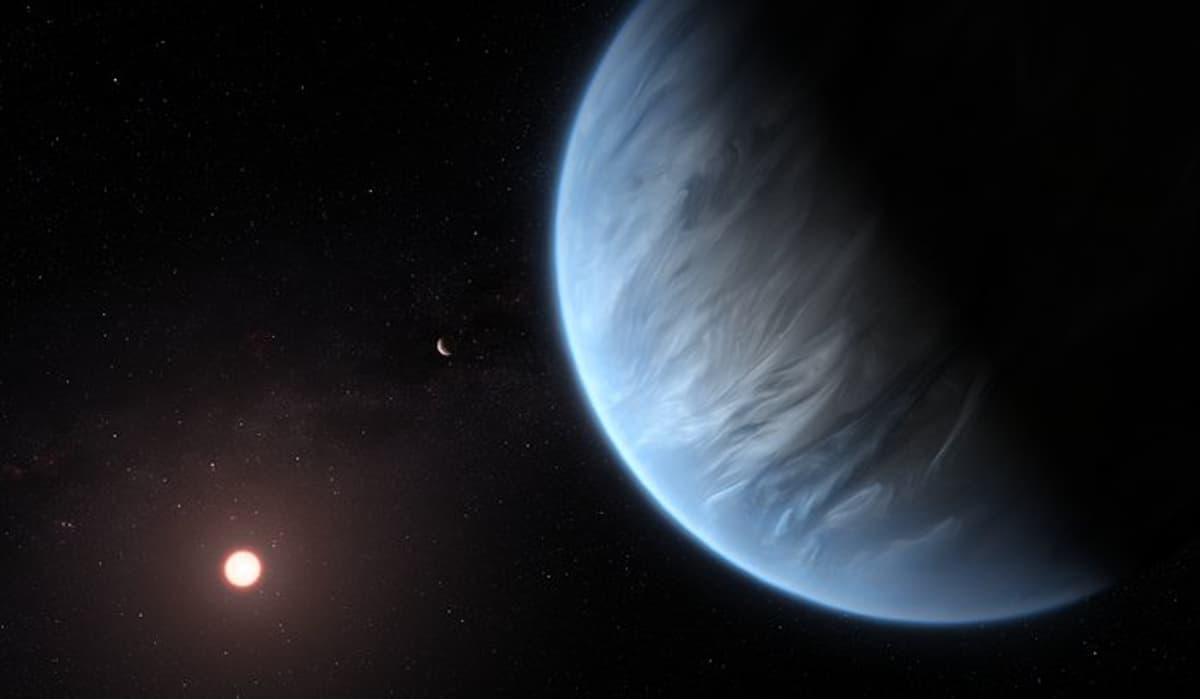
The hunt for life beyond Earth has been propelled by the James Webb Space Telescope’s ability to dissect the thin atmospheres of distant worlds. K2‑18 b, a 2.6‑Earth‑radius sub‑Neptune 124 light‑years away, became a headline magnet when early JWST data hinted at dimethyl sulfide, a molecule on Earth almost exclusively produced by marine plankton. That initial detection relied on near‑infrared spectra that were noisy and limited in wavelength coverage, making it vulnerable to misinterpretation. As more comprehensive mid‑infrared observations from JWST’s MIRI instrument emerged, the scientific community recognized the need to reassess the claim with a broader spectral baseline.
Statistical rigor is essential when extracting chemical fingerprints from exoplanet spectra. The original study applied a binary Bayesian model comparison, pitting a DMS‑inclusive model against a simple methane‑CO₂ scenario, and declared the former a better fit. However, Welbanks et al. demonstrated that this approach ignored a vast landscape of plausible alternatives. By testing over ninety hydrocarbon configurations, they showed that many, particularly propyne, reproduced the observed signal more convincingly. This illustrates the “Bayesian trap” where limited model sets can produce false positives, underscoring the importance of exhaustive model libraries and robust evidence thresholds in biosignature research.
Looking ahead, the Extremely Large Telescope (ELT) promises the resolution needed to break the current degeneracy. Its ground‑based adaptive optics and larger aperture will capture finer spectral details, allowing astronomers to discriminate between DMS, propyne, and other hydrocarbons with confidence. Whether the final verdict confirms a biological gas or a purely chemical signature, the episode reinforces the self‑correcting nature of science and tempers premature hype. As the field moves toward more precise instruments, rigorous statistical frameworks will be pivotal in turning tantalizing hints into credible evidence of life beyond our solar system.
How the Evidence for Alien Life on K2-18 b Evaporated
0
Comments
Want to join the conversation?
Loading comments...