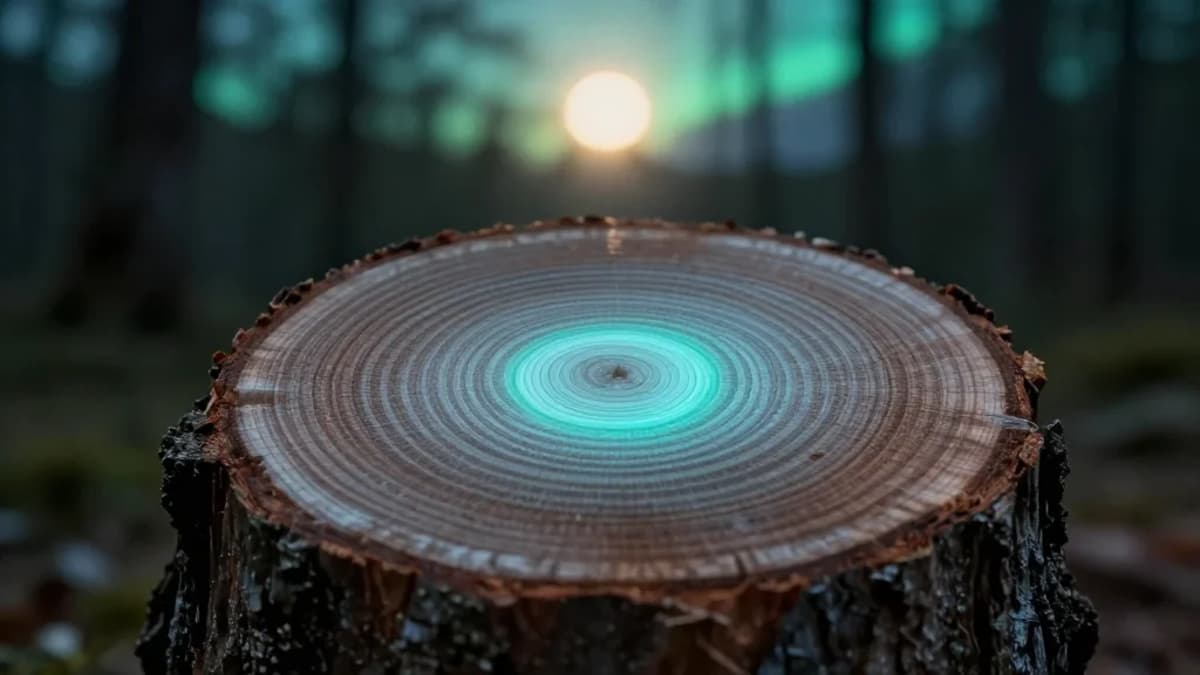
How Tree Rings Help Scientists Understand Disruptive Extreme Solar Storms
•January 29, 2026
0
Why It Matters
Understanding how trees mediate radiocarbon signals enables more accurate dating of ancient solar storms, which in turn refines forecasts of future extreme space‑weather impacts on critical infrastructure.
Key Takeaways
- •Tree species store carbon differently, affecting radiocarbon spikes.
- •Delayed carbon allocation blurs annual ¹⁴C signal timing.
- •Accurate storm dating improves space‑weather risk models.
- •Findings extend radiocarbon dating precision for archaeology.
- •Multi‑species analysis refines global solar storm reconstructions.
Pulse Analysis
Tree rings have long served as natural archives of atmospheric radiocarbon, especially the sharp ¹⁴C spikes generated when high‑energy solar particles strike Earth’s atmosphere during Miyake events. While these spikes provide a unique timestamp for extreme solar storms, the assumption that every tree records the signal identically has proven overly simplistic. Recent research highlights that the biological pathways converting atmospheric CO₂ into wood differ across species, introducing subtle delays and amplitude variations that can obscure the exact year of a storm.
The study, led by Amy Hessl and colleagues, dissects the carbon dynamics of several tree types, showing that storage pools—ranging from short‑term carbohydrate reserves to long‑term structural carbon—affect when and how much ¹⁴C appears in a given ring. Species that allocate carbon to growth later in the season or retain it in sapwood for multiple years produce a smeared radiocarbon signature, whereas fast‑growing conifers capture a sharper peak. By calibrating these physiological factors, scientists can correct for species‑specific biases, yielding a more precise global chronology of past solar superstorms and enhancing the fidelity of radiocarbon dating across disciplines.
Beyond academic insight, the findings carry practical weight for modern society. A clearer picture of historic storm magnitude informs models that predict the frequency and severity of future solar events, helping utilities and satellite operators design more resilient systems. Moreover, the refined radiocarbon framework benefits archaeology and climate research, where exact dating is paramount. Integrating tree‑biology expertise with space‑weather science exemplifies the interdisciplinary approach needed to safeguard technology‑dependent economies against the next disruptive solar storm.
How tree rings help scientists understand disruptive extreme solar storms
0
Comments
Want to join the conversation?
Loading comments...