How Weather and Environment Affect Direct-to-Device Satellite Communications Operators and Services
Why It Matters
The analysis shows D2D is a critical backup layer for communications during disasters, but its effectiveness hinges on user‑side factors like sky view and battery health, influencing how operators prioritize service offerings.
Key Takeaways
- •Weather obstruction, not rain, dominates D2D link loss
- •Text/SOS survive harsh conditions; voice/video struggle
- •Open‑sky view and battery temperature are critical user constraints
- •Operator gateway diversity mitigates regional weather impacts
- •Service class dictates tolerance: narrowband messaging most resilient
Pulse Analysis
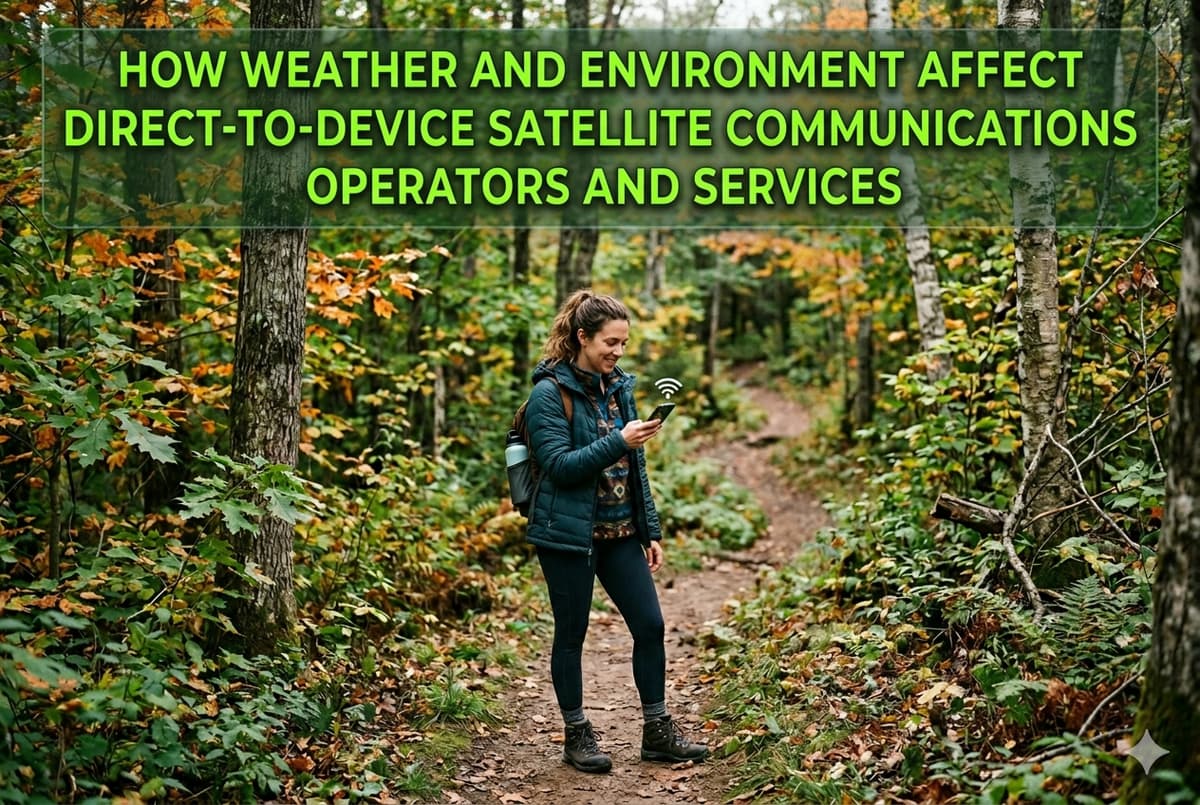
The surge of direct‑to‑device satellite connectivity reflects a broader shift toward non‑terrestrial networks that can bypass damaged terrestrial infrastructure. Early deployments, such as T‑Mobile’s beta service, demonstrated tangible value during the 2026 wildfires and hurricanes, connecting over a million users and handling hundreds of thousands of emergency messages. However, unlike traditional satellite broadband that worries primarily about rain‑fade, D2D links are far more sensitive to line‑of‑sight obstructions—trees, canyon walls, and indoor sheltering—because the handset antenna is tiny and the device must operate on limited battery power. This makes open‑sky visibility the single most decisive factor for successful transmission.
Technical nuances further shape performance. Most D2D constellations operate in L‑band or S‑band frequencies, which are inherently less susceptible to atmospheric attenuation, shifting the challenge to geometry, power budgeting, and gateway resilience. Operators that diversify ground stations and backhaul paths can reroute traffic when regional storms knock out local infrastructure, preserving service continuity. At the same time, space‑weather events—geomagnetic storms and solar flares—introduce timing jitter and orbital drag that can strain constellation management, especially for services demanding low latency such as voice or video. Battery chemistry also plays a role; extreme cold or heat can trigger throttling or shutdown, turning the handset itself into a limiting component.
From a market perspective, the service ladder is clear: narrowband emergency messaging thrives under adverse conditions, while broadband‑class voice and video remain vulnerable. Companies like Apple/Globalstar and Lynk have embraced low‑data, safety‑focused offerings, achieving higher environmental tolerance. In contrast, AST SpaceMobile’s ambition to deliver full‑mobile broadband directly to phones faces a harsher test, requiring denser constellations, robust gateway networks, and sophisticated link‑budget engineering. As operators refine spectrum use, expand gateway diversity, and integrate space‑weather forecasting, D2D will solidify its role as a resilient communications layer, especially for disaster‑prone regions and remote workforces.
How Weather and Environment Affect Direct-to-Device Satellite Communications Operators and Services
Comments
Want to join the conversation?
Loading comments...