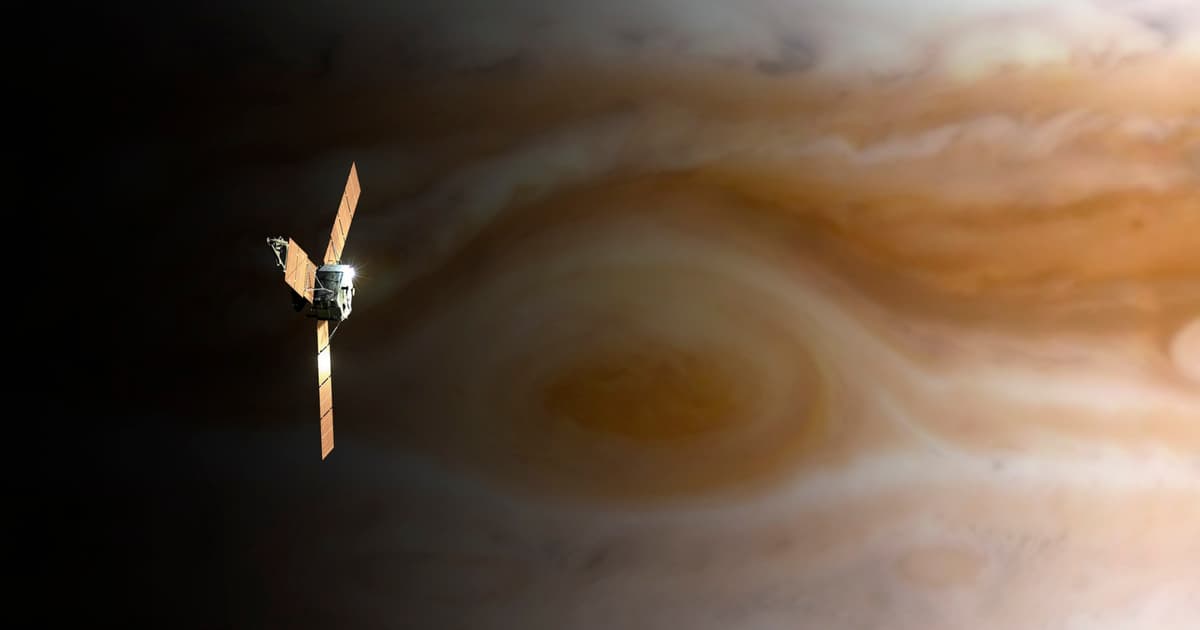
In 1995, NASA’s Galileo Spacecraft Sent a Probe Into Jupiter’s Atmosphere that Kept Transmitting for Just 58 Minutes as It Fell, Returning the First Direct Readings From Inside the Giant Planet Before Rising Heat and Pressure Silenced It for Good
Why It Matters
The Galileo probe delivered the first direct, in‑situ data on a gas‑giant atmosphere, reshaping theories of Jupiter’s formation and informing the design of future deep‑probe missions.
Key Takeaways
- •Galileo probe transmitted 58 minutes, 3.5 Mb data from Jupiter’s atmosphere
- •Entry speed 47 km/s generated 16,000 °C heat shield temperatures
- •Measurements revealed unexpectedly dry hot spot with low water content
- •Probe reached ~180 km depth, 23 bar pressure before signal loss
Pulse Analysis
The Galileo probe’s 1995 plunge marked a milestone in planetary exploration, representing the culmination of a six‑year journey that began with a Space Shuttle launch in 1989. Unlike flyby missions, Galileo carried a dedicated entry vehicle that entered Jupiter’s atmosphere without propulsion or guidance, relying on precise targeting and a robust heat shield. Its brief 58‑minute transmission window yielded 3.5 megabits of raw data, a modest volume by today’s standards but priceless because it came from inside a giant planet for the first time.
Technically, the probe faced unprecedented challenges. Entering at roughly 47 km/s—about 170,000 km/h—it endured deceleration forces exceeding 200 g and surface‑shield temperatures hotter than the Sun’s photosphere. The ablative heat shield shed half its mass within minutes, allowing the parachute to deploy once the vehicle slowed below sonic speed. Instruments then measured temperature, pressure, density, chemical composition, cloud layers and electrical activity, discovering a dry, cloud‑free hot spot with water abundances far below expectations. These findings forced scientists to revise atmospheric models and reconsider the distribution of volatiles in Jupiter’s deep layers.
The legacy of the Galileo probe extends beyond its immediate science return. It proved that a one‑way descent probe could survive the harshest entry environment, providing a template for future missions such as ESA’s JUICE and NASA’s upcoming Europa Clipper, which may carry similar atmospheric samplers for icy moons or even a second Jupiter probe. Understanding the probe’s performance and data gaps helps engineers design more resilient heat shields, higher‑bandwidth communication links, and multi‑point sampling strategies, keeping the quest to unravel giant‑planet formation alive.
In 1995, NASA’s Galileo spacecraft sent a probe into Jupiter’s atmosphere that kept transmitting for just 58 minutes as it fell, returning the first direct readings from inside the giant planet before rising heat and pressure silenced it for good
Comments
Want to join the conversation?
Loading comments...