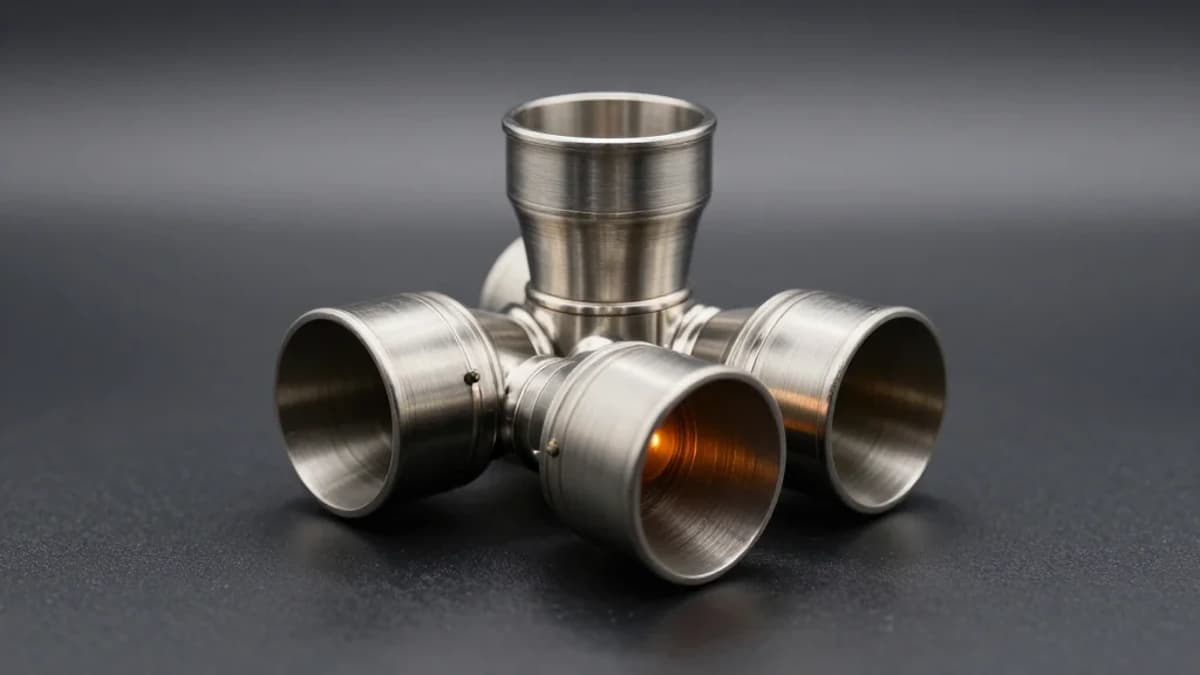
Indian Rocket Startup Agnikul Completes Static Fire Test of Three-Engine Cluster
•March 2, 2026
0
Why It Matters
Successful engine clustering validates Agnikul’s reusable launch architecture, positioning it for future commercial payload services in a rapidly growing Indian space market.
Key Takeaways
- •Three 3D‑printed engines fired for 40 seconds.
- •Electric‑motor pumps enable precise semi‑cryogenic control.
- •Test validates synchronization of six pumps and motors.
- •Funding of $500 million supports reusable orbital rocket development.
- •Agnikul trails Skyroot but aims for commercial missions.
Pulse Analysis
India’s private launch ecosystem is gaining momentum, and Agnikul’s latest static‑fire milestone underscores the sector’s technical ambition. By showcasing a three‑engine cluster, the startup signals readiness to transition from sub‑orbital hops to full‑scale orbital missions. The visual evidence of a 40‑second burn not only proves hardware reliability but also highlights the company’s commitment to indigenous manufacturing, a factor that differentiates Indian newcomers from legacy players like ISRO.
The cluster’s architecture hinges on fully 3D‑printed engine bodies and electric‑motor‑driven turbopumps, a combination that reduces part count and improves throttle precision. Synchronizing six pumps, six motors and six independent speed‑control loops demanded sophisticated software and rigorous calibration, especially given the semi‑cryogenic propellants involved. This approach promises higher thrust‑to‑weight ratios and finer thrust vector control, essential for the Agnibaan’s planned vertical‑landing first stage and rapid reusability cycles.
From a business perspective, the $500 million capital infusion equips Agnikul to scale production, refine its reusable launch system, and compete for commercial satellite contracts. While the firm currently trails Skyroot in development cadence, its demonstrated engine clustering could attract payload customers seeking cost‑effective, domestically sourced launch services. The absence of a firm launch date suggests a longer runway, but the technical progress and financial backing position Agnikul as a potential key player in India’s emerging launch market.
Indian rocket startup Agnikul completes static fire test of three-engine cluster
0
Comments
Want to join the conversation?
Loading comments...