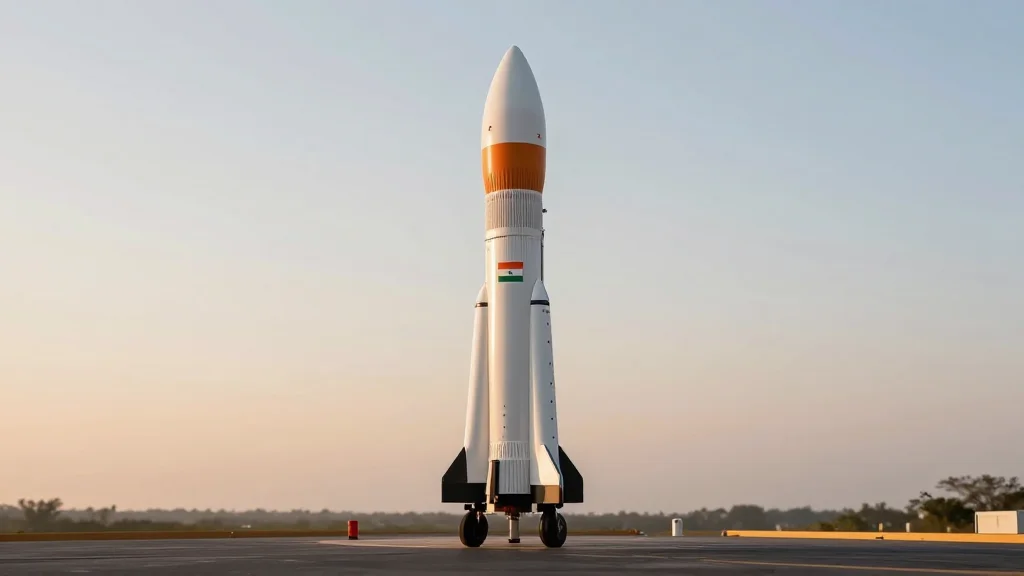
India’s Space Industry Is Blasting Off
Why It Matters
Achieving crewed flight will boost India’s strategic stature and open lucrative satellite‑launch services, challenging established providers. The surge also promises economic spill‑overs in high‑tech manufacturing and STEM talent development.
Key Takeaways
- •Gaganyaan aims for crewed launch by 2027, joining US, Russia, China
- •ISRO’s launch price under $5 million, attracting small‑sat customers
- •Private firms Skyroot and Agnikul secured $150 million in funding
- •India’s space exports projected to exceed $2 billion by 2030
- •Government incentives include 100% tax exemption for space startups
Pulse Analysis
India’s space ambition traces back to Jawaharlal Nehru’s 1960s vision of a self‑reliant nation, which birthed ISRO as a modest research agency. Decades of cost‑effective launch development, epitomized by the Polar Satellite Launch Vehicle, built a reputation for reliability. Under Narendra Modi, the government amplified funding, streamlined regulations, and launched the "Space India" initiative, while the global success of Elon Musk’s SpaceX demonstrated the commercial upside of low‑cost access to orbit. This policy mix has transformed a once‑government‑only program into a burgeoning ecosystem.
The imminent Gaganyaan mission, slated for 2027, will be India’s first crewed flight, positioning the country alongside the United States, Russia and China. ISRO’s ability to launch satellites for under $5 million has attracted dozens of small‑sat operators, especially from Europe and Southeast Asia. Simultaneously, private firms such as Skyroot Aerospace and Agnikul Cosmos have raised roughly $150 million combined, developing reusable launchers that could further slash costs. The domestic market now supports a full supply chain—from propulsion to avionics—while foreign investors view India as a gateway to the rapidly expanding low‑Earth‑orbit segment.
Strategically, a successful crewed program enhances India’s geopolitical clout and opens new revenue streams in human‑spaceflight tourism and deep‑space research. Commercially, the projected $2 billion export target by 2030 could rival traditional launch hubs in French Guiana and Kazakhstan. However, challenges remain: scaling up launch cadence, ensuring regulatory safety standards, and retaining skilled engineers amid global competition. If India navigates these hurdles, its space industry could become a cornerstone of the nation’s high‑tech economy and a decisive player in the next era of space exploration.
India’s space industry is blasting off
Comments
Want to join the conversation?
Loading comments...