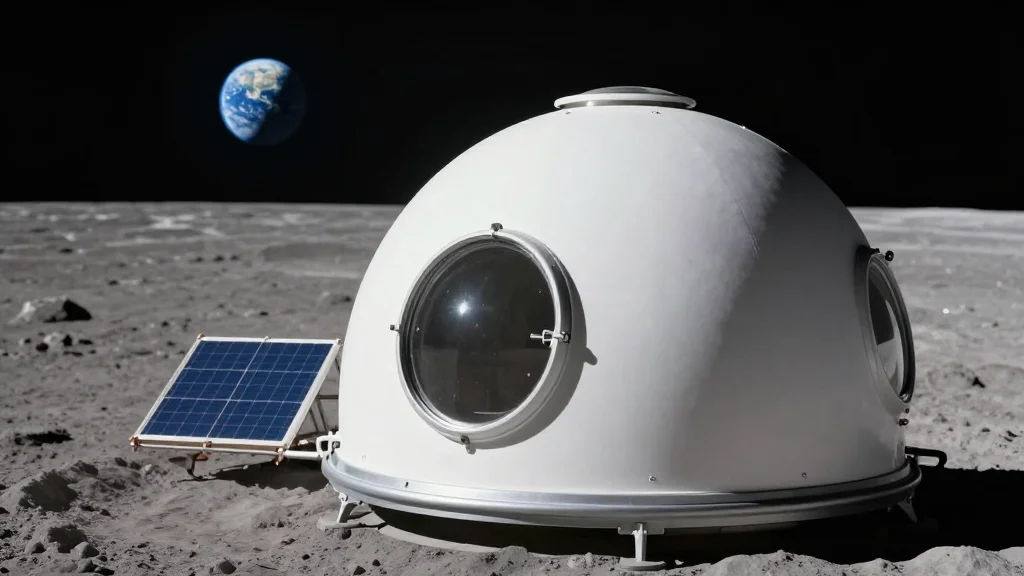
Industry Panel: Moon Base Essentials Include Transportation, Surface Power
Companies Mentioned

Why It Matters
Securing these core capabilities will determine whether the U.S. can maintain a continuous, economically viable presence on the Moon, shaping future commercial and scientific opportunities. The infrastructure roadmap also sets a benchmark for private‑sector participation in deep‑space logistics.
Key Takeaways
- •NASA targets lunar base by 2030 with monthly robotic launches
- •Reliable transport, constant communications, and surface power are core infrastructure
- •SpaceX and Blue Origin push for affordable, frequent lunar crew flights
- •Multiple power sources—nuclear, solar, fuel cells—will likely coexist on the Moon
Pulse Analysis
The United States’ renewed lunar agenda, formalized in NASA’s 2030 base strategy, reflects a shift from short‑term exploration to long‑term habitation. By committing to a cadence of almost monthly robotic deliveries, the agency intends to validate life‑support systems, in‑situ resource utilization, and habitat modules well before crewed missions commence. This aggressive timeline aligns with broader national objectives to cement American leadership in space, attract private investment, and lay groundwork for deeper ventures such as Mars. The policy also signals to Congress and industry that sustained funding and regulatory support will be essential for success.
Transportation emerges as the linchpin of the lunar enterprise. Industry leaders like SpaceX and Blue Origin argue that the cost structure and reliability of current low‑Earth‑orbit services must be replicated for cislunar operations. Their vision likens lunar travel to commercial aviation, where a spectrum of vehicle sizes and turnaround times serves diverse mission profiles—from cargo resupply to crew rotation. Achieving this will require reusable landers, scalable propulsion, and streamlined launch cadence, all of which are already in various stages of development. The panel’s emphasis on “affordable, frequent” flights underscores the economic pressure to lower per‑kilogram costs while maintaining safety standards.
Beyond getting to the Moon, continuous communication and power are non‑negotiable for a thriving outpost. A dedicated lunar satellite constellation promises near‑real‑time data links, enabling autonomous operations, scientific telemetry, and crew safety. Simultaneously, power strategies are converging on a hybrid model: nuclear reactors offer baseload energy for high‑demand activities, solar arrays provide renewable daytime supply, and fuel cells serve as backup or niche power sources. This redundancy mirrors Earth’s energy grids and mitigates the risks of any single technology failure. Together, these infrastructure pillars form the backbone of a sustainable lunar economy, paving the way for commercial mining, tourism, and scientific research.
Industry panel: Moon base essentials include transportation, surface power
Comments
Want to join the conversation?
Loading comments...