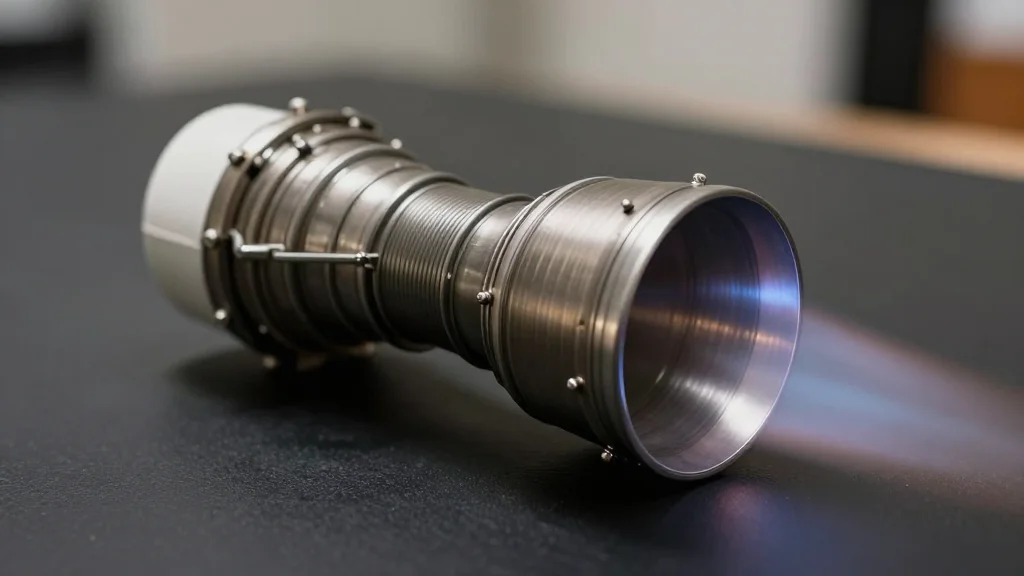
Innospace Sets Korean Record with 420‑Second Methane Engine Test

Companies Mentioned
Why It Matters
The LiMEK‑04 test marks a technical breakthrough for South Korea’s nascent commercial launch ecosystem. Methane propulsion is gaining traction worldwide because of its higher specific impulse than kerosene and its potential for in‑situ resource utilization on the Moon and Mars. By proving a lightweight, dual‑propellant cooling system, Innospace not only enhances its own vehicle performance but also contributes a reusable‑engine technology that could lower barriers for future exploration missions. Beyond engineering, the achievement signals growing confidence among Korean regulators and investors in private‑sector space capabilities. A successful Hanbit‑Micro launch would validate the country’s ability to produce end‑to‑end launch solutions, encouraging further public‑private partnerships and positioning Korea as a supplier of advanced propulsion components to the broader Asian market.
Key Takeaways
- •Innospace completed a 420‑second ground test of the LiMEK‑04 methane engine, the longest in Korea
- •The engine delivers 0.4 ton thrust and uses dual‑propellant regenerative cooling, boosting coolant flow 3‑3.4×
- •Previous tests included a 237‑second burn in May 2024 and the first dual‑propellant ignition in July 2023
- •The technology reduces tank‑pressure requirements, enabling lighter launch‑vehicle designs for small‑sat markets
- •Innospace targets a Hanbit‑Micro launch in Q3 2026 pending Korean aerospace licensing approval
Pulse Analysis
Innospace’s record‑setting test arrives at a moment when the global launch market is fragmenting into niche segments. While heavy‑lift providers chase megaprojects, the demand for dedicated small‑sat rides is expanding, driven by constellations for Earth observation and IoT. Methane engines, once the domain of heavy‑lift (e.g., SpaceX’s Raptor), are now being miniaturized to serve this segment, offering higher efficiency than kerosene while avoiding the cryogenic complexities of hydrogen.
Historically, South Korea’s launch capability has been state‑driven, with the Nuri rocket marking its first orbital success in 2022. Innospace’s progress demonstrates a shift toward private‑sector innovation, mirroring trends in Japan and India where startups are leveraging government infrastructure while pursuing independent propulsion breakthroughs. The dual‑propellant cooling approach could become a differentiator, allowing Innospace to compete on mass‑fraction metrics that directly affect payload pricing.
Looking ahead, the real test will be translating ground‑test performance into flight reliability. If the Hanbit‑Micro can deliver payloads on schedule and at competitive cost, investors may accelerate funding rounds, and other Asian startups could adopt the cooling technology under licensing agreements. Conversely, any setbacks could reinforce the perception that methane propulsion remains too complex for small‑scale operations. The next six months will therefore be pivotal in determining whether Innospace’s engine becomes a cornerstone of a new Korean launch ecosystem or a promising prototype that stalls in development.
Innospace Sets Korean Record with 420‑Second Methane Engine Test
Comments
Want to join the conversation?
Loading comments...