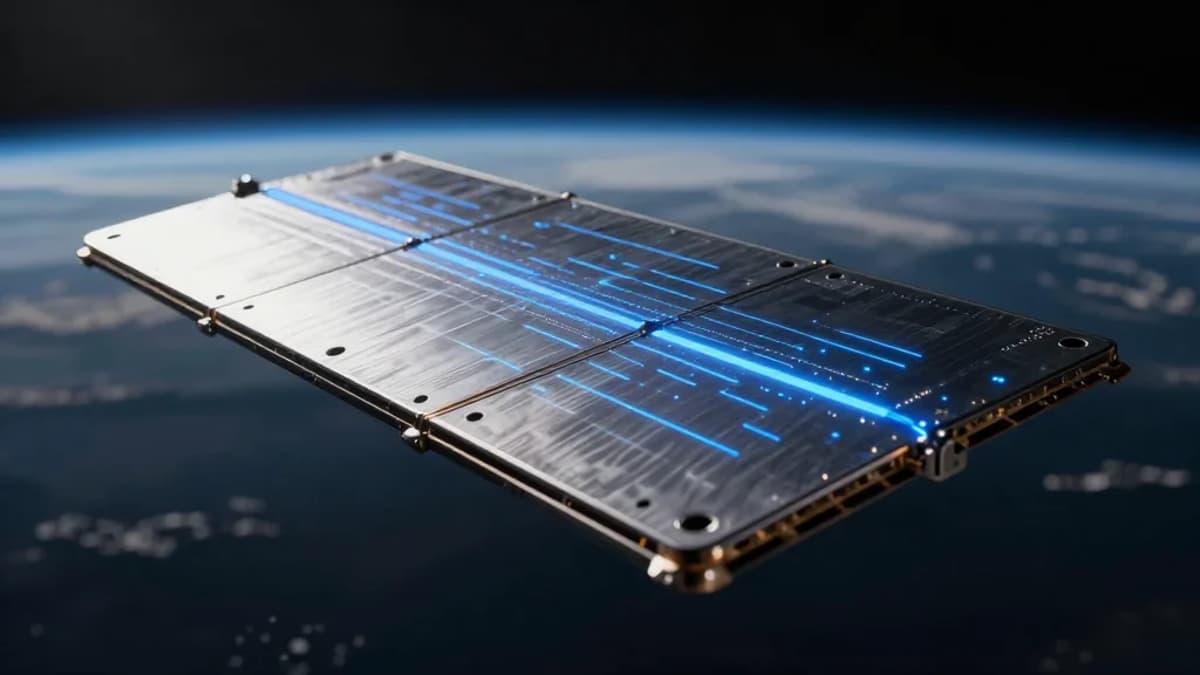
Inside Starcloud and SpaceX’s Orbital Data Centers FCC Filings
•February 28, 2026
0
Why It Matters
These filings mark a decisive move toward space‑borne data processing, potentially reshaping cloud economics and enabling ultra‑low‑latency services for enterprises worldwide.
Key Takeaways
- •Starcloud proposes 120 low‑Earth orbit data nodes.
- •SpaceX plans 300 satellites for orbital computing.
- •Both use sun‑synchronous orbits for global coverage.
- •On‑board AI processors target edge analytics.
- •End‑of‑life disposal via controlled deorbit.
Pulse Analysis
The Federal Communications Commission (FCC) filings from Starcloud and SpaceX provide the first detailed look at how major players intend to turn orbiting satellites into floating data centers. By leveraging low‑Earth‑orbit constellations, these companies aim to bring compute resources closer to end users, slashing the round‑trip latency that hampers traditional terrestrial cloud services. The filings enumerate technical specifics—such as orbital altitude, inclination, and inter‑satellite laser links—underscoring the engineering depth required to sustain continuous, high‑throughput processing in space.
Starcloud’s proposal centers on a 120‑satellite LEO mesh, each equipped with modular AI accelerators and solid‑state storage, while SpaceX’s more expansive 300‑satellite design integrates high‑bandwidth Ka‑band transceivers and on‑board GPUs. Both firms have opted for sun‑synchronous orbits, ensuring consistent illumination for solar power and predictable coverage patterns. Their disposal plans, featuring controlled deorbit burns, reflect growing regulatory scrutiny and a commitment to mitigate space debris, a critical factor as orbital traffic intensifies.
For the broader cloud ecosystem, these orbital data centers could unlock new use cases—from real‑time video analytics at the edge of 5G networks to rapid processing of IoT sensor streams in remote regions. Enterprises seeking sub‑10‑millisecond response times may find space‑based compute a viable complement to edge nodes on the ground. As the FCC reviews these applications, the industry watches closely; approval could accelerate a shift toward a hybrid terrestrial‑orbital cloud architecture, redefining latency benchmarks and competitive dynamics across the tech sector.
Inside Starcloud and SpaceX’s Orbital Data Centers FCC Filings
0
Comments
Want to join the conversation?
Loading comments...