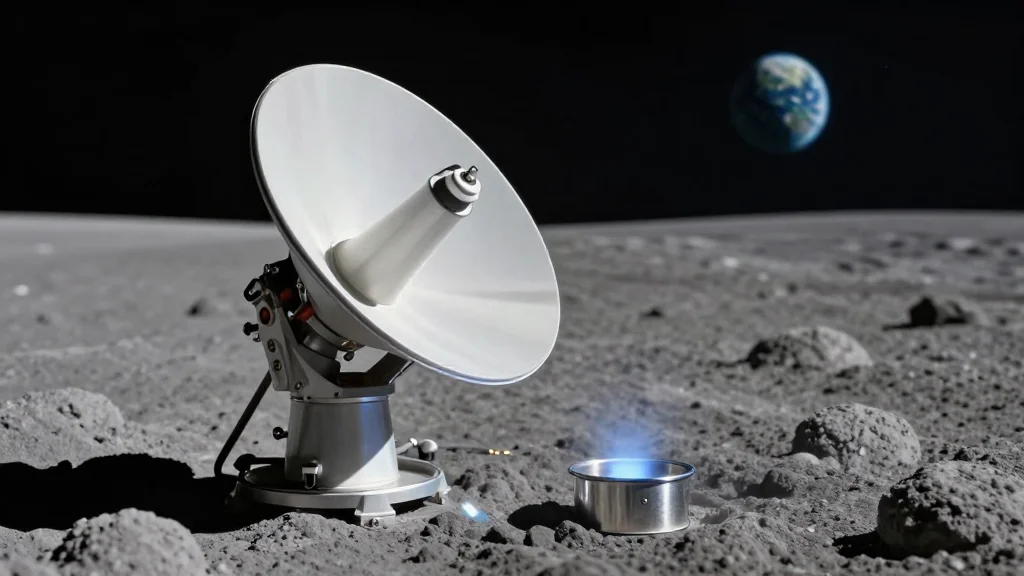
Is Extracting Oxygen From Lunar Soil the Future of Space Exploration?
Why It Matters
Producing oxygen on the Moon cuts launch weight and costs, making permanent lunar habitats and Mars missions financially viable. Successful ISRU will shift space logistics from Earth‑centric supply chains to local manufacturing.
Key Takeaways
- •Solar‑vacuum pyrolysis extracts oxygen using concentrated sunlight and lunar vacuum
- •Lab tests yielded 35 mg O₂ from 3.38 g regolith simulant (≈1% mass)
- •Yield improvements require lower pressure and continuous operation during lunar day
- •By‑products can become glass or construction materials for in‑situ manufacturing
- •ISRU reduces launch mass, lowering cost of lunar and Mars missions
Pulse Analysis
The race to establish a sustainable lunar presence is no longer about landing flags; it’s about turning the Moon into a resource hub. In‑situ resource utilization (ISRU) sits at the heart of this shift, promising to harvest oxygen, water, and building materials from the regolith that blankets the surface. By generating consumables locally, space agencies can dramatically trim the mass of cargo that must be launched from Earth, a factor that directly translates into lower mission budgets and increased payload flexibility for both lunar habitats and future Mars expeditions.
At the forefront of ISRU research, the PROMES‑CNRS laboratory in the French Pyrenees has validated a solar‑vacuum pyrolysis approach. Using a 10,000‑times solar concentrator, researchers heated lunar‑simulant pellets to over 2,000 °C inside a low‑pressure chamber, liberating oxygen that was captured by an electrochemical sensor. The experiment produced 35 mg of oxygen from a 3.38 g sample—roughly one percent of the material’s total mass—while also forming a glassy residue rich in non‑volatile oxides. Although the yield is modest, the process leverages abundant solar energy and the Moon’s natural vacuum, minimizing the need for imported fuels or complex machinery.
The next phase will focus on scaling the technology to true lunar conditions: reducing chamber pressure to near‑vacuum, improving thermal insulation, and automating continuous operation throughout the lunar day. Success could unlock a cascade of benefits, from on‑site construction of habitats and radiation shields to the production of propellant for deeper‑space travel. Commercial partners are already eyeing the market for lunar‑derived oxygen and building blocks, positioning ISRU as a cornerstone of the emerging space economy. As the technology matures, the Moon could evolve from a destination into a launchpad, accelerating humanity’s push toward Mars and beyond.
Is extracting oxygen from lunar soil the future of space exploration?
Comments
Want to join the conversation?
Loading comments...