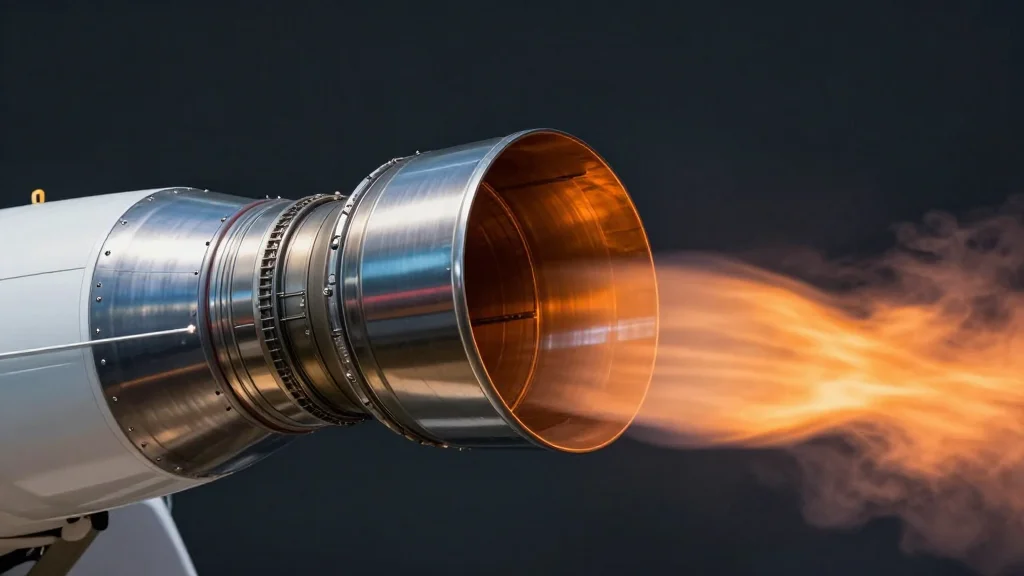
ISRO and Roscosmos Move Toward Semi‑Cryogenic Engine Deal in Moscow

Companies Mentioned
Why It Matters
The prospective engine deal could accelerate India's transition to a higher‑performance launch architecture, directly influencing its ability to compete for lucrative commercial satellite contracts and to support ambitious deep‑space missions. By tapping Russian expertise, ISRO may shorten development cycles and mitigate technical risk, while Russia secures a strategic customer for its propulsion technology at a time when its own launch market faces budgetary pressures. Beyond the immediate technical benefits, the agreement signals a strengthening of Indo‑Russian space ties, offering a counterbalance to the growing US‑China rivalry in space. The collaboration may also set a precedent for future joint ventures on payloads, navigation, and planetary exploration, expanding the ecosystem of international cooperation.
Key Takeaways
- •ISRO and Roscosmos discussed a draft contract for 2,000 kN SE‑2000 semi‑cryogenic engines.
- •The engine’s specific impulse is 335 seconds and chamber pressure 180 bar, boosting LVM3 payload to 5 tonnes GTO.
- •Integration aims to replace the L110 core stage with the SC120 stage powered by SE‑2000.
- •Deal could enhance India’s launch market share in a $20 billion global industry.
- •Collaboration aligns with broader Indo‑Russian cooperation on the Venus Orbiter Mission.
Pulse Analysis
The ISRO‑Roscosmos engine talks illustrate how emerging space powers are leveraging legacy expertise to close capability gaps. Historically, India has relied on indigenous cryogenic engines, but the semi‑cryogenic class remains a niche held by a handful of nations. By securing Russian hardware, ISRO can sidestep years of incremental development, a strategy reminiscent of early NASA‑ESA collaborations that accelerated the Shuttle program.
However, the partnership is not without risk. Dependence on foreign propulsion could expose ISRO to geopolitical fluctuations, especially given recent sanctions affecting Russian aerospace exports. A balanced approach—using Russian engines as a bridge while continuing domestic R&D—will be crucial to maintain strategic autonomy. The success of this deal may also influence other nations seeking similar technology transfers, potentially reshaping the supply chain for high‑thrust engines.
Looking ahead, the timeline for contract finalisation will be a key market signal. A swift approval could allow ISRO to field the upgraded LVM3 before competitors like SpaceX’s Starship or Blue Origin’s New Glenn achieve operational status, positioning India as a viable alternative for medium‑to‑heavy payloads. Conversely, delays could erode the competitive edge, pushing Indian customers toward established commercial providers. The outcome will therefore have ripple effects across launch pricing, satellite procurement, and the broader geopolitics of space access.
ISRO and Roscosmos Move Toward Semi‑Cryogenic Engine Deal in Moscow
Comments
Want to join the conversation?
Loading comments...