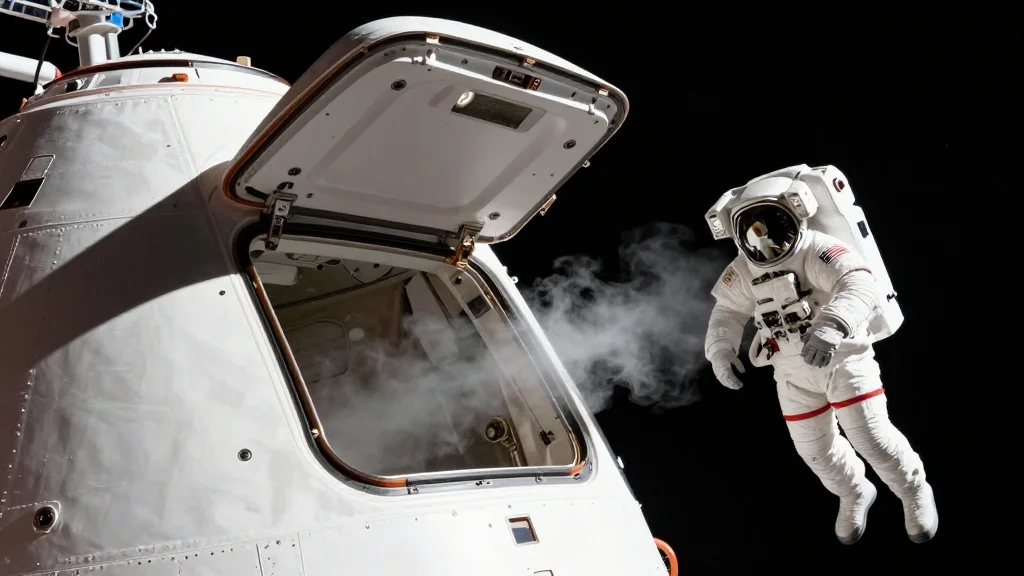
ISS Astronauts Told To Prepare For Possible Evacuation Over Air Leak

Companies Mentioned

NASA
Roscosmos
Why It Matters
The incident highlights how critical air‑loss management and cross‑agency coordination are to ISS crew safety, and it raises concerns about the long‑term reliability of aging Russian hardware that supports the station’s habitability.
Key Takeaways
- •NASA ordered Crew‑12 to shelter in Dragon as leak worsened
- •Zvezda tunnel leak rose from 1 to 2 pounds daily
- •Roscosmos paused repairs to reassess structural data
- •Crew‑Dragon suits ready for emergency return to Earth
- •ISS safety protocols highlight US‑Russia operational interdependence
Pulse Analysis
The International Space Station’s Zvezda service module, a cornerstone of the Russian segment, has been plagued by micro‑leaks since early 2023. While most losses were trivial, the recent escalation to roughly two pounds of air per day represents a significant breach in a closed‑loop environment where every kilogram of atmosphere is meticulously balanced. Engineers trace the issue to the PrK transfer tunnel, a conduit that links Zvezda’s habitation areas to other modules, and the leak’s growth suggests material fatigue or a micrometeoroid impact that has compromised the seal.
When NASA’s mission control issued the safe‑haven directive, the crew moved into the Crew Dragon capsule and donned their Extravehicular Mobility Units, a protocol designed for rapid evacuation to Earth if cabin pressure fell below safe thresholds. This response showcases the layered safety architecture of the ISS, where commercial crew vehicles serve not only as transport but also as emergency lifeboats. The coordination between NASA and Roscosmos, despite longstanding political tensions, proved essential; Roscosmos paused its own repair attempts to allow joint data analysis, preventing potentially conflicting actions that could exacerbate the leak.
Looking ahead, the episode fuels debate over the ISS’s remaining operational lifespan and the need for hardware upgrades. With the station slated to operate through at least 2030, aging Russian components pose a reliability risk that may accelerate plans for a commercial low‑Earth‑orbit platform. The incident also reinforces the strategic value of the U.S. commercial crew program, which provides an independent evacuation capability and could become a cornerstone of future orbital habitats. Stakeholders will watch closely how NASA and Roscosmos resolve the leak, as their approach will set precedents for multinational collaboration on next‑generation space stations.
ISS Astronauts Told To Prepare For Possible Evacuation Over Air Leak
Comments
Want to join the conversation?
Loading comments...