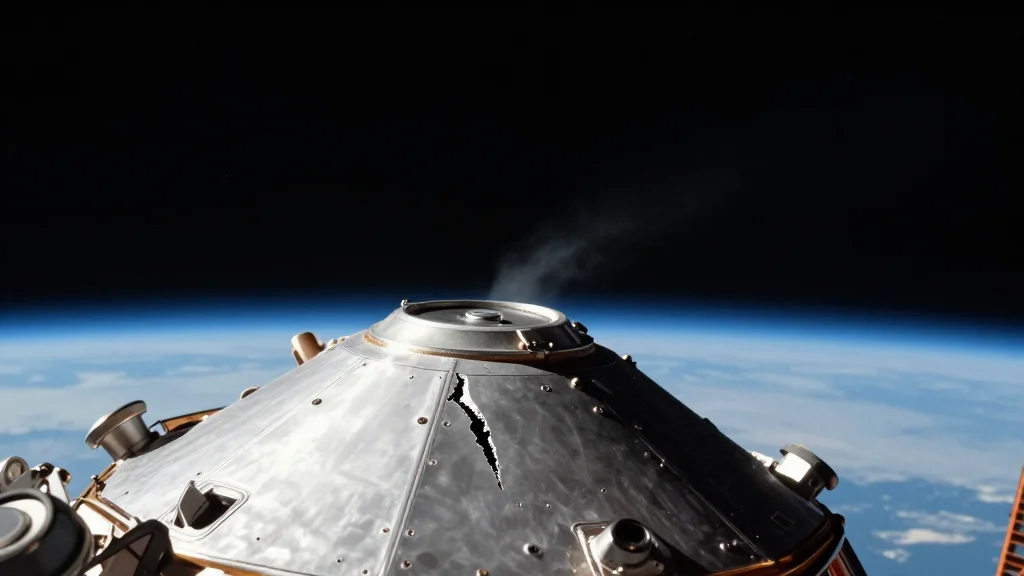
ISS Russian Segment Leaks Again, Prompting Fresh Safety Review

Companies Mentioned

Why It Matters
The renewed leak in the ISS’s Russian segment spotlights the engineering challenges of extending the life of a complex, multi‑national space platform. As the station approaches its planned 2030 retirement, each incident adds pressure on policymakers to balance scientific output with crew safety and budget constraints. Moreover, the leak underscores the importance of robust, modern design standards for upcoming commercial habitats, which must avoid the legacy issues that have plagued the ISS. For the broader SpaceTech ecosystem, the incident serves as a cautionary tale. Investors and developers of LEO infrastructure are likely to scrutinize the cost and risk models of operating aging hardware, potentially shifting capital toward newer, modular stations that incorporate advanced materials and autonomous maintenance capabilities. The event also reinforces the strategic value of international collaboration; resolving the leak will require coordinated effort between NASA and Roscosmos, setting a precedent for future joint ventures beyond low Earth orbit.
Key Takeaways
- •NASA confirms a new atmospheric leak in the ISS’s Russian PrK module on Thursday.
- •Leak is caused by microscopic structural cracks that have resisted previous sealant fixes.
- •The incident occurs despite a January report that the module’s pressure had reached a stable configuration.
- •The leak adds urgency to the planned 2030 retirement of the ISS and may influence commercial LEO habitat development.
- •NASA plans a detailed inspection on the next crewed mission, with results to inform long‑term mitigation and decommissioning plans.
Pulse Analysis
The ISS leak is less a surprise than a symptom of the inevitable wear that any long‑duration orbital platform endures. Over its 23‑year lifespan, the station has weathered dozens of micrometeoroid impacts, thermal cycles, and the cumulative stress of docking and undocking operations. Each of these factors contributes to the formation of micro‑cracks, especially in older Russian modules that were designed with the engineering tolerances of the 1990s. The fact that the PrK module’s leak re‑emerged after a seemingly successful sealant campaign suggests that the current mitigation toolbox—primarily patch‑and‑seal—may be insufficient for a structure that is now approaching the end of its design life.
From a market perspective, the leak could accelerate the shift toward commercial stations. Companies like Axiom Space and Nanoracks have already secured contracts to attach private modules to the ISS, but the recurring maintenance headaches may prompt NASA to fast‑track the transition to fully independent commercial habitats. Investors are likely to view the incident as a risk factor for any venture that plans to rely on the ISS as a long‑term platform, potentially redirecting funding toward projects that promise newer materials, modular replacement parts, and autonomous leak detection.
Strategically, the incident also tests the resilience of the U.S.–Russia partnership that underpins the ISS. While both agencies have historically cooperated on repairs, the political climate has grown more strained in recent years. A transparent, joint response to the leak could reinforce confidence in multinational space endeavors, whereas a muted or contentious reaction might erode trust and complicate future collaborations, such as the Lunar Gateway. In short, the PrK leak is a micro‑event with macro‑implications, shaping policy, investment, and partnership dynamics across the SpaceTech sector.
ISS Russian Segment Leaks Again, Prompting Fresh Safety Review
Comments
Want to join the conversation?
Loading comments...