James Webb Space Telescope Reveals New Origin Story for the Universe's 1st Supermassive Black Holes
•January 29, 2026
0
Why It Matters
Validating direct‑collapse black holes resolves a key timing gap in cosmology and refines galaxy‑evolution models, while illustrating that relativistic physics is essential for critical navigation systems.
Key Takeaways
- •JWST detected supermassive black holes only 470 million post‑BigBang
- •Direct‑collapse black holes provide massive seeds, solving early growth puzzle
- •Black‑hole physics underpins GPS satellite timing via relativity
- •Natarajan’s predictions validated by JWST and Chandra observations
- •Overmassive black‑hole galaxies emit light dominated by central black holes
Pulse Analysis
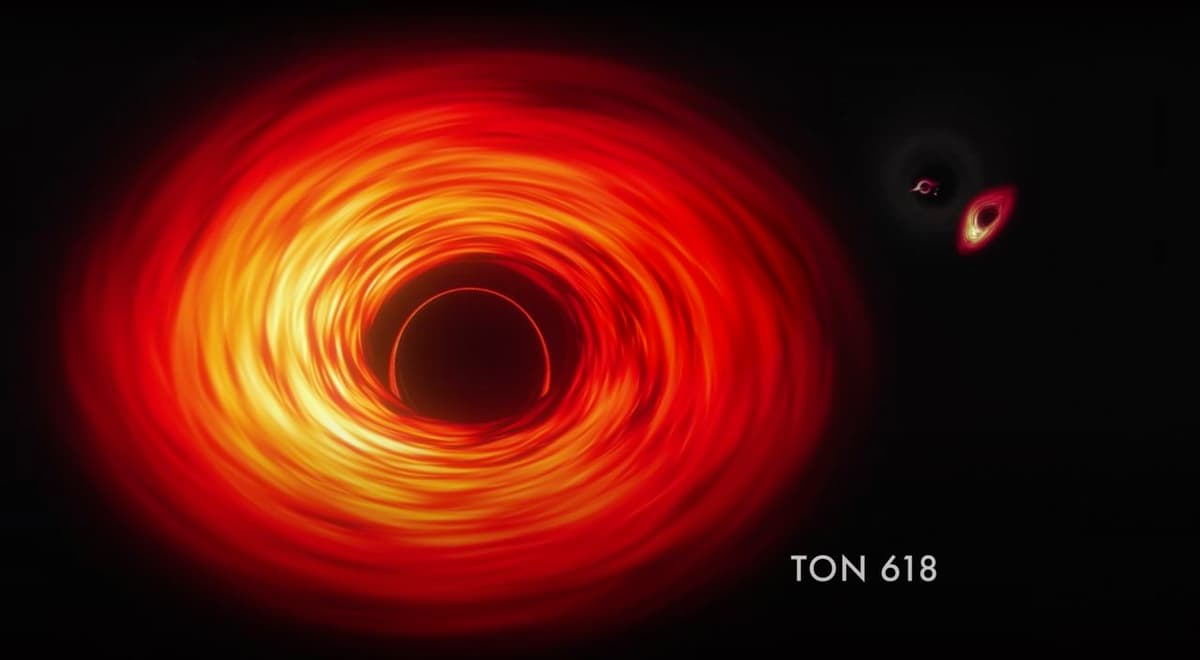
The James Webb Space Telescope’s unprecedented infrared sensitivity has opened a window onto the universe’s first few hundred million years, allowing astronomers to spot the luminous signatures of nascent supermassive black holes. By capturing objects like UHZ1 and the enigmatic Infinity Galaxy, JWST provides empirical support for the direct‑collapse scenario, where massive, metal‑free gas clouds bypass star formation and implode into black‑hole seeds weighing tens of thousands of solar masses. This pathway offers a plausible solution to the long‑standing “timing problem” that traditional stellar‑remnant growth models could not explain.
Beyond confirming a theoretical framework, these findings reshape our understanding of early galaxy assembly. Direct‑collapse black holes act as powerful gravitational anchors, influencing gas inflows, star‑formation rates, and the morphological evolution of their host protogalaxies. The presence of off‑center, overmassive black holes suggests that violent mergers and turbulent gas dynamics were common, accelerating the co‑evolution of black holes and galaxies far earlier than previously thought. Future observations with JWST, the upcoming Roman Space Telescope, and next‑generation X‑ray observatories will refine seed mass distributions and trace the feedback mechanisms that regulate early cosmic structure.
The relevance of black‑hole physics extends well beyond academia. The same relativistic equations that describe event horizons also correct the timing of GPS satellites, ensuring the accuracy of global navigation systems that underpin modern logistics, finance, and emergency response. As researchers continue to test and expand these models, the interplay between cutting‑edge astrophysics and everyday technology underscores the broader economic and societal value of fundamental science. Continued investment in space telescopes and high‑energy observatories promises deeper insights into the universe’s origins and the physical laws that shape our daily lives.
James Webb Space Telescope reveals new origin story for the universe's 1st supermassive black holes
0
Comments
Want to join the conversation?
Loading comments...