Companies Mentioned


Why It Matters
These developments shape the competitive landscape of lunar exploration, reveal resource constraints in Russia’s space agenda, and illustrate the increasing importance of debris mitigation as more nations launch payloads.
Key Takeaways
- •Europe delivers Orion module for Artemis‑4 integration.
- •Russia will launch station modules using Proton and Soyuz.
- •China tests Wangyu moon suits; deployment planned by 2028.
- •Philippines recovers Chinese Long March 7A debris.
- •Book “Genesis” chronicles Apollo 8, now available.
Pulse Analysis
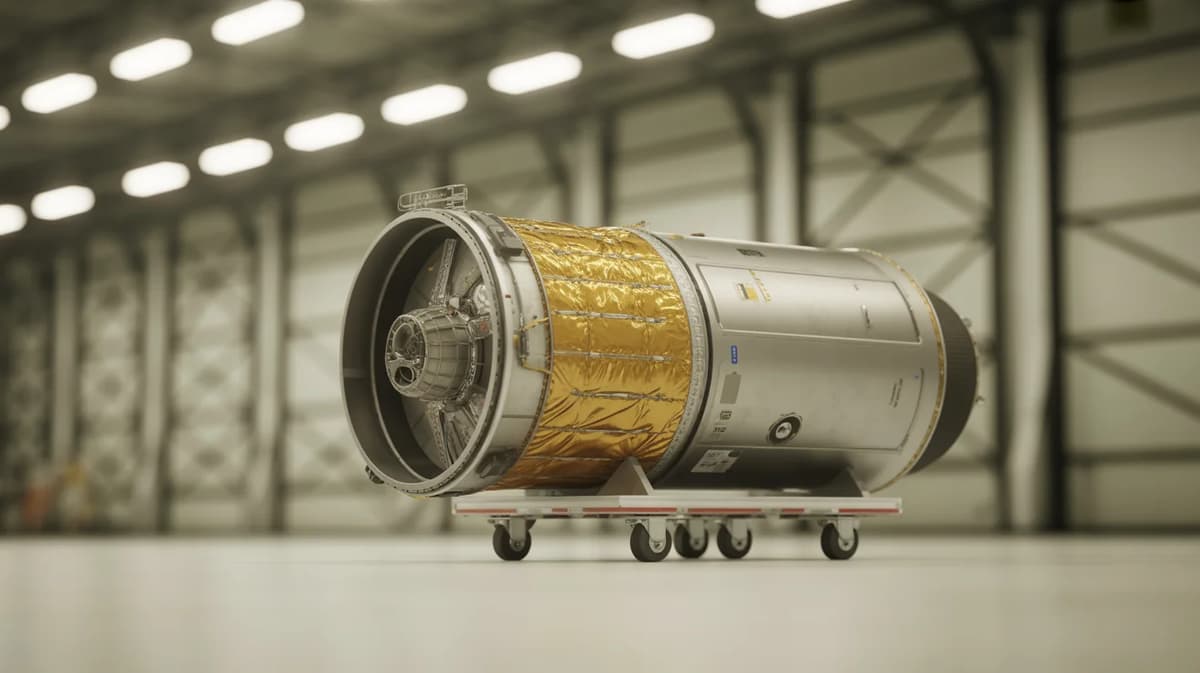
The arrival of Europe’s Orion service module at Kennedy Space Center underscores the deepening trans‑Atlantic partnership underpinning NASA’s Artemis program. By providing a critical component for the Artemis‑4 mission, Europe not only secures a foothold in the upcoming lunar landing architecture but also demonstrates its industrial capability to meet NASA’s stringent testing and integration timelines. This collaboration is a strategic counterbalance to private sector players and reinforces the multilateral nature of future deep‑space endeavors.
Russia’s decision to revert to Proton and Soyuz launchers for its nascent space station reflects persistent challenges in modernizing its launch infrastructure. Decades‑long development of the Angara family and the Vostochny launch complex has stalled, leaving the nation dependent on legacy systems that, while reliable, lack the payload capacity and efficiency of newer rockets. This reliance may constrain Russia’s ability to compete for international partnerships and could delay the station’s operational readiness, reshaping the geopolitical dynamics of low‑Earth‑orbit habitation.
China’s 2026 testing regime for the Wangyu lunar suits signals a methodical approach to crewed lunar exploration, targeting a 2028 deployment. While suit readiness is a milestone, the broader context includes heightened competition for lunar resources and the need for robust life‑support technologies. Simultaneously, the recovery of Chinese rocket debris by the Philippine Coast Guard highlights the escalating issue of orbital debris and its terrestrial impacts. Together, these narratives illustrate a rapidly evolving space ecosystem where technological progress, geopolitical strategy, and sustainability considerations intersect, offering readers a comprehensive view of the current trajectory toward a new era of lunar activity.
January 8, 2026 Quick space links
0
Comments
Want to join the conversation?
Loading comments...