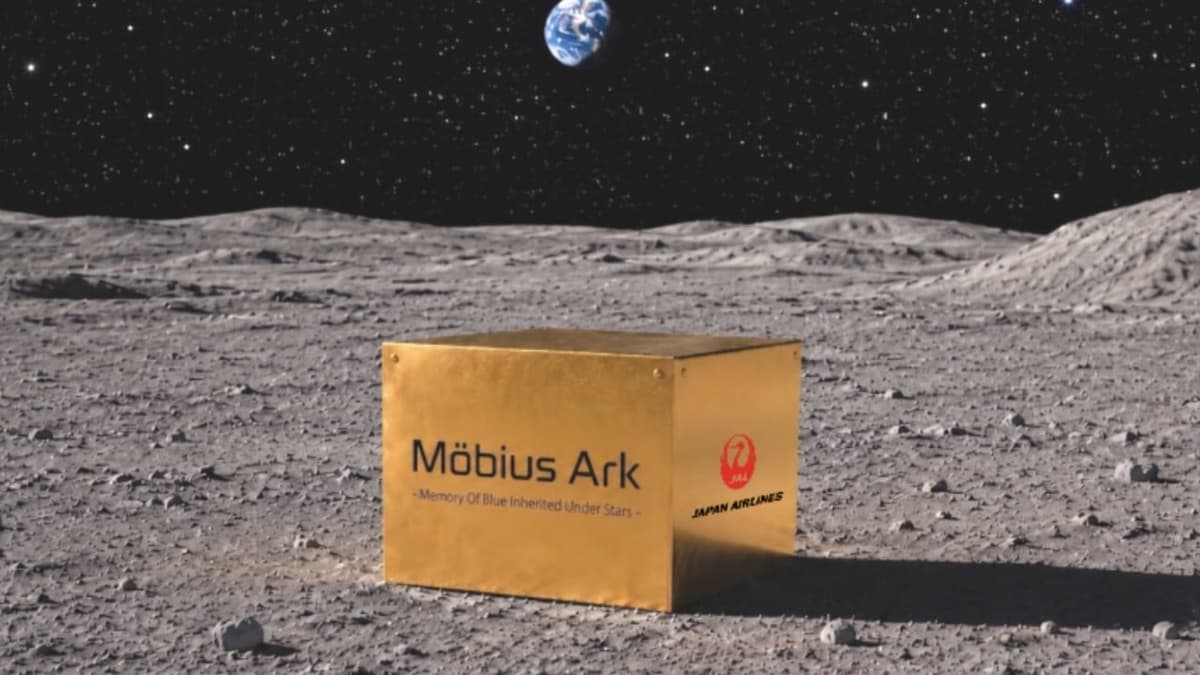
Japan Airlines Wants to Blast Human Culture Into Space and Land It on the Moon
Companies Mentioned
Why It Matters
The project gives JAL a foothold in the emerging space logistics market, potentially opening new revenue streams while showcasing Japan’s cultural soft power beyond Earth. It also signals a shift among legacy airlines toward non‑traditional assets as aviation demand faces uncertainty.
Key Takeaways
- •JAL partners with ispace for ARGO Trans‑Lunar Heritage Project
- •Payload service agreement scheduled for a 2028 lunar landing
- •Goal: store Japanese cultural artefacts in lunar canister for preservation
- •Analysts see diversification as hedge against weak commercial aviation
- •Critics label project a PR stunt with limited airline synergy
Pulse Analysis
Japan Airlines’ collaboration with ispace marks a rare convergence of aviation and lunar logistics, reflecting a strategic pivot toward high‑growth, non‑core sectors. The ARGO Trans‑Lunar Heritage Project will use a hardened canister to transport Japanese cultural items—ranging from regional foods to historic artifacts—to the Moon’s stable environment. By framing the Moon as a climate‑proof vault, JAL taps into a narrative of cultural preservation while positioning itself as a pioneer in commercial payload services, a market traditionally dominated by satellite operators and government agencies.
The partnership fits within a broader wave of Japanese firms eyeing space as a diversification frontier. Toyota is co‑developing a manned lunar rover, Nippon Travel Agency envisions sub‑hour trans‑Pacific rocket trips, and construction giant Shimizu plans orbital hotels. For airlines like JAL, whose revenue streams have been squeezed by pandemic‑era demand volatility, space‑related ventures offer a potential hedge and a brand‑enhancing story. Industry analysts note that such moves mirror global trends where carriers explore advanced mobility, cargo drones, and even satellite broadband to offset declining passenger yields.
Skeptics, however, caution that JAL’s lunar ambition may be more symbolic than substantive. Critics argue that preserving heritage on the Moon does not address immediate challenges in aircraft maintenance or route optimization, and that the venture lacks clear synergies with core airline operations. Yet, if the cislunar economy matures—driven by regular cargo flights and eventual human habitats—the early‑bird advantage could translate into lucrative contracts for payload handling, logistics planning, and supply‑chain management, giving JAL a foothold in a market that could reshape the future of global transportation.
Japan Airlines wants to blast human culture into space and land it on the moon
Comments
Want to join the conversation?
Loading comments...