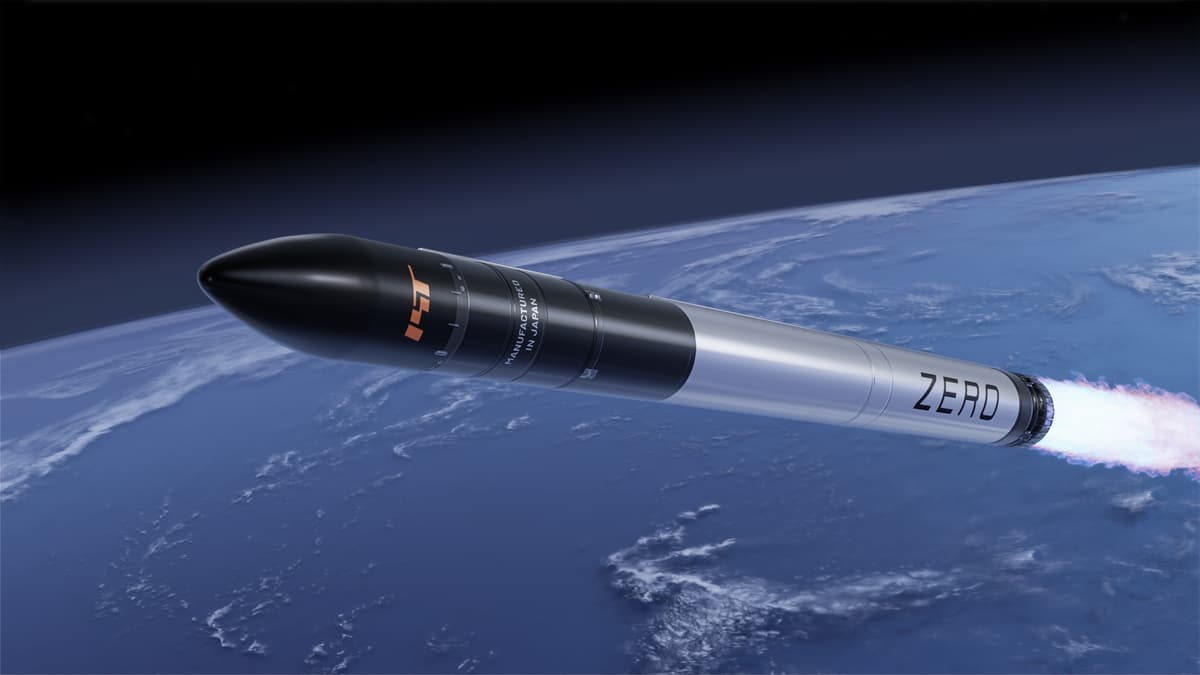
Japanese Launch Company Interstellar Technologies Raises $130 Million
•January 16, 2026
0
Companies Mentioned
Why It Matters
The capital injection positions Interstellar as Japan’s leading commercial launch provider, addressing a domestic capability gap and enabling participation in the fast‑growing small‑sat market. Successful deployment of Zero could diversify global launch options and stimulate Japan’s space industry.
Key Takeaways
- •Series F raised 20.1 billion yen (~$130 M).
- •Equity led by Woven by Toyota, plus major financiers.
- •Zero aims 1,000 kg LEO payload by 2027.
- •Five international customers signed for inaugural launch.
- •Funding also backs satellite‑formation communication system.
Pulse Analysis
Japan’s commercial launch sector has lagged behind global peers, with recent setbacks from the H3 and Epsilon S rockets highlighting the need for private‑sector momentum. Interstellar Technologies’ near‑$130 million Series F round not only doubles its capital base but also signals confidence from both domestic conglomerates and financial institutions. This infusion arrives at a pivotal moment as the nation seeks to re‑establish credibility in orbital services and reduce reliance on foreign launch providers, positioning Interstellar as a potential catalyst for a broader Japanese space renaissance.
The Zero vehicle embodies the next wave of small‑sat launch solutions, employing a methane‑liquid‑oxygen propulsion cycle that promises higher performance and lower operational costs compared with legacy hypergolic systems. With a two‑stage architecture capable of delivering up to 1,000 kg to low‑Earth orbit, Zero directly targets the burgeoning market for constellations, Earth‑observation payloads, and rapid‑deployment cubesats. By securing customers from Japan, Singapore, South Korea and the United States ahead of its 2027 debut, Interstellar demonstrates market traction that rivals emerging players such as Rocket Lab and Firefly, while offering a domestic alternative for regional satellite operators.
Beyond launch services, the Series F proceeds also fund a novel formation‑flying communications platform, aiming to create phased‑array antennas for direct‑to‑device links. This dual focus on propulsion and satellite communications could unlock new revenue streams and reinforce Japan’s strategic autonomy in space infrastructure. As global demand for low‑cost, high‑frequency launch cadence intensifies, Interstellar’s progress may reshape supply dynamics, encourage further private investment, and help Japan reclaim a competitive foothold in the international space economy.
Japanese launch company Interstellar Technologies raises $130 million
0
Comments
Want to join the conversation?
Loading comments...