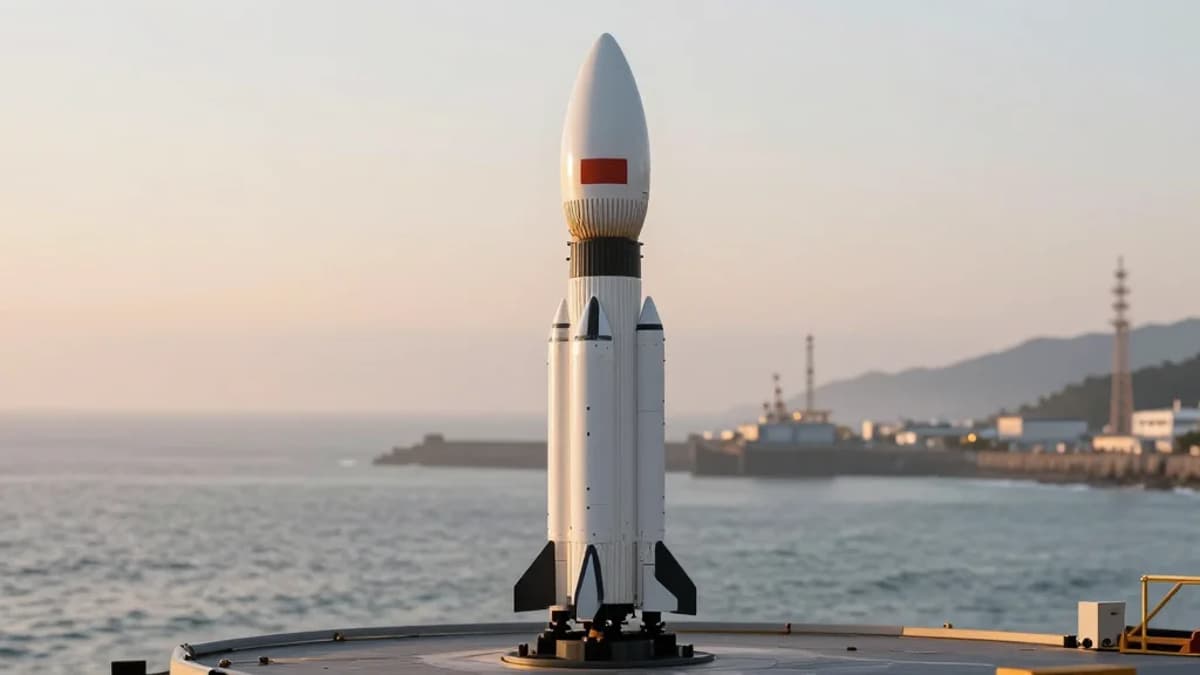
Japanese Rocket Startup Space One to Attempt Third Orbital Launch This Weekend
•February 27, 2026
0
Why It Matters
A win for Space One could restore Japan’s indigenous launch capability and reduce reliance on delayed government rockets, strengthening the nation’s position in the growing small‑satellite market.
Key Takeaways
- •Third Kairos launch scheduled for March 1, 2026.
- •Rocket carries five satellites, one from Taiwan.
- •Previous two attempts failed shortly after liftoff.
- •Success could revive Japan's launch capability.
- •Govt H3 and Epsilon rockets grounded after failures.
Pulse Analysis
Japan’s commercial space sector has been in a holding pattern since the government’s flagship H3 and Epsilon rockets were sidelined by recent launch failures. Space One, a private venture founded in 2022, is betting on its Kairos vehicle to fill the gap. The Kairos design targets the small‑satellite niche, offering rapid, low‑cost access to low‑Earth orbit. After two abortive attempts—one in March and another in December 2024—the company has scheduled a third flight from its own Spaceport Kii, a coastal launch site that gives it operational flexibility absent from state‑run facilities.
The upcoming launch carries five payloads, notably a satellite developed by the Taiwan Space Agency, underscoring regional collaboration and the demand for dedicated rideshare services. If Kairos reaches orbit, it would demonstrate that Japan’s private sector can deliver reliable launch services, potentially attracting commercial customers who have been forced to look abroad or wait for government rockets to return to service. This success could also catalyze investment in domestic supply chains, from propulsion components to ground‑segment software, accelerating the broader ecosystem.
Beyond national pride, the Kairos mission reflects a global shift toward smaller, more frequent launches. As constellations of Earth‑observation and communications cubesats proliferate, operators seek launch windows that align with tight deployment schedules. Space One’s ability to launch on short notice, leveraging its private launchpad, positions it to compete with emerging Asian players such as India's Skyroot and South Korea’s Hanwha Aerospace. A successful flight would not only validate the company’s technology but also signal to investors that Japan’s private launch market is viable, paving the way for future funding rounds and potential partnerships with satellite manufacturers worldwide.
Japanese rocket startup Space One to attempt third orbital launch this weekend
0
Comments
Want to join the conversation?
Loading comments...