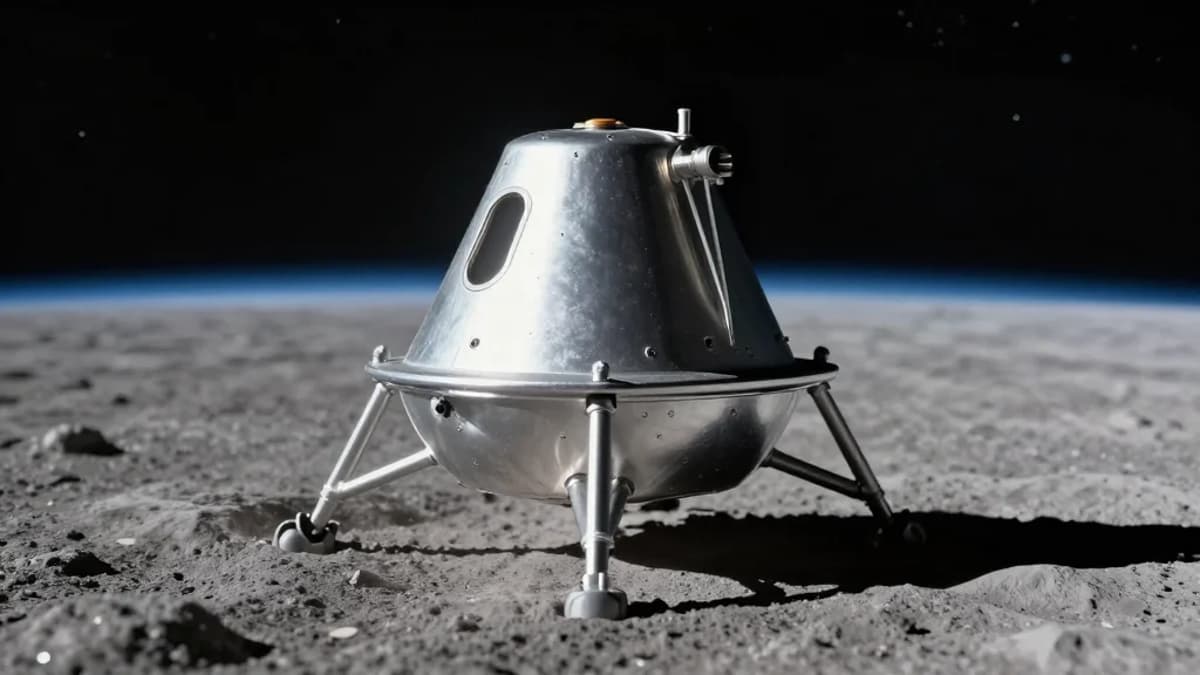
Japan’s Government Gives Ispace a $125 Million Contract to Build a High-Precision Lunar Lander
•January 19, 2026
0
Companies Mentioned


Why It Matters
The contract signals Japan’s transition toward a private‑driven lunar program, potentially accelerating technology development and reducing bureaucratic overhead. Successful execution could reshape the nation’s space ecosystem and boost its competitiveness in the emerging lunar market.
Key Takeaways
- •Ispace receives $125 M for high‑precision lunar lander.
- •Contract targets 2029 launch to Moon’s polar regions.
- •Includes orbital relay satellite for future far‑side missions.
- •JAXA retains limited design control, shifting to private ownership.
- •Aligns with Japan’s $6.6 bn Space Strategy Fund goals.
Pulse Analysis
Japan’s recent $125 million award to Ispace reflects a broader policy pivot that seeks to leverage private capital for deep‑space exploration. The Space Strategy Fund, created in 2023 with a $6.6 billion budget, was designed to nurture startups capable of delivering market‑ready hardware. Ispace, already known for its Hakuto series of lunar landers, now gains a government‑backed customer for a high‑precision vehicle targeting the Moon’s resource‑rich polar craters, a region of growing scientific and commercial interest.
The contract’s structure is notable for its limited JAXA involvement, granting Ispace primary responsibility for design, integration, and mission execution. This mirrors trends in the United States where NASA contracts out core capabilities to commercial firms, fostering competition and rapid innovation. By also funding an orbital relay satellite, the agreement ensures a communications backbone that can support not only Ispace’s Mission 6 but also future private or governmental missions, potentially lowering entry barriers for other Japanese actors.
If Ispace meets its milestones, the deal could catalyze a new era for Japan’s space sector, encouraging additional private investment and prompting JAXA to adopt a more customer‑oriented role. Success would enhance Japan’s standing in the global lunar economy, where nations and companies vie for resources, data, and strategic footholds. Conversely, technical setbacks could reignite debate over the balance between public oversight and private autonomy, underscoring the high stakes of this pioneering partnership.
Japan’s government gives Ispace a $125 million contract to build a high-precision lunar lander
0
Comments
Want to join the conversation?
Loading comments...