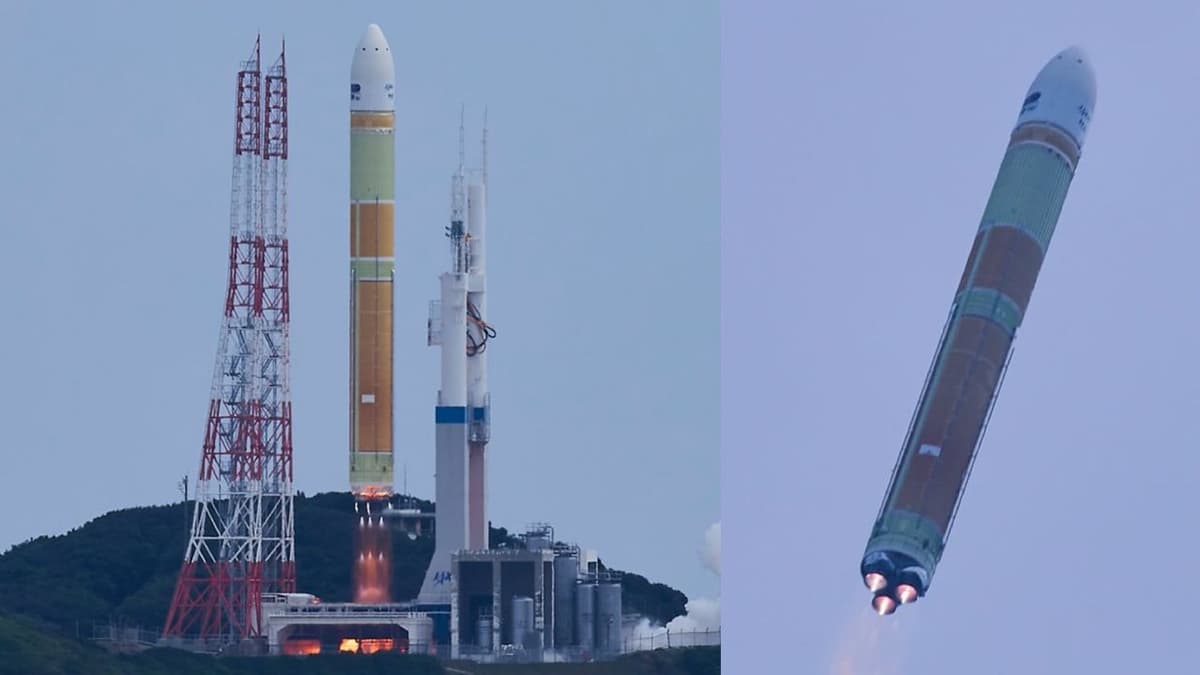
Japan's H3 Rocket Bounces Back From Failure with Successful Return to Flight Launch Carrying 6 Satellites
Companies Mentioned
Why It Matters
The successful return to flight validates the H3’s engineering fixes and revives Japan’s competitive edge in the global commercial launch market, attracting satellite operators seeking reliable, cost‑effective access to orbit.
Key Takeaways
- •H3's third engine configuration succeeded on eighth launch
- •All six payloads reached intended orbits without issue
- •December failure traced to damaged payload adapter
- •H3 set to replace retired H‑2A for commercial launches
Pulse Analysis
Japan’s H3 rocket has finally shed the shadow of its December failure, delivering a flawless launch that underscores the nation’s growing ambition in the crowded low‑earth‑orbit market. Developed jointly by JAXA and Mitsubishi Heavy Industries, the H3 is designed to be a more affordable and flexible alternative to legacy launchers. Its LE‑9 liquid hydrogen‑oxygen engines, now operating in a three‑engine configuration, promise higher payload capacity while reducing per‑kilogram costs, a crucial factor as satellite constellations proliferate.
The December mishap, caused by a damaged payload adapter, prompted a thorough root‑cause analysis and a series of design revisions. Engineers reinforced the adapter interface, upgraded the second‑stage propellant tanks, and refined the ignition sequence to mitigate the earlier engine anomalies. The recent flight was the first to employ three LE‑9 engines, a step that not only increased thrust but also provided redundancy, enhancing mission reliability. This technical evolution demonstrates JAXA’s capacity to iterate quickly and restore stakeholder confidence after setbacks.
Looking ahead, the H3’s success opens doors for a slate of upcoming missions, ranging from Earth‑observation satellites to deep‑space probes. With the H‑2A retired, the H3 is poised to become Japan’s flagship commercial launcher, competing directly with SpaceX’s Falcon 9 and Arianespace’s Ariane 6. The ability to reliably place multiple small‑sat payloads in orbit could attract regional operators and multinational constellations, bolstering Japan’s export of launch services and reinforcing its strategic position in the aerospace sector.
Japan's H3 rocket bounces back from failure with successful return to flight launch carrying 6 satellites
Comments
Want to join the conversation?
Loading comments...