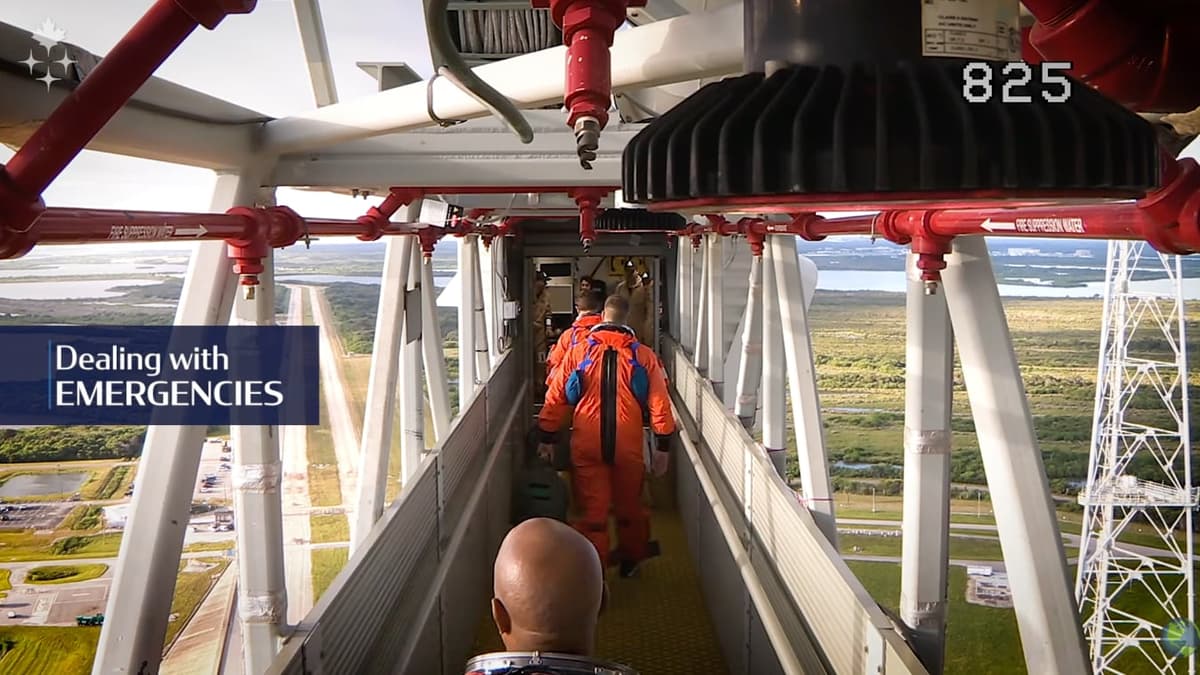
Jeremy Hansen on Dealing with Artemis 2 Emergencies
•March 2, 2026
0
Why It Matters
The disclosed procedures boost confidence in Artemis 2’s crew safety, setting a benchmark for future deep‑space missions and international partnership standards.
Key Takeaways
- •Artemis 2 features CSA astronaut Jeremy Hansen.
- •Two pre‑launch abort paths: egress or capsule ejection.
- •Abort system activates within five minutes of launch.
- •Survival gear rehearsed in Neutral Buoyancy Lab.
- •Plans address debris impacts and onboard fires.
Pulse Analysis
Artemis 2 marks NASA’s return to crewed deep‑space exploration, with the Canadian Space Agency contributing astronaut Jeremy Hansen to the four‑person crew. The mission’s high‑visibility profile has amplified scrutiny on safety measures, prompting detailed public briefings that illustrate the program’s commitment to risk mitigation. By integrating international expertise, NASA not only broadens its talent pool but also reinforces a collaborative safety culture that resonates across the global aerospace community.
Hansen’s walkthrough reveals a dual‑track abort strategy designed for the narrow window before liftoff. If a fault emerges early in the countdown, crew members can evacuate via an emergency egress tunnel, descending on baskets away from the launch tower. Within five minutes of ignition, an abort system—akin to an ejection seat—propels the capsule away, allowing a controlled splashdown off Florida’s coast. Post‑abort protocols include rapid suit donning, heavy‑hatch operation, and deployment of orange‑bag survival kits, all rehearsed in the Neutral Buoyancy Laboratory to simulate water landings and micro‑gravity conditions.
Beyond the immediate mission, these procedures set a precedent for forthcoming Artemis flights and commercial lunar ventures. Demonstrating transparent, repeatable emergency drills reassures investors, regulators, and the public that crew safety remains paramount. The emphasis on debris impact mitigation and fire suppression also informs industry standards for spacecraft design, influencing vendors and partners developing next‑generation habitats and propulsion systems. As Artemis 2 progresses, its safety blueprint will likely become a reference model for any crewed venture beyond Earth’s protective magnetosphere.
Jeremy Hansen on dealing with Artemis 2 emergencies
0
Comments
Want to join the conversation?
Loading comments...