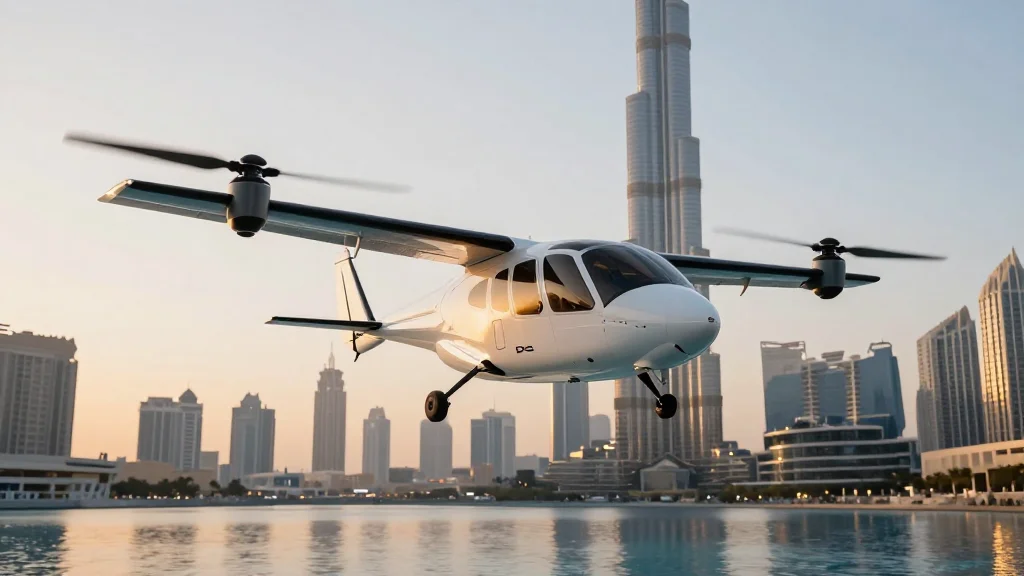
Joby Aviation and Uber Lock in Dubai eVTOL Launch by 2026

Companies Mentioned
Why It Matters
The Dubai launch marks the first time a major eVTOL operator will offer a commercial air‑taxi service to the public, moving the technology out of test‑flight labs and into everyday transportation. Success in the UAE could validate the business model for other high‑density cities, prompting regulators worldwide to fast‑track vertiport approvals and encouraging investors to fund the next generation of electric aircraft. Moreover, the partnership showcases how ride‑hailing platforms can become multimodal gateways, integrating ground and air travel in a single user experience—a shift that could reshape urban mobility ecosystems. Beyond commercial implications, the rollout highlights geopolitical and safety considerations unique to air mobility. Operating in a region with recent security incidents forces both Joby and Uber to develop robust risk‑management protocols, potentially setting industry standards for operating eVTOL services in volatile environments. The outcome will inform how quickly other markets—particularly those with complex airspace regulations—adopt similar services.
Key Takeaways
- •Joby Aviation and Uber confirm eVTOL air‑taxi launch in Dubai by 2026
- •Service will be booked via Uber’s app, linking ground and air legs
- •Joby posted $53.4 M revenue and $929.8 M loss in 2025; market cap $9 B
- •Uber’s market cap $154 B; eVTOL service a long‑term revenue add‑on
- •Dubai’s regulatory environment fast‑tracks vertiport approvals, setting a template for other cities
Pulse Analysis
Joby’s Dubai debut is less a surprise than a calculated milestone in a multi‑year rollout plan that hinges on regulatory wins and fleet certification. By choosing Dubai—a city with a clear vision for smart‑city infrastructure and a willingness to subsidize vertiport construction—Joby sidesteps the slower, more contentious approval processes in the United States and Europe. The partnership with Uber is strategic: Uber supplies a massive user base and a proven booking platform, while Joby provides the aircraft technology. This division of labor reduces go‑to‑market risk for both parties and creates a template for future collaborations between mobility‑as‑a‑service firms and aerospace manufacturers.
However, the financials reveal a stark asymmetry. Joby’s near‑billion‑dollar loss underscores the capital intensity of certifying and scaling eVTOL fleets. Uber’s balance sheet can absorb the long‑term investment, but the upside for Uber remains speculative; the company’s core ride‑hailing business will continue to dominate earnings for the foreseeable future. Investors should watch the upcoming earnings releases for clues on cash‑flow timing, especially whether Joby can secure additional pre‑orders or defense contracts that would diversify revenue beyond passenger rides.
Finally, competition is intensifying. China’s Autoflight is targeting the freight segment with a 5‑ton eVTOL, a market that could dwarf passenger services if logistics firms adopt air‑borne last‑mile delivery. If Autoflight’s hybrid models achieve the promised 930‑mile range, the competitive landscape could shift from short‑haul urban taxis to inter‑city cargo corridors, forcing Joby to accelerate its own hybrid‑eVTOL development. The Dubai launch will therefore serve as both a proof‑of‑concept and a litmus test for how quickly the industry can adapt to emerging use cases and rival technologies.
Joby Aviation and Uber lock in Dubai eVTOL launch by 2026
Comments
Want to join the conversation?
Loading comments...