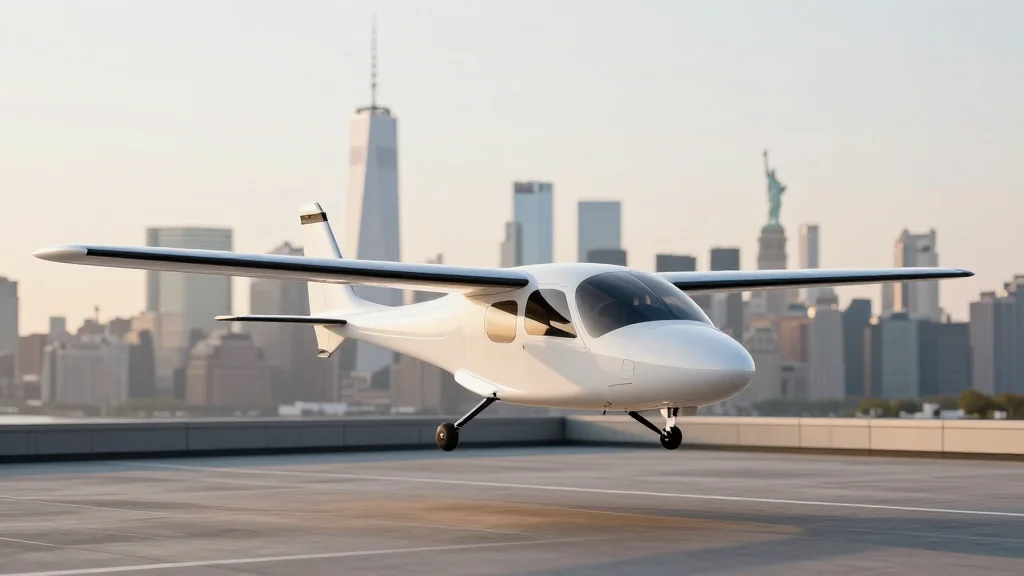
Joby Aviation Launches First Electric Air‑taxi Flights over NYC Airports

Companies Mentioned
Why It Matters
Joby’s successful JFK‑Manhattan flights demonstrate that eVTOL technology can operate safely in one of the world’s most congested airspaces, providing a proof‑of‑concept for urban air mobility (UAM) that could reshape commuter patterns in megacities. By cutting a typical two‑hour ground trip to under ten minutes, electric air taxis promise to alleviate road congestion, lower carbon emissions, and create new revenue streams for airlines, ride‑share platforms, and infrastructure owners. The demonstration also puts pressure on regulators to finalize certification pathways and on city planners to invest in vertiport electrification. As the FAA’s eIPP gathers operational data, the outcomes will influence policy decisions that could either accelerate a nationwide rollout of eVTOL services or stall the industry amid safety and community‑impact concerns. Competitors like Archer, Beta, and Boeing’s Wisk are watching closely, making the next few months a decisive period for market leadership in the emerging UAM sector.
Key Takeaways
- •Joby’s production‑prototype eVTOL flew from JFK to Manhattan’s West 30th Street heliport in 15 minutes, the first point‑to‑point eVTOL flight at a major US airport.
- •The ten‑day demo will also include East 34th Street heliport and Downtown Skyport, with plans for additional routes pending FAA approval.
- •Delta has invested $60 million in Joby, with a potential increase to $200 million tied to development milestones.
- •FAA’s eVTOL Integration Pilot Program (eIPP) selected Joby as one of eight participants, generating data that will shape future certification standards.
- •Competitors Archer Aviation and Beta Technologies are slated to join the eIPP, intensifying the race for UAM market share.
Pulse Analysis
Joby Aviation’s New York demonstration is more than a publicity stunt; it is a strategic move to lock in first‑mover advantage in a market where timing is as critical as technology. The company’s vertically integrated model—combining aircraft development, a partnership with Uber for a transportation‑as‑a‑service platform, and a deep tie‑up with Delta—creates a self‑reinforcing ecosystem that could outpace rivals still dependent on third‑party OEMs. Archer, for example, leans heavily on external suppliers and has yet to secure a comparable airline investment, leaving it vulnerable to supply‑chain bottlenecks and higher unit costs.
However, the economic case remains fragile. At an estimated $200 per seat, the service competes directly with premium ground transport and existing helicopter operators like Blade, which already face limited demand due to high operating costs and noise concerns. The real test will be whether Joby can achieve sufficient load factors and operational efficiencies to bring per‑seat costs down while maintaining safety and noise standards that satisfy community groups such as Stop the Chop. The FAA’s forthcoming certification decisions will be a litmus test for the industry’s ability to scale safely.
Regulatory momentum is undeniable. The eIPP’s multi‑state, multi‑use‑case approach will produce a trove of data on flight paths, vertiport charging, and air‑traffic integration. If Joby can leverage this data to accelerate its certification timeline, it could secure lucrative contracts not only in the United States but also in international hubs like Dubai, where the company already has a partnership with Uber. In contrast, any delay could hand the advantage to competitors who are simultaneously advancing their own certification dossiers. The next quarter will likely reveal whether Joby’s New York flights translate into a sustainable commercial model or remain a high‑profile pilot that fuels investor hype without delivering revenue.
Joby Aviation launches first electric air‑taxi flights over NYC airports
Comments
Want to join the conversation?
Loading comments...