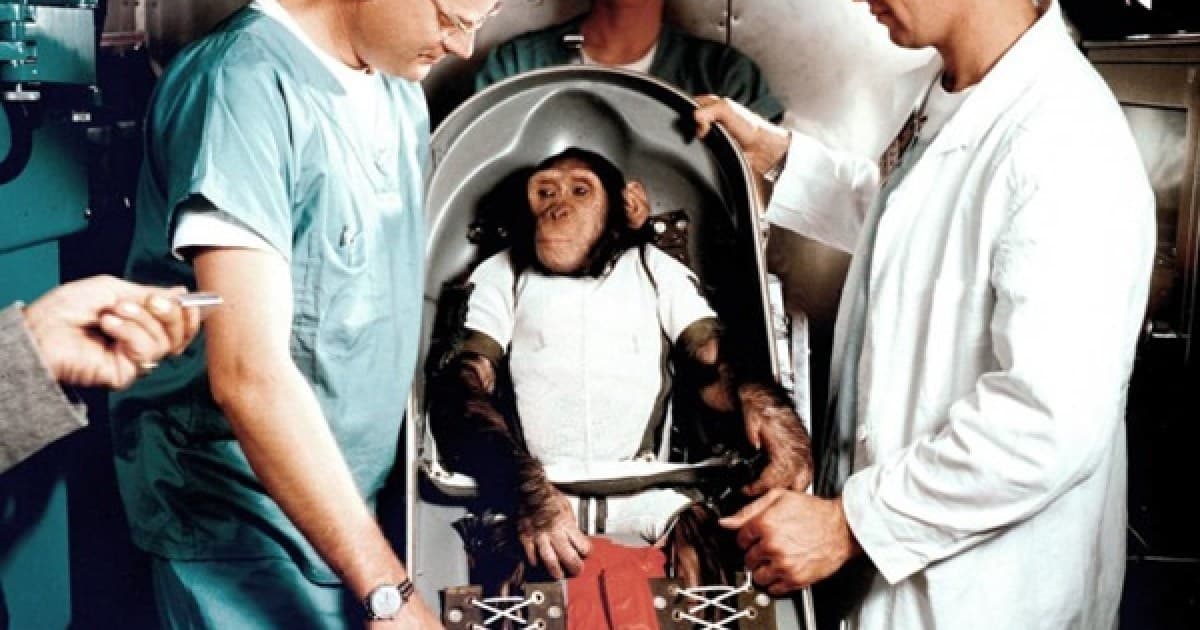
June 14, 1949: The First Mammal in Space
Companies Mentioned

NASA
Why It Matters
Albert II’s flight delivered the first in‑flight biological metrics, proving that mammals could survive launch stresses and informing the design of crewed spacecraft that would later carry humans into orbit.
Key Takeaways
- •Albert II reached 83 miles altitude on June 14, 1949.
- •First mammal to cross the Kármán line in a V‑2 rocket.
- •Mission recorded heart and respiration data in microgravity.
- •Parachute failure caused Albert II’s fatal impact.
- •Data guided life‑support design for later human flights.
Pulse Analysis
The post‑World‑War II era saw the United States repurposing captured German V‑2 rockets for scientific experiments, turning the desert at White Sands into a proving ground for early space biology. While fruit flies and mice had already been lofted skyward, the launch of Albert II marked a decisive step: a primate, physiologically closer to humans, survived the extreme acceleration and vacuum of space. This achievement demonstrated that the United States could gather meaningful biomedical data beyond the atmosphere, a capability that would become a strategic advantage in the burgeoning Cold War space race.
Albert II’s brief sub‑orbital flight lasted just a few minutes, yet the onboard instrumentation captured continuous heart‑rate and respiration traces, the first of their kind from a mammal in space. Engineers wired the monkey to sensors that transmitted data back to ground stations, confirming that vital signs remained stable during the high‑g launch and microgravity phases. Although the parachute failed on re‑entry, the loss of the animal underscored the need for reliable recovery systems—a lesson that directly influenced the design of later Mercury capsules, where redundant parachutes and soft‑landing technologies became standard.
The legacy of Albert II extends far beyond the 1949 flight. The physiological benchmarks established by his mission informed NASA’s life‑support engineering, shaping pressure suits, cabin atmosphere controls, and emergency protocols for the Mercury, Gemini, and Apollo programs. Moreover, the ethical debate sparked by using animals in space laid groundwork for modern standards of animal welfare in research. In hindsight, Albert II’s sacrifice was a pivotal data point that bridged the gap between unmanned experiments and the first human journeys to orbit, cementing his place in the chronology of space exploration.
June 14, 1949: The first mammal in space
Comments
Want to join the conversation?
Loading comments...