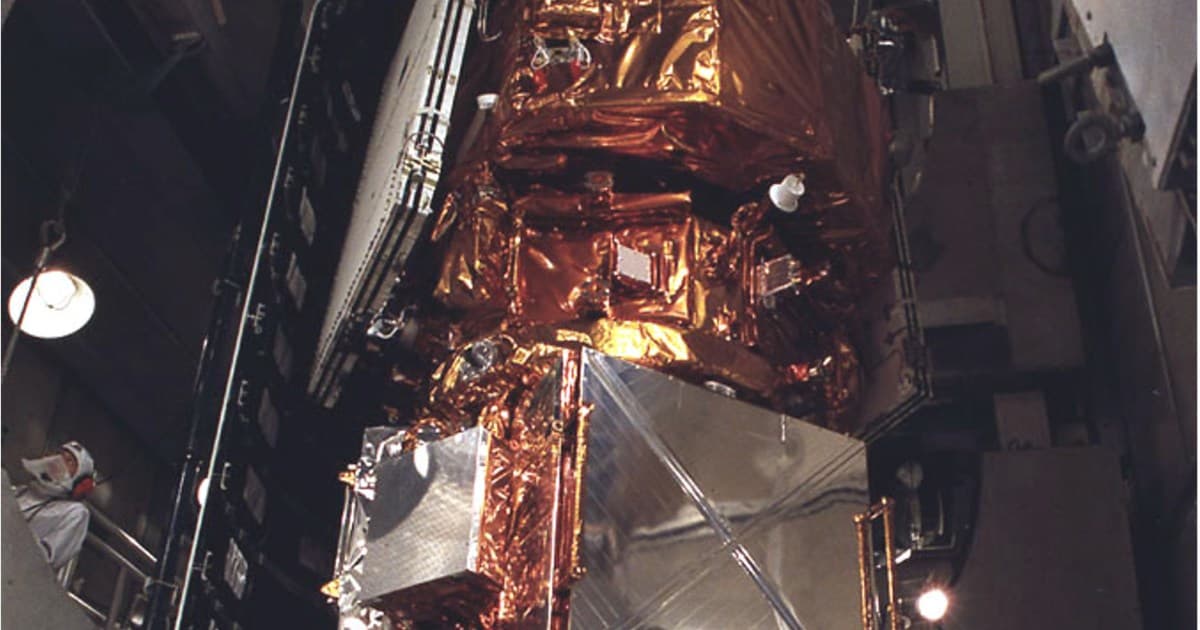
June 7, 1992: The Extreme Ultraviolet Explorer Launches
Companies Mentioned

NASA
Why It Matters
EUVE opened a previously inaccessible spectral window, enabling new insights into stellar evolution and interstellar chemistry, and set technical precedents for future space‑based UV observatories.
Key Takeaways
- •EUVE launched June 7 1992 for full‑sky UV survey
- •First satellite to operate in short‑wave ultraviolet band
- •Conducted full‑sky, deep‑sky, and targeted observations
- •Provided data on interstellar medium absorption effects
- •Decommissioned Jan 31 2001 after nine years of service
Pulse Analysis
NASA’s investment in the Extreme Ultraviolet Explorer marked a pivotal shift in space‑based astronomy, allocating roughly $150 million (in 1990s dollars) to develop instrumentation capable of detecting wavelengths blocked by Earth’s atmosphere. The engineering challenge of shielding sensitive detectors from solar radiation while maintaining precise pointing accuracy pushed forward satellite bus design, thermal control, and data handling technologies that later benefitted commercial Earth‑observation platforms. EUVE’s success demonstrated that high‑cost, niche scientific missions could yield durable hardware solutions applicable across the aerospace sector.
The scientific payoff was equally significant. By mapping the sky in the 70–760 Å range, EUVE identified thousands of previously unknown hot white dwarfs, active galactic nuclei, and stellar coronae, enriching catalogs used by both academic researchers and private space firms developing UV‑based remote‑sensing tools. Its measurements of interstellar medium absorption refined models of gas composition and density, informing the design of next‑generation telescopes that require precise background calibration. The mission’s open‑access data policy also spurred a wave of collaborative research, accelerating innovation in data analytics and machine‑learning pipelines for astrophysical datasets.
EUVE’s legacy persists in today’s UV observatories such as the Hubble Space Telescope’s Cosmic Origins Spectrograph and the upcoming World Space Observatory‑UV. The mission’s proven hardware architecture and operational protocols have been referenced in commercial satellite proposals targeting UV imaging for materials inspection and atmospheric monitoring. By establishing a viable pathway for ultraviolet space astronomy, EUVE helped justify continued public‑private partnerships, encouraging venture capital to fund niche space instrumentation startups that leverage heritage designs for new market applications.
June 7, 1992: The Extreme Ultraviolet Explorer launches
Comments
Want to join the conversation?
Loading comments...