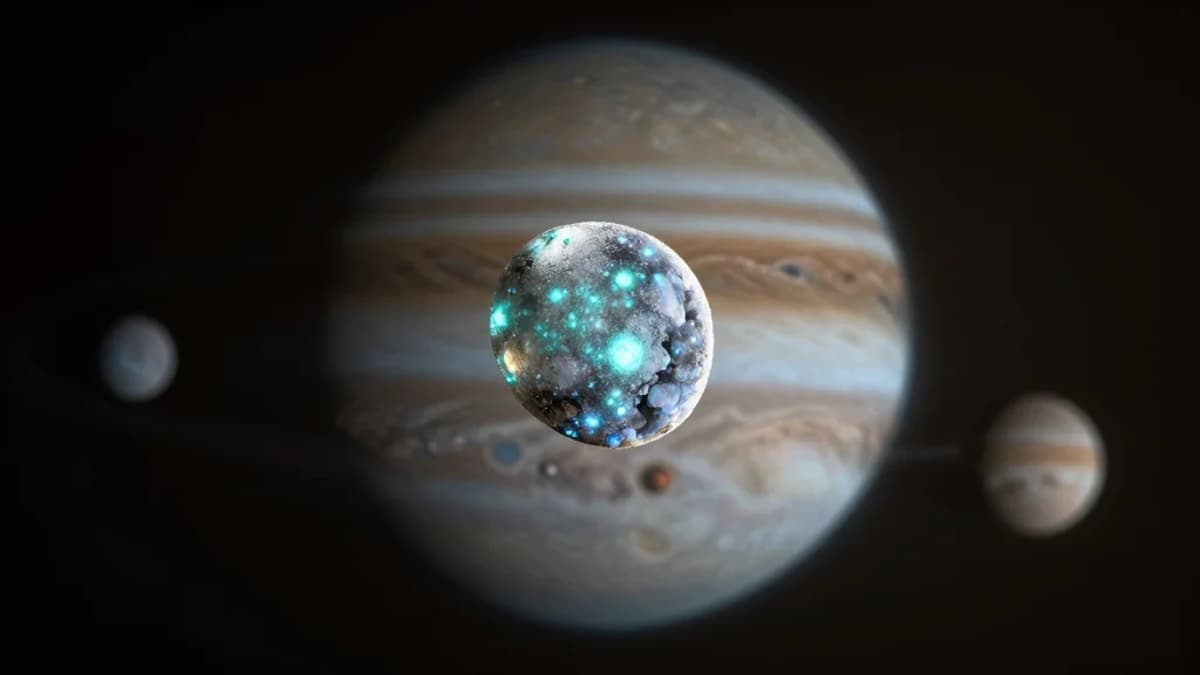
Jupiter's Galilean Moons May Have Gained Life's Building Blocks at Birth
•February 24, 2026
0
Why It Matters
The research provides a concrete pathway for how life‑building chemicals arrived on Europa, Ganymede and Callisto, strengthening their habitability prospects and informing upcoming mission measurements.
Key Takeaways
- •COMs formed in protosolar and Jovian disks
- •Up to 50% grains delivered organics unchanged
- •Moons inherited organics, aiding prebiotic chemistry
- •Findings guide Europa Clipper and JUICE analyses
Pulse Analysis
The formation of complex organic molecules in space has long been a cornerstone of astrobiology, yet the mechanisms that deliver these precursors to nascent worlds remain debated. Recent simulations integrate the physics of protoplanetary and circumplanetary disks with grain‑transport dynamics, revealing that ultraviolet irradiation and modest heating can trigger organic synthesis directly within the disks surrounding young stars and giant planets. By aligning these models with laboratory experiments that replicate interstellar ice chemistry, researchers demonstrate that the same processes that operated in the early solar nebula also functioned in Jupiter’s own disk, creating a dual‑source reservoir of prebiotic material.
Crucially, the study quantifies the efficiency of organic delivery: in several scenarios, nearly half of the simulated icy grains retain their newly formed COMs as they migrate from the outer solar nebula into Jupiter’s circumplanetary environment. This high retention rate suggests that Europa, Ganymede and Callisto were not chemically sterile embryos but rather inherited a substantial inventory of carbon‑rich compounds at birth. The models also identify localized heating zones within the Jovian disk where organics could form in situ, further enriching the moons’ building blocks without requiring extensive external input.
For mission planners and planetary scientists, these insights reshape expectations for the chemical landscapes that Europa Clipper and JUICE will encounter. By establishing a plausible origin story for organics, the work offers a framework to interpret spectroscopic signatures, surface deposits, and potential plume compositions. Ultimately, linking early‑stage disk chemistry to present‑day habitability assessments deepens our understanding of how life‑supporting environments may arise around gas giants, extending the search for biosignatures beyond Earth‑like planets.
Jupiter's Galilean moons may have gained life's building blocks at birth
0
Comments
Want to join the conversation?
Loading comments...