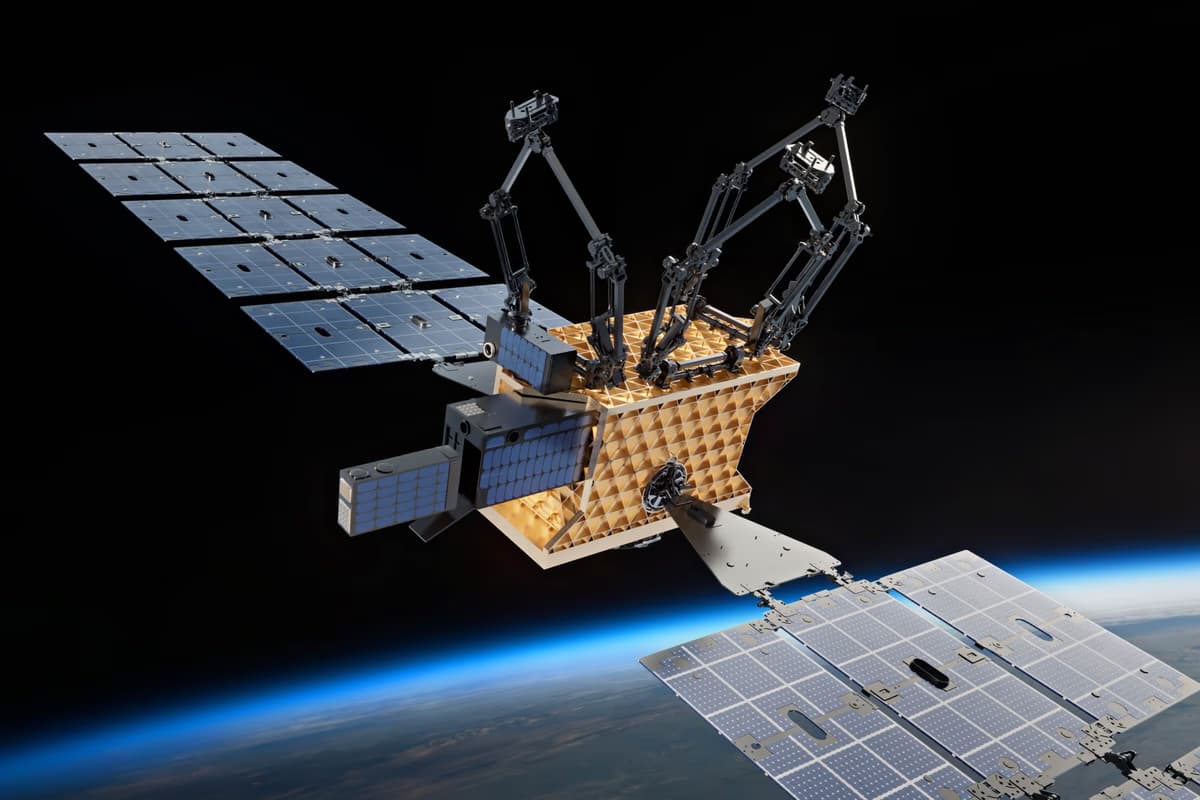
Katalyst Space Raises $12 Million for GEO Servicing Demo Mission
Companies Mentioned
Why It Matters
Successful GEO servicing proves the economic viability of on‑orbit maintenance, unlocking new revenue streams for national‑security and commercial satellite operators. It also signals a shift toward sustainable, reusable space infrastructure.
Key Takeaways
- •Katalyst secured $12 million to build Nexus‑1 for GEO servicing.
- •Nexus‑1 will rendezvous with a U.S. Space Force satellite in 2027.
- •Link spacecraft will re‑boost NASA’s Swift Observatory by June 2027.
- •Funding led by Geodesic Capital, with Fortitude Ventures participation.
- •Investors cite rapid development and capital efficiency as differentiators.
Pulse Analysis
The satellite servicing market, long dominated by speculative concepts, is gaining traction as operators seek to extend the life of multi‑billion‑dollar assets. Katalyst Space’s recent financing underscores investor confidence that robotic refueling, repair, and orbital adjustments can transition from niche experiments to mainstream services. By targeting both low‑Earth orbit (LEO) with its Link vehicle and the far more challenging geostationary orbit (GEO) with Nexus‑1, the company addresses a critical gap: the ability to service high‑value GEO platforms that are otherwise inaccessible without costly replacement launches.
Link’s upcoming Pegasus XL launch from Kwajalein Atoll will demonstrate a practical use case—attaching to NASA’s Swift observatory to counteract atmospheric drag and preserve its scientific mission. This rapid development cycle, from contract award to flight readiness in under a year, highlights Katalyst’s engineering agility. Nexus‑1, scheduled for a 2027 Ariane 6 ride, will perform a series of rendezvous and proximity operations with a U.S. Space Force satellite, installing a space‑domain‑awareness sensor before offering similar capabilities to commercial clients. The mission will validate key technologies such as autonomous docking, robotic manipulation, and high‑precision navigation in GEO’s harsh radiation environment.
If successful, Katalyst’s dual‑mission roadmap could reshape the economics of satellite operations. GEO satellites, which generate a substantial share of global communications revenue, often become stranded when propulsion reserves run low. On‑orbit servicing promises to defer costly replacements, reduce space debris, and enable new business models like in‑orbit upgrades. Moreover, the demonstrated ability to service national‑security assets may attract defense contracts, further accelerating industry adoption. As more operators recognize the strategic advantage of extendable satellite lifespans, Katalyst’s early mover status positions it to capture a sizable share of the emerging space‑maintenance market.
Katalyst Space raises $12 million for GEO servicing demo mission
Comments
Want to join the conversation?
Loading comments...