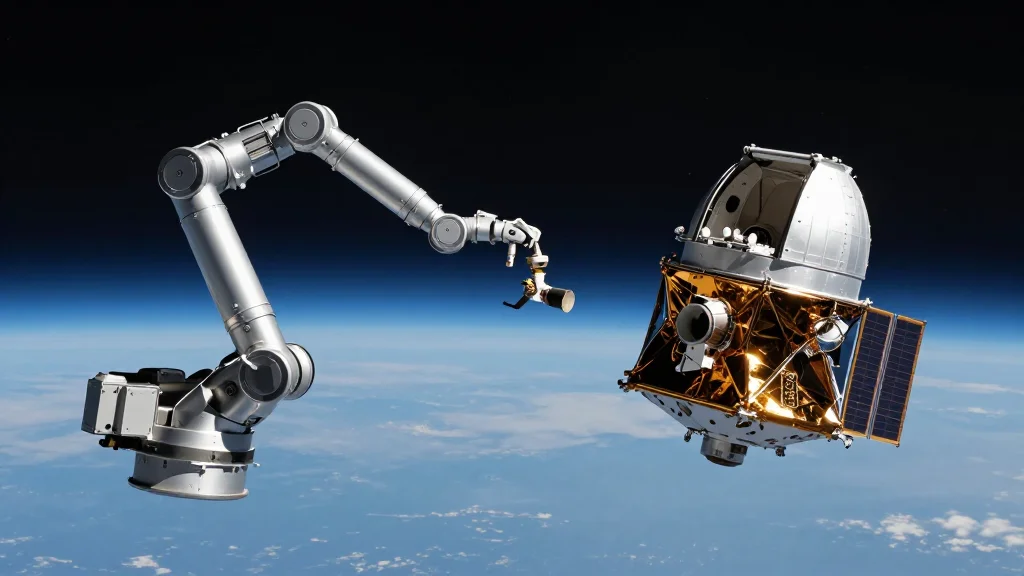
Katalyst’s Link Rescue Spacecraft Installed on Pegasus Rocket
Companies Mentioned
Why It Matters
Preserving Swift’s scientific capabilities safeguards critical high‑energy astrophysics data, while a successful rescue would validate commercial on‑orbit servicing and accelerate funding for the nascent industry.
Key Takeaways
- •LINK spacecraft installed on Pegasus XL for Swift rescue
- •Mission aims to raise Swift's orbit using robotic tentacles
- •First orbital grab without pre‑installed attachment points
- •Success could catapult Katalyst into leading satellite‑servicing position
- •Pegasus XL's final flight ends a 30‑year launch legacy
Pulse Analysis
The Neil Gehrels Swift Observatory, a workhorse for gamma‑ray burst detection, has been losing altitude faster than anticipated due to heightened atmospheric drag from recent solar storms. In low Earth orbit, even modest drag can de‑orbit satellites over time, and Swift’s lack of onboard propulsion makes a rescue essential to extend its mission life and protect the billions of dollars of scientific data it generates. NASA’s decision to contract a private firm underscores a growing reliance on commercial partners to address operational challenges that were once handled solely by government agencies.
Katalyst Space’s LINK vehicle represents a bold technical leap. Equipped with articulated robotic arms, LINK must first locate and then securely latch onto Swift’s body— a maneuver never performed on a spacecraft without dedicated grapple fixtures. The integration of LINK onto the Pegasus XL, a solid‑fuel launch system that has serviced over 400 payloads, provides a unique testbed for this high‑risk operation. If the spacecraft can successfully raise Swift’s orbit, it will demonstrate that on‑orbit servicing can be achieved with relatively low‑cost, rapid‑deployment hardware, potentially opening the door to similar rescue or upgrade missions for other aging assets.
Beyond the immediate scientific payoff, the mission carries significant commercial implications. A successful rescue would instantly position Katalyst as a front‑runner in the burgeoning orbital‑servicing market, likely attracting venture capital and government contracts. Even a near‑miss could still prove the viability of the technology, prompting investors to fund further development. Meanwhile, the Pegasus XL’s final flight marks the end of a three‑decade era for a launch platform that has been a staple for small‑satellite deployments, highlighting the industry’s shift toward more versatile, reusable launch solutions. The convergence of these factors signals a pivotal moment for both space logistics and the broader commercial space ecosystem.
Katalyst’s Link rescue spacecraft installed on Pegasus rocket
Comments
Want to join the conversation?
Loading comments...