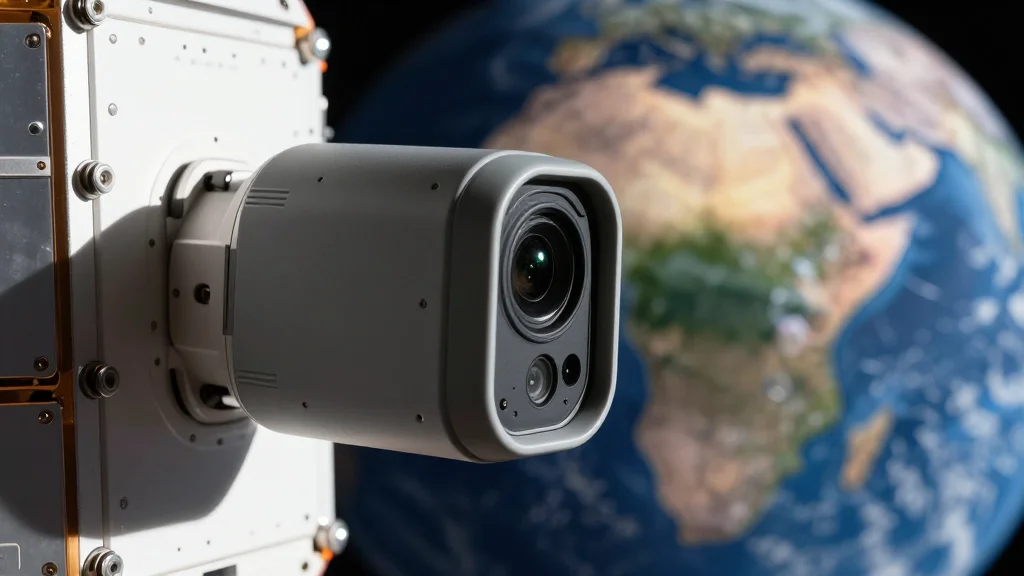
Kenya, Egypt and Uganda Launch AI‑Enabled Climate Camera to ISS in Historic African Collaboration

Companies Mentioned
Why It Matters
ClimCam’s deployment demonstrates that African space agencies can move from isolated nanosatellite projects to collaborative, high‑impact research payloads on the world’s premier orbital laboratory. By delivering near‑real‑time climate data tailored to East Africa, the mission directly addresses food‑security and disaster‑risk challenges that affect millions. Moreover, the partnership showcases a viable model for pooling resources across borders, reducing costs, and accelerating technology transfer, which could inspire similar collaborations in telecommunications, Earth observation and scientific research across the Global South. The mission also signals to the global space community that Africa is ready to contribute valuable data to the ISS ecosystem. Successful operation could unlock further funding from international partners, increase the continent’s bargaining power in future access‑to‑space programmes, and encourage private investors to consider African‑focused satellite services as a growth market.
Key Takeaways
- •Kenya, Egypt and Uganda launched the 3.5 kg AI‑enabled ClimCam payload to the ISS on 11 April 2026.
- •Payload rides on SpaceX Falcon 9 and Northrop Grumman Cygnus XL NG‑24, carrying >11,000 lb of cargo.
- •ClimCam will image at least 20 sq km daily over East Africa at 10 m resolution from 400 km altitude.
- •Data will support flood detection, agriculture monitoring, weather forecasting and disaster management.
- •First joint African ISS payload; part of UNOOSA’s ‘Access to Space for All’ programme.
Pulse Analysis
The ClimCam mission is a watershed for African space policy because it reframes the continent’s role from data consumer to data producer on a premier orbital platform. Historically, African nations have relied on commercial providers such as Planet or Maxar for high‑resolution imagery, paying subscription fees that strain limited budgets. By inserting an AI‑driven sensor that processes images on‑board, the partnership reduces bandwidth costs and accelerates the delivery of actionable intelligence. This technical advantage could make African climate services more competitive globally, especially as climate‑risk financing becomes a larger market.
From a market perspective, the success of ClimCam may catalyze a new wave of regional payload contracts under the UNOOSA framework. Investors will watch the commissioning phase closely; a smooth start could attract venture capital to spin‑off companies focused on AI‑enabled Earth observation hardware. Conversely, any delay or performance shortfall could reinforce skepticism about the continent’s ability to deliver complex space hardware, potentially slowing future collaborations.
Strategically, the mission underscores a broader shift toward multilateral space initiatives in the Global South, mirroring trends in Europe’s Artemis Accords and Asia’s lunar cooperation. If Kenya, Egypt and Uganda can demonstrate reliable data delivery, they will be better positioned to negotiate data‑sharing agreements with neighboring countries, creating a regional climate‑monitoring network that could feed into United Nations climate reporting mechanisms. The next logical step will be to leverage the Bartolomeo platform for additional African experiments, turning the ISS into a shared laboratory that accelerates scientific capacity across the continent.
Kenya, Egypt and Uganda Launch AI‑Enabled Climate Camera to ISS in Historic African Collaboration
Comments
Want to join the conversation?
Loading comments...