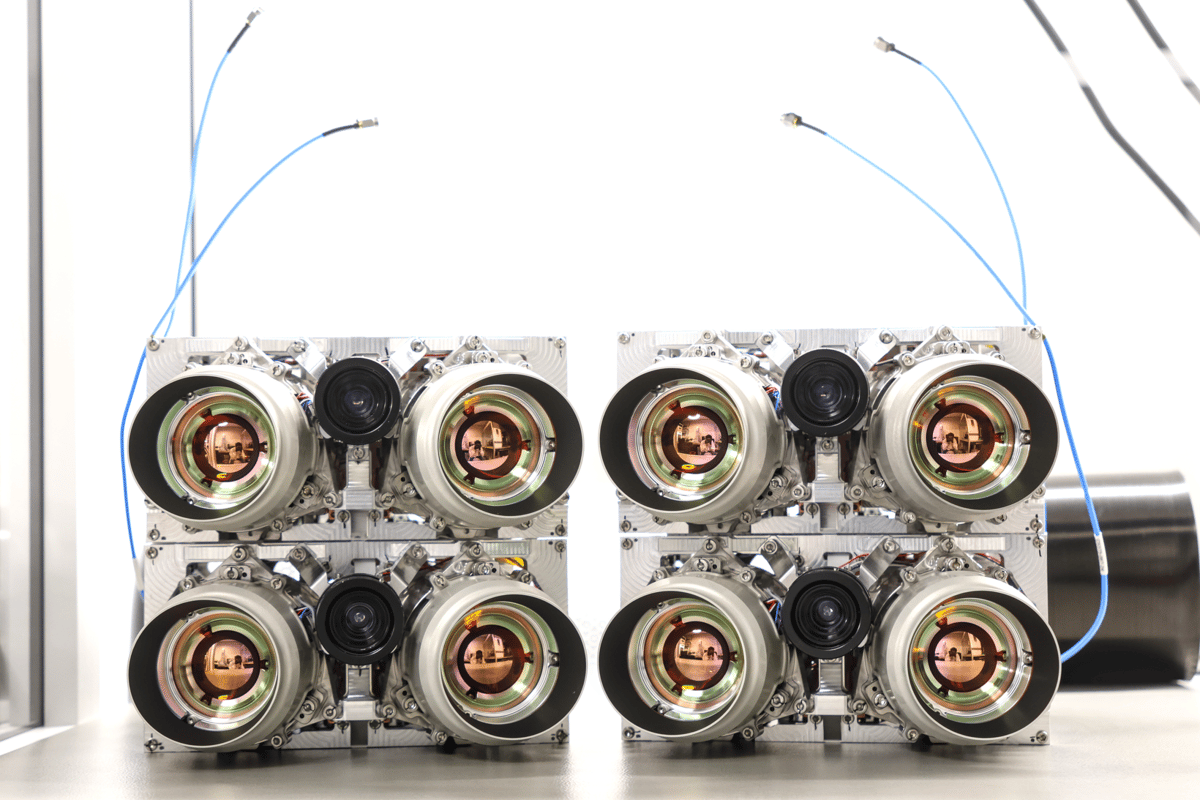
Kepler Network to Link OroraTech Sensors for Earth Monitoring
•January 11, 2026
0
Why It Matters
The integration delivers persistent, low‑latency Earth observation essential for wildfire detection and climate monitoring, while giving Kepler a data‑rich payload to diversify revenue streams.
Key Takeaways
- •Kepler launches four SAFIRE Gen4 thermal sensors Jan 11
- •OroraTech aims for 100 thermal instruments by 2027
- •Laser-linked network reduces data latency to minutes
- •Hourly time‑lapse thermal imagery enables near‑real‑time monitoring
- •Partnership expands Kepler’s utility beyond communications
Pulse Analysis
OroraTech’s rapid ascent in the thermal‑imaging sector reflects a broader shift toward continuous, high‑resolution Earth observation. Since its 2018 founding, the Munich‑based firm has moved from occasional hosted payloads to a dedicated fleet, leveraging proprietary SAFIRE sensors that capture infrared signatures of wildfires, deforestation, and industrial heat sources. By targeting a constellation of 100 instruments by 2027, OroraTech aims to provide global, hourly revisits—a capability that rivals traditional optical satellites while offering unique thermal insights for climate‑risk analytics.
The partnership with Kepler introduces an optical‑communication backbone that fundamentally changes data delivery. Instead of waiting for ground‑station passes, the laser‑linked network routes imagery across satellites, enabling downlink within minutes of capture. This near‑real‑time pipeline transforms thermal data from a delayed product into a live stream, dramatically improving response times for emergency services and enabling more granular, time‑lapse analyses for insurers and agribusinesses. The 5‑kilogram Gen4 sensors also feature in‑orbit algorithm updates, ensuring image quality evolves alongside emerging AI models.
Industry observers see the collaboration as a template for future satellite ecosystems where communication and sensing converge. Kepler’s ten‑satellite constellation, originally designed for broadband services, now doubles as a data‑distribution platform, opening new revenue channels and attracting customers seeking rapid, actionable intelligence. As governments and private firms prioritize climate resilience, the ability to monitor thermal events in near‑real‑time will become a competitive differentiator, positioning both OroraTech and Kepler at the forefront of the next generation of space‑based monitoring services.
Kepler network to link OroraTech sensors for Earth monitoring
0
Comments
Want to join the conversation?
Loading comments...