Key Support Equipment Arrives at Kennedy for Roman Space Telescope
Companies Mentioned

NASA
SpaceX
Why It Matters
Ultra‑clean conditions are essential for the telescope’s infrared optics, directly influencing data quality and mission success. Timely equipment arrival helps preserve NASA’s early‑September launch schedule and its partnership with SpaceX.
Key Takeaways
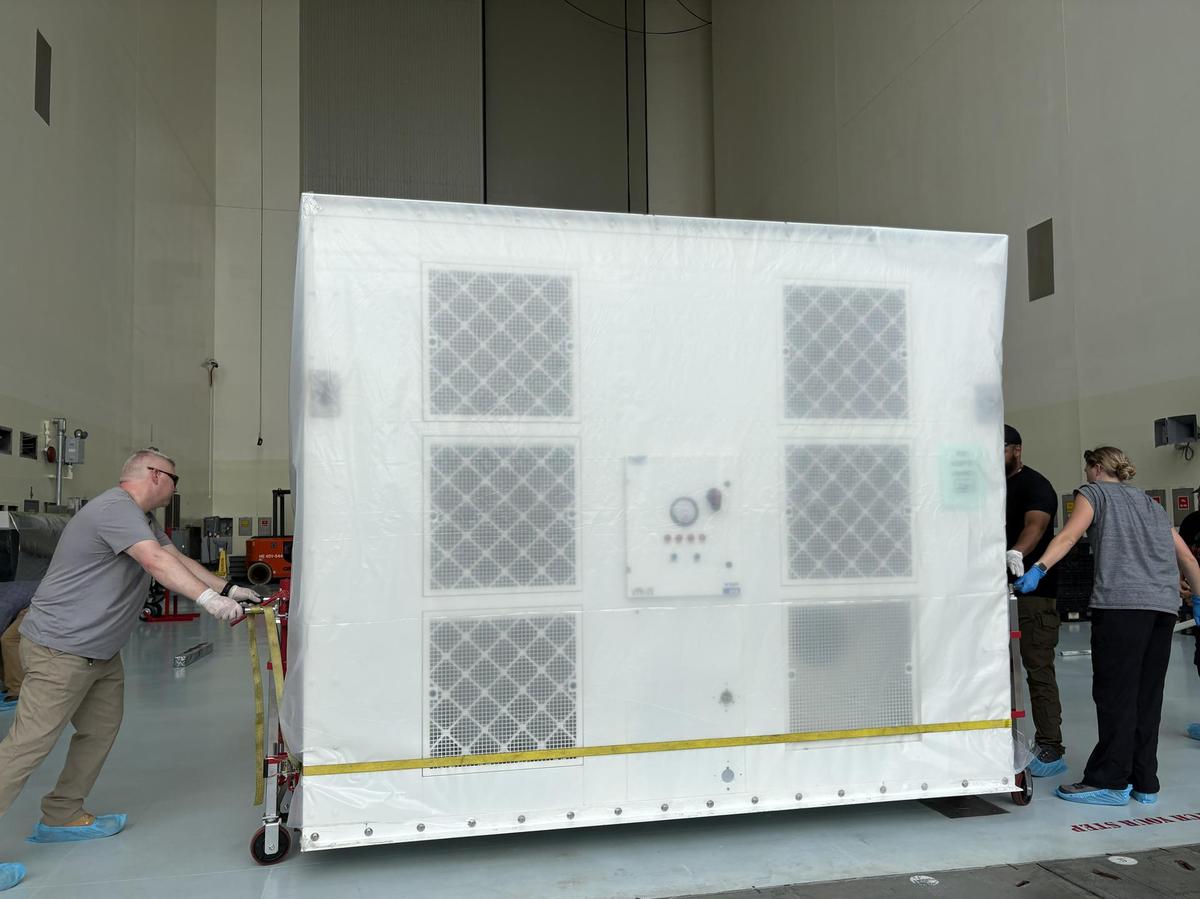
- •Eight 1,800‑lb HEPA modules installed at Kennedy’s PHSF.
- •Modules enhance clean‑room filtration for Roman’s infrared instruments.
- •Cleanliness crucial to prevent contamination of sensitive optics.
- •Supports fueling and integration ahead of early‑September launch.
- •Roman aims to probe dark energy and map exoplanets.
Pulse Analysis
The Nancy Grace Roman Space Telescope represents NASA’s most ambitious infrared observatory since the Hubble, designed to capture panoramic views of the cosmos and probe the nature of dark energy. Its Wide Field Instrument and Coronagraph demand an exceptionally clean assembly environment; even microscopic particles can scatter infrared light, degrading image fidelity. By delivering eight high‑efficiency particulate air (HEPA) wall modules to the Payload Hazardous Servicing Facility, NASA reinforces the clean‑room’s ability to filter out contaminants, ensuring the telescope’s delicate optics remain pristine during final integration and fueling.
HEPA filtration is a cornerstone of aerospace hardware processing, especially for missions targeting faint infrared signals. The 1,800‑pound modules increase airflow turnover and capture particles as small as 0.3 microns, aligning with the telescope’s contamination thresholds. This upgrade reduces the risk of particulate‑induced aberrations that could compromise measurements of cosmic acceleration and exoplanet atmospheres. Moreover, the enhanced system supports rigorous testing protocols, allowing engineers to validate instrument performance under near‑space conditions before the spacecraft departs the Kennedy facility.
Beyond technical safeguards, the equipment arrival underscores NASA’s adherence to a tight launch cadence. With a target lift‑off in early September aboard a SpaceX Falcon Heavy from Launch Complex 39A, any delay in clean‑room readiness could cascade into schedule slips, affecting downstream science operations and international collaborations. The successful integration of the Roman telescope on time will not only advance astrophysical research but also demonstrate the efficacy of public‑private partnerships in delivering complex, high‑value space assets. This milestone reinforces confidence in the broader U.S. space exploration agenda.
Key Support Equipment Arrives at Kennedy for Roman Space Telescope
Comments
Want to join the conversation?
Loading comments...